
Journal of Systems Engineering and Electronics ›› 2026, Vol. 37 ›› Issue (5): 1624-1641.doi: 10.23919/JSEE.2026.000173
• SYSTEMS ENGINEERING • Previous Articles
Yilin Ou1,2, Xiaoli Wu1,2,*, Biao Yan1,2, Yuhan Wu1,2, Xinyue Zhang1,2, Hao Qu1,2, Chuanyu Wu1,2
Received:2025-07-09
Online:2026-10-18
Published:2026-11-09
Contact:
Xiaoli Wu
Supported by:Yilin Ou, Xiaoli Wu, Biao Yan, Yuhan Wu, Xinyue Zhang, Hao Qu, Chuanyu Wu. Study on dynamic information presentation methods for manned/unmanned aerial vehicle cooperative command and control interfaces[J]. Journal of Systems Engineering and Electronics, 2026, 37(5): 1624-1641.

Table 1
Stimulus property distinctiveness"
| Static feature | Illustration | Dynamic variable | Illustration |
| Orientation | 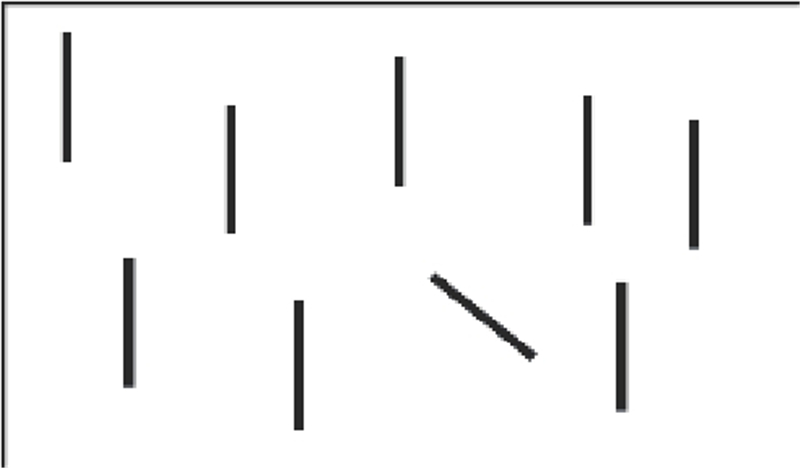 | Duration |  |
| Size |  | Rate of change | 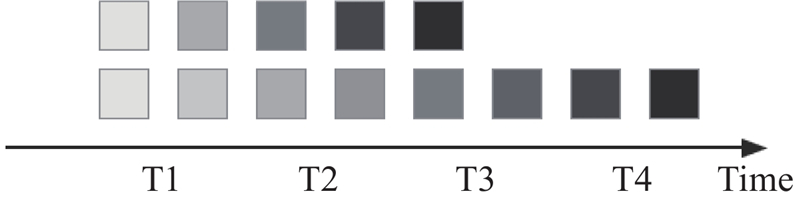 |
| Color | 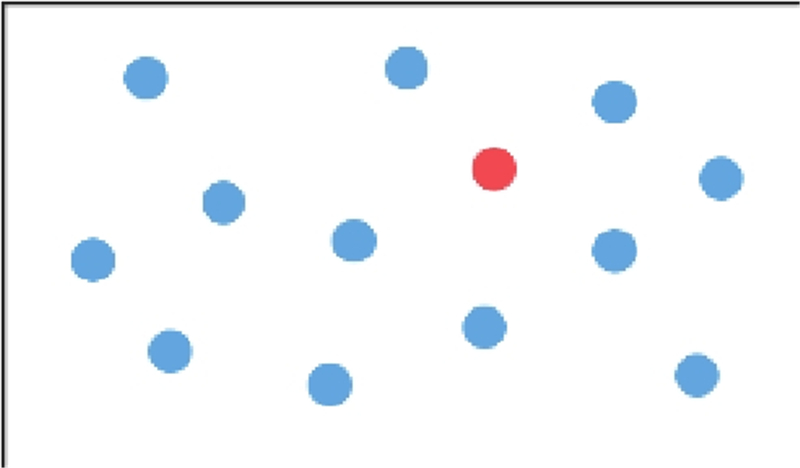 | Magnitude of change | 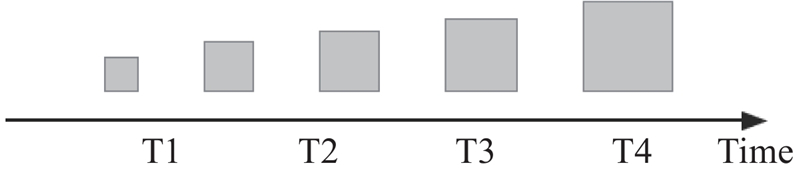 |
| Shape |  | Temporal logic |  |
Fig 1
Experimental platform"
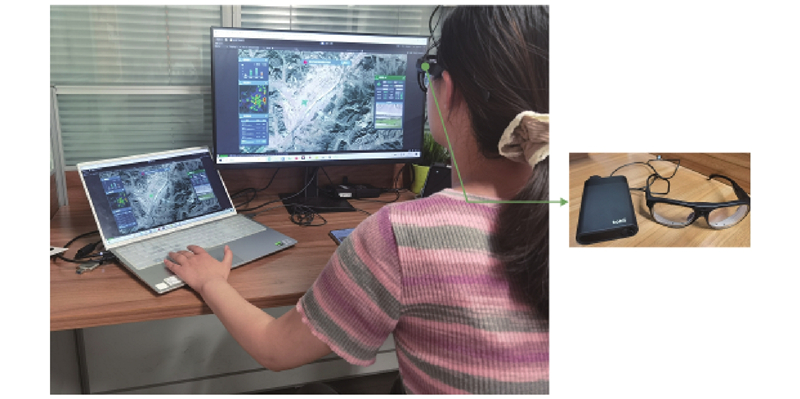
Fig 2
Evaluation metrics for M/UAV cooperative C2 interfaces"
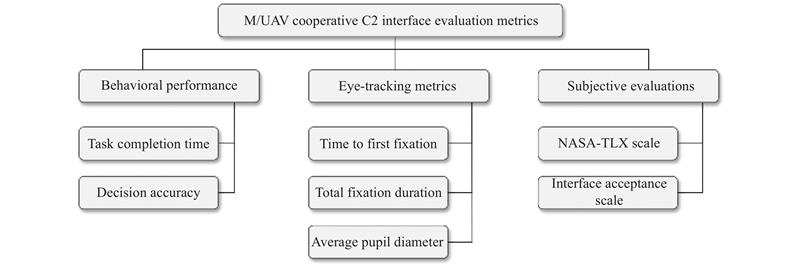
Fig 3
Top-level operational action sequence diagram of the C2 system"
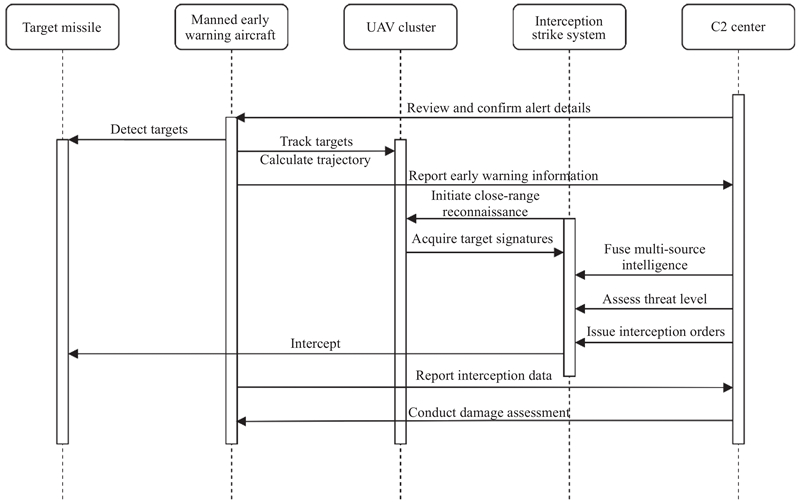
Table 2
Design of experimental interactive tasks and information presentation methods"
| Mission phase | Interactive task | Static | Dynamic | |||
| Blinking | Flowing border | Masking | Size Scaling | |||
| Early warning detection | Receive warning information; Confirm alert details |  |  |  |  |  |
| Target identification | Identify ballistic missile with highest threat level |  |  |  |  |  |
| Interception strike | Locate attack aircraft-09 on situational map; review attack aircraft-09 details |  | 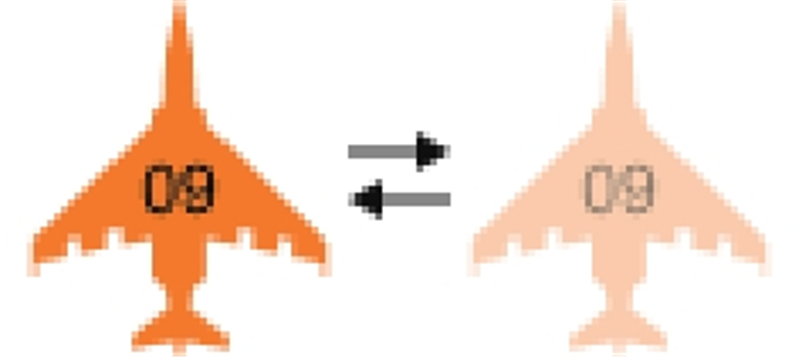 |  |  | 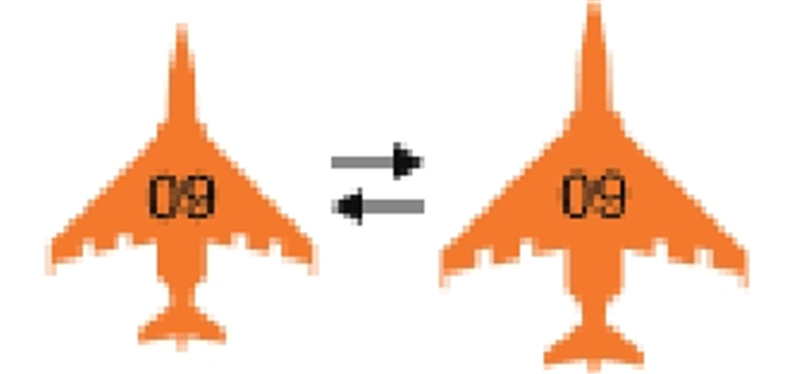 |
| Damage assessment | Assess interception status of attack aircraft-09 & ground air defense system; decide mission termination/return | 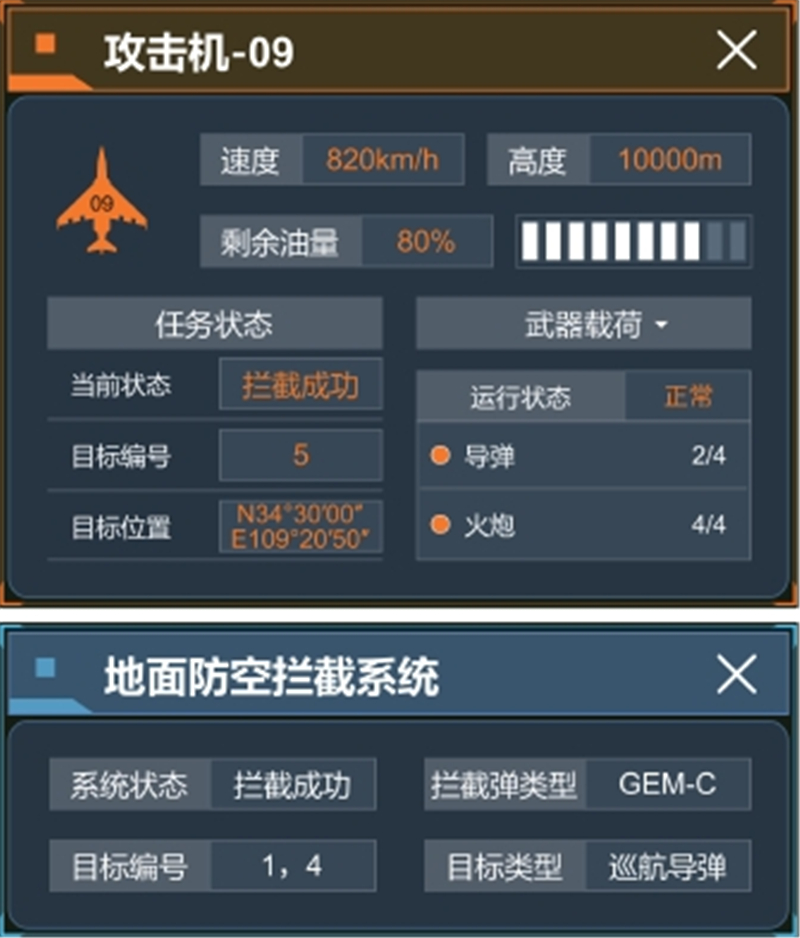 | 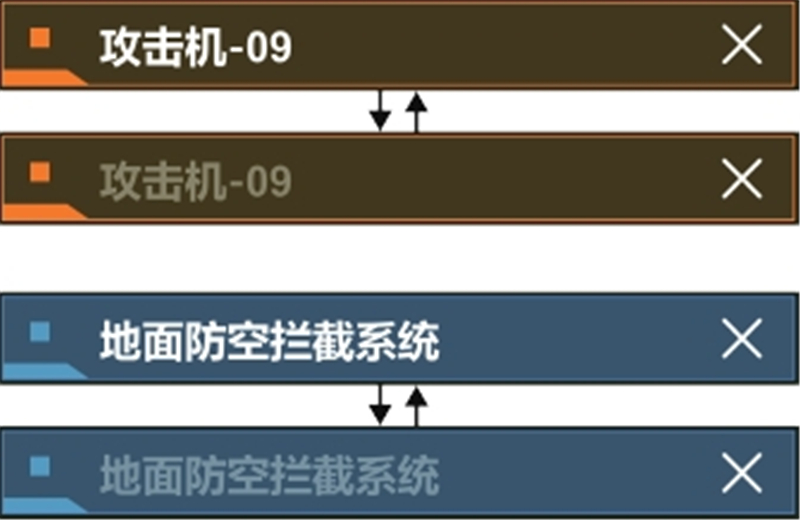 | 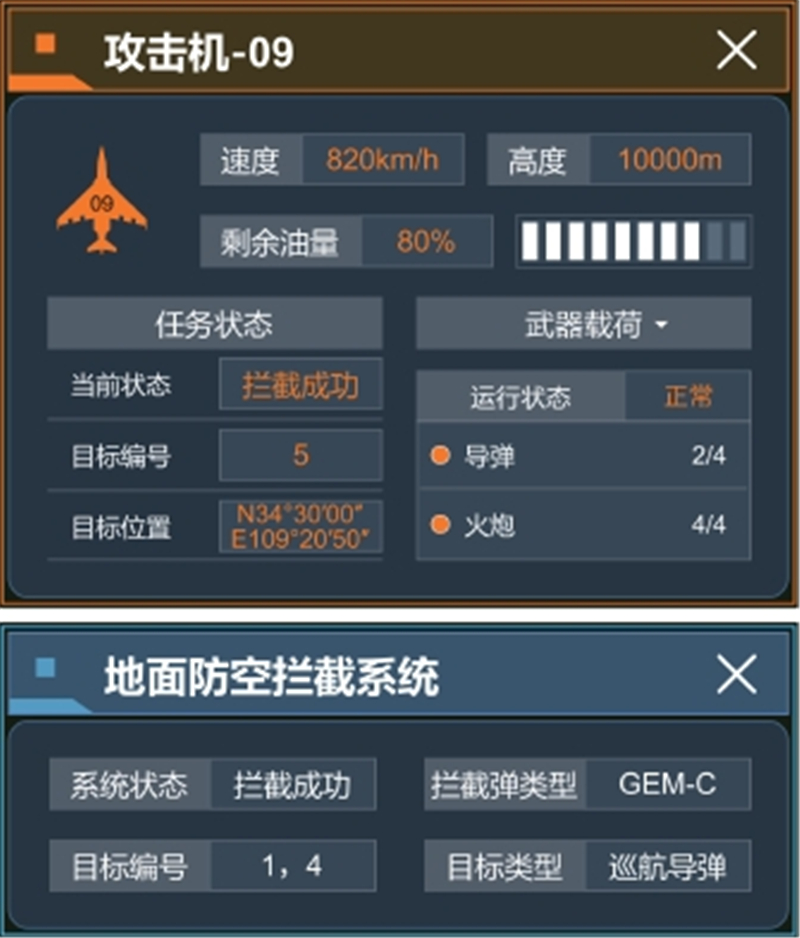 | 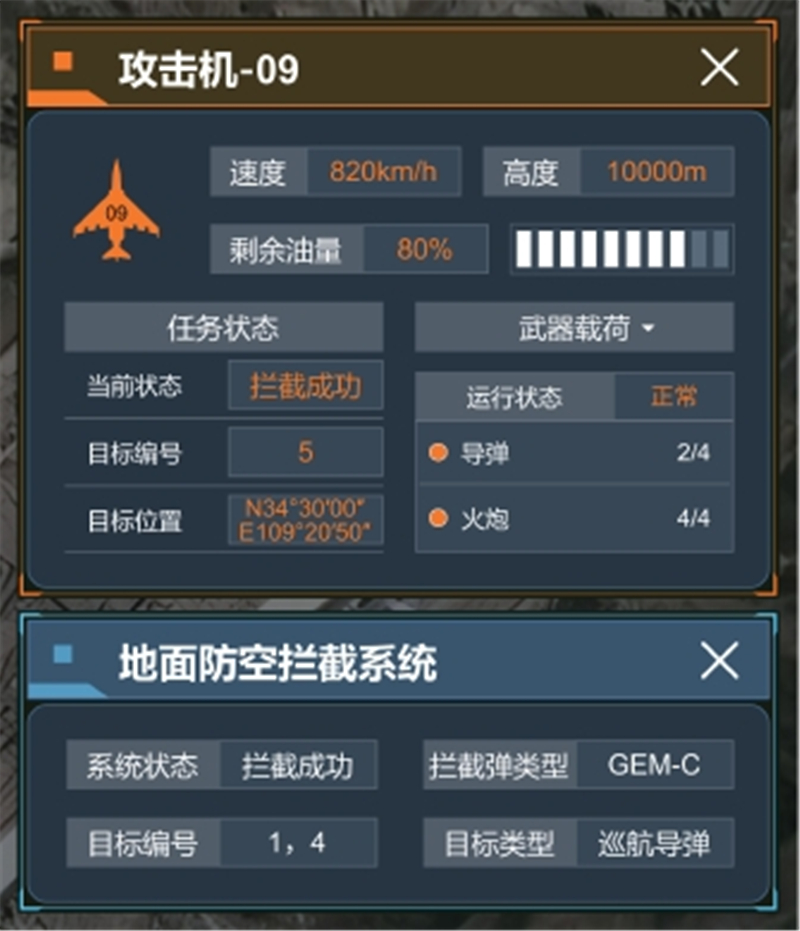 | 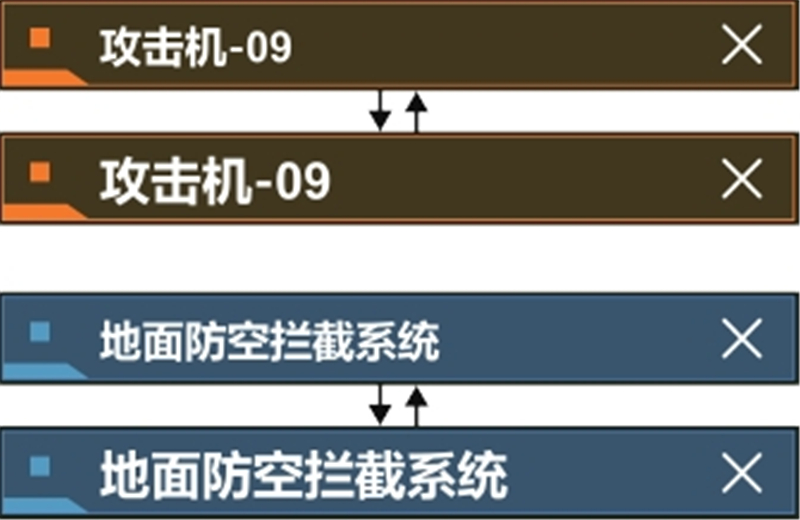 |
Fig 4
Overall experimental procedure"
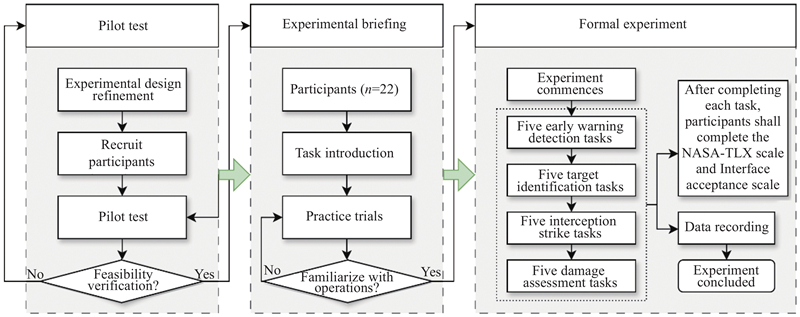
Table 3
Sample items from the interface acceptance questionnaire"
| Number | Question |
| 1 | Under this presentation method, were you able to quickly discover key information? |
| 2 | Did the visual elements (e.g., dynamic effects, color) of this method cause you interference? |
| 3 | Was this method convenient for you to make decisions or operations quickly? |
| 4 | Did this method effectively guide your attention to critical information nodes? |
| 5 | Would you prefer to use this presentation method for such tasks? |
Fig 5
Schematic diagram of the experimental flow"
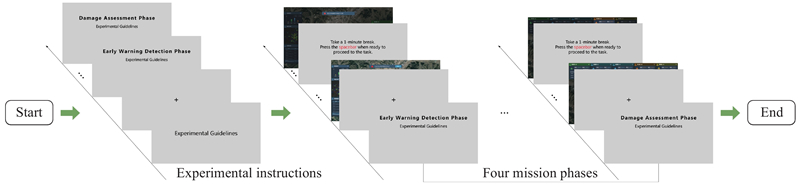
Table 4
Wilcoxon signed-rank tests of task completion time for static vs. dynamic presentation methods in each mission phase"
| Comparison group | Rank | N | Mean rank | Sum of ranks | Z | Asymptotic significance (2-tailed) |
| Early warning phase dynamic mean time-early warning phase static time | Negative ranks | 19a | 10.00 | 190.00 | −3.823b | < 0.001 |
| Positive ranks | 0b | 0.00 | 0.00 | |||
| Ties | 0c | |||||
| Target identification phase dynamic mean time-target identification phase static time | Negative ranks | 19a | 10.00 | 190.00 | −3.823b | < 0.001 |
| Positive ranks | 0b | 0.00 | 0.00 | |||
| Ties | 0c | |||||
| Interception strike phase dynamic mean time-interception strike phase static time | Negative ranks | 19a | 10.00 | 190.00 | −3.823b | < 0.001 |
| Positive ranks | 0b | 0.00 | 0.00 | |||
| Ties | 0c | |||||
| Damage assessment phase dynamic mean time-damage assessment phase static time | Negative ranks | 19a | 10.00 | 190.00 | −3.823b | < 0.001 |
| Positive ranks | 0b | 0.00 | 0.00 | |||
| Ties | 0c |
Table 5
Significance levels of paired Wilcoxon tests for task completion time by mission phase"
| Mission phase | Flowing border- blinking | Masking- blinking | Size scaling- blinking | Masking- flowing border | Size scaling- flowing border | Size scaling- masking |
| Early warning detection | <0.001 | 0.004 | <0.001 | 0.365 | 0.601 | 0.872 |
| Target identification | 0.587 | <0.001 | 0.809 | <0.001 | 0.904 | <0.001 |
| Interception strike | 0.355 | 0.872 | <0.001 | 0.573 | <0.001 | <0.001 |
| Damage assessment | <0.001 | 0.147 | 0.102 | <0.001 | <0.001 | 0.936 |
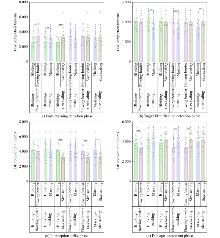
Fig 6
Bar charts of mean task completion time for pairwise comparisons of four dynamic presentation methods by mission phase"
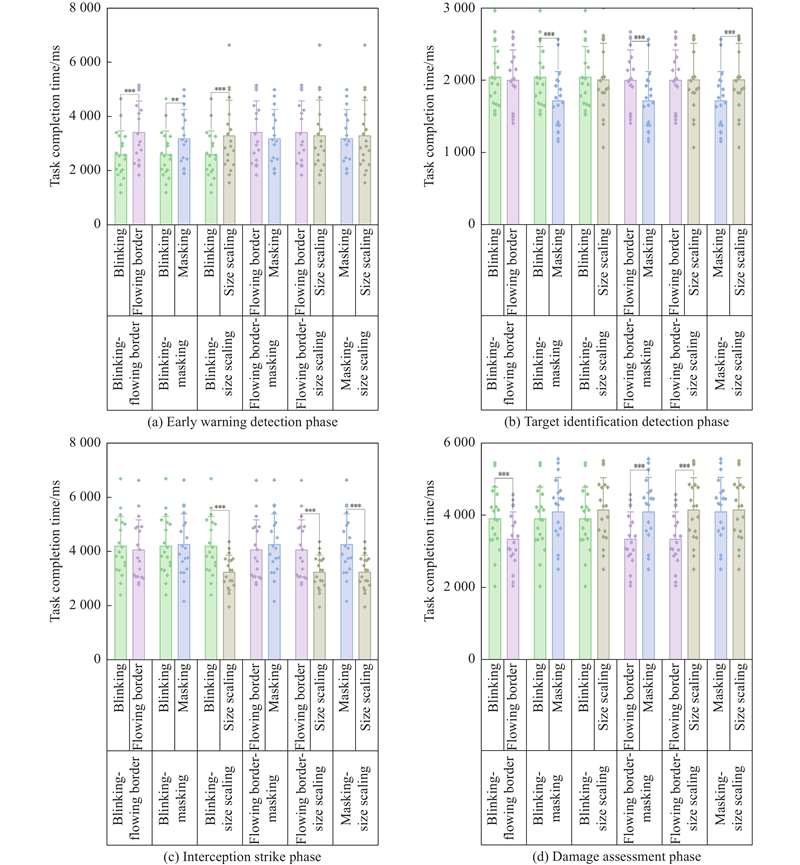
Fig 8
Heatmap of task completion times across participants and experimental tasks"
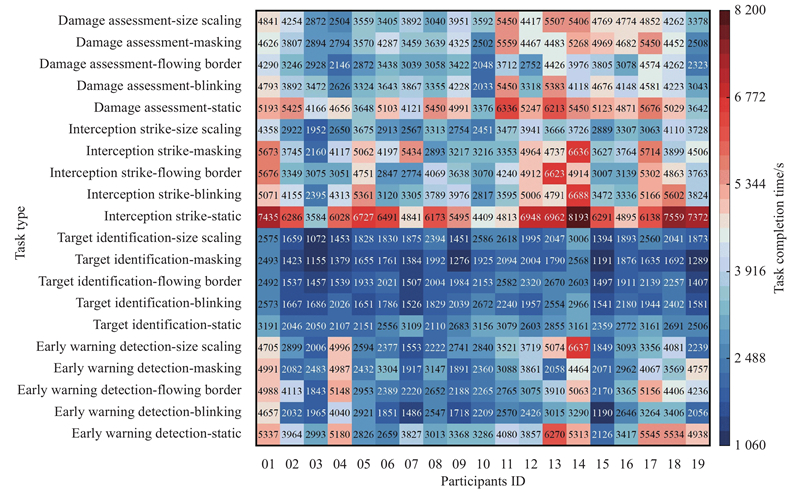
Fig 7
Box plots of task completion time for five presentation methods by mission phase"
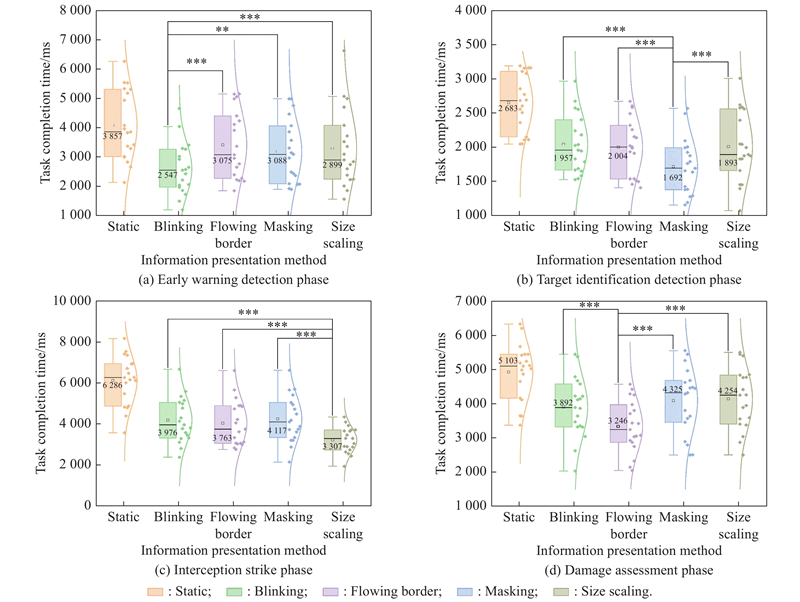
Fig 9
Bar charts of mean time to first fixation for pairwise comparisons of four dynamic presentation methods by mission phase"
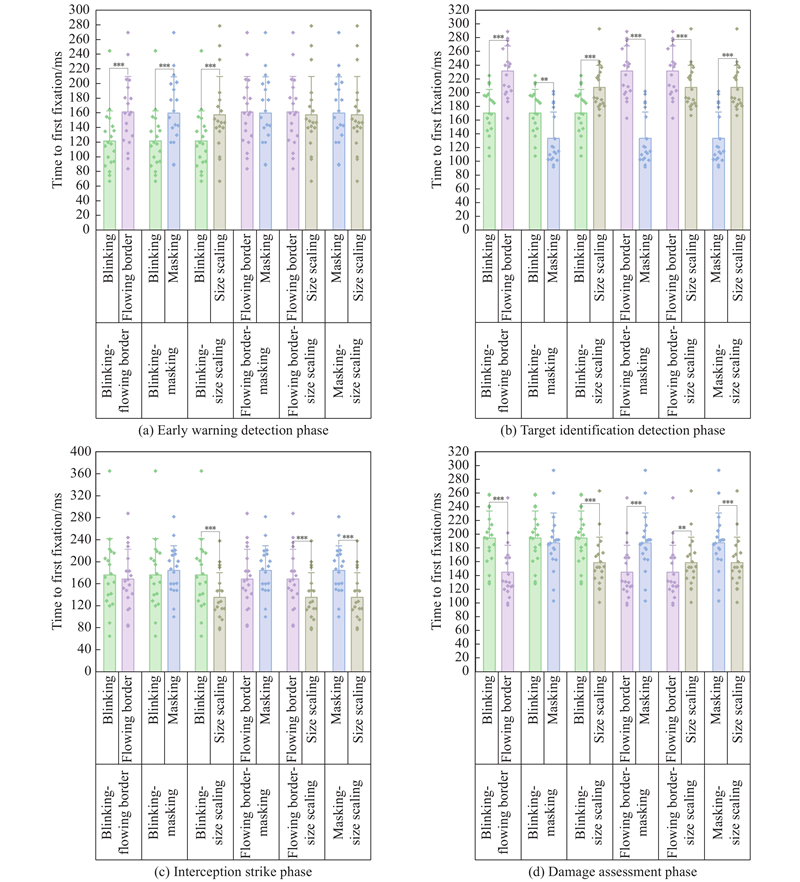
Fig 10
Box plots of time to first fixation for five presentation methods by mission phase"
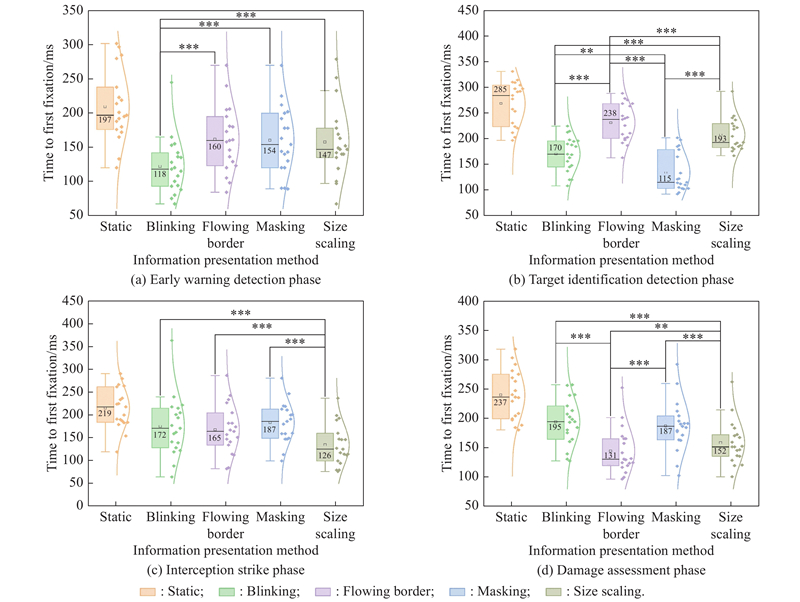
Table 6
Significance levels of paired wilcoxon tests for total fixation duration by mission phase"
| Mission phase | Flowing border- blinking | Masking- blinking | Size scaling- blinking | Masking-flowing border | Size scaling- flowing border | Size scaling- masking |
| Early warning detection | 0.004 | 0.005 | 0.053 | 0.084 | 0.041 | 0.005 |
| Interception strike | 0.014 | 0.171 | < 0.001 | 0.573 | 0.042 | < 0.001 |
| Damage assessment | < 0.001 | 0.184 | 0.748 | < 0.001 | < 0.001 | 0.306 |
Fig 11
Bar charts of mean total fixation duration for pairwise comparisons of four dynamic presentation methods by mission phase"
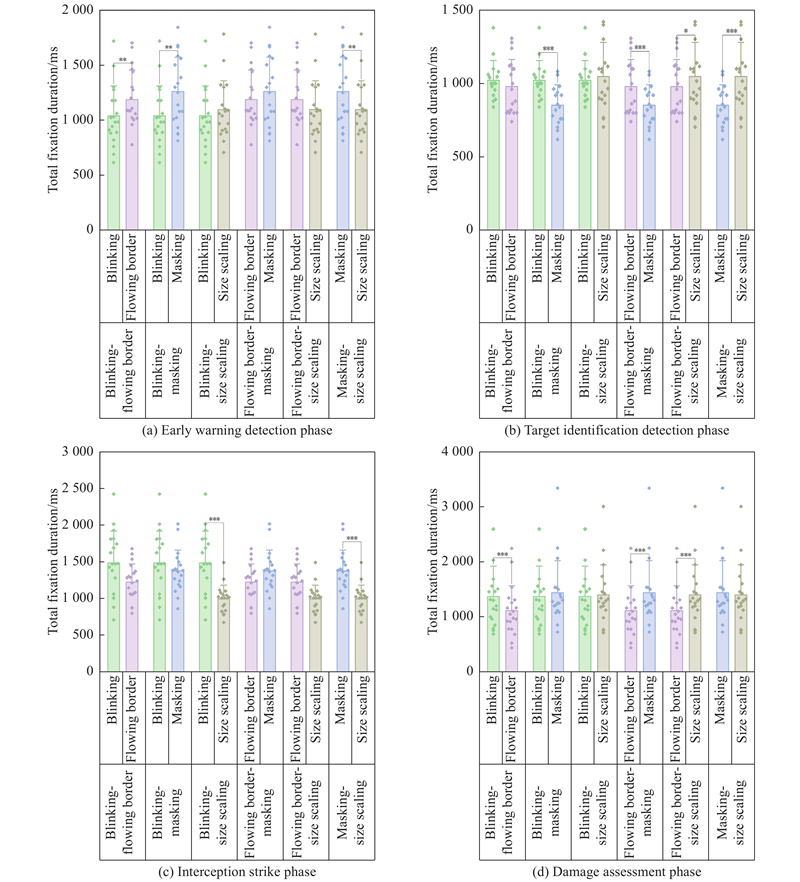
Fig 12
Box plots of mean pupil diameter for five presentation methods by mission phase"
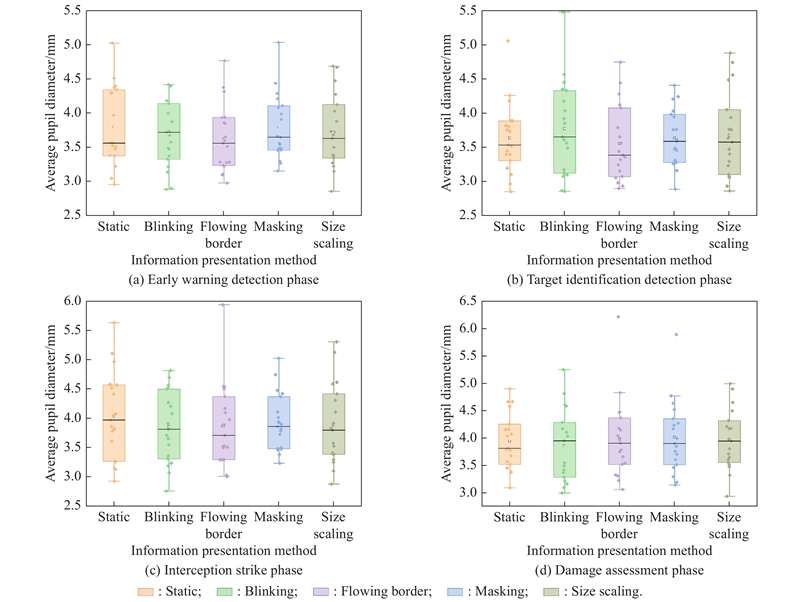
Fig 13
Bar charts of overall NASA-TLX scores by mission phase"
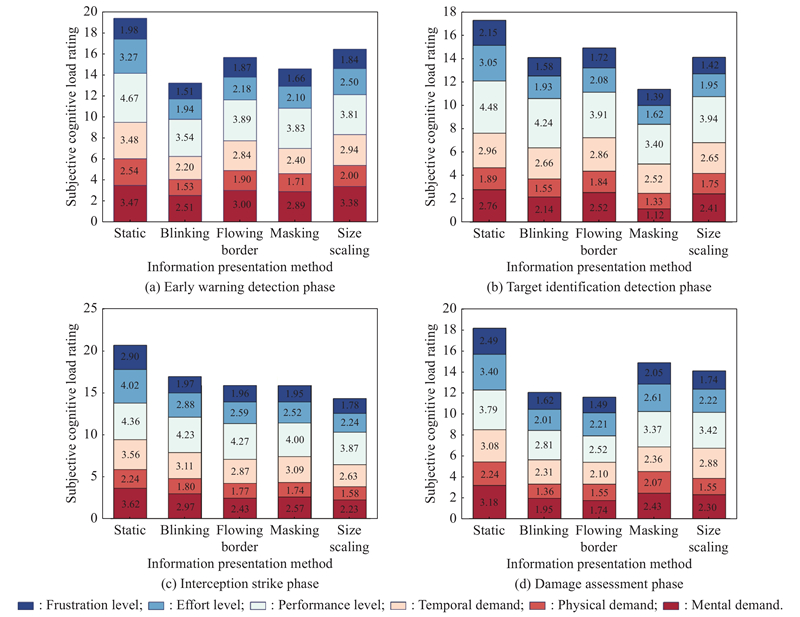
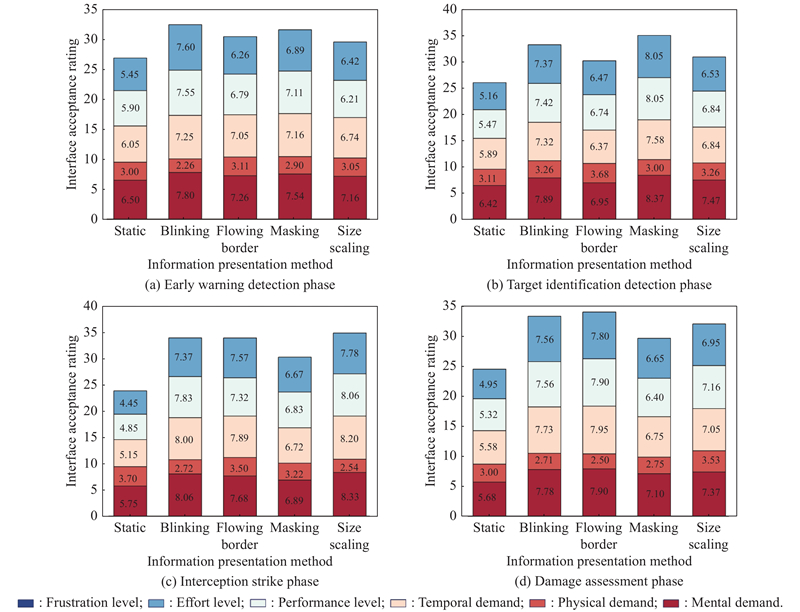
Fig 14
Bar charts of overall interface acceptance ratings by mission phase"
| 1 | Wang W, Zhu Y S, Wang Q L, et al Research on information fusion method for human computer interaction interface of command and control system in MR environment. International Journal of Human-Computer Interaction, 2024, 41 (4): 2052. |
| 2 | Zhuang T, Liu X, Geng Z Research on optimization problem of surface-to-air missile weapon system against cruise missile deployment based on complex battlefield environment. Military Operations Research and Evaluation, 2024, 39 (1): 75. |
| 3 |
Jiao Z Q, Yao P Y, Zhang J Y, et al MAV/UAV task coalition phased-formation method. Journal of Systems Engineering and Electronics, 2019, 2 (30): 402.
doi: 10.21629/jsee.2019.02.18 |
| 4 | Chen D, Wang J Intuitionistic fuzzy set-based threat assessment for air defense combat targets. Journal of Detection and Control, 2019, 41 (4): 46. |
| 5 | Guo F. Human factors engineering [M]. Xi’an: Northeastern University Press, 2001. (in Chinese) |
| 6 | Cowan N George Miller’s magical number of immediate memory in retrospect: observations on the faltering progression of science. Psychological Review, 2015, 122 (3): 536. |
| 7 | Hou Y T, Xia J J Research on icon design of interactive interface based on cognitive load theory. Industrial Design, 2023, (6): 27. |
| 8 | Cui Y. Advertising icon design and communication conception under the condition of EEG and eye movement experiments-taking the Lingmei Omnimedia e-commerce platform mobile app as an example [C]//International Conference on Cyber Security Intelligence and Analytics. Cham: Springer, 2020: 1348. |
| 9 | Tang J, Tian C Z, Song M Research on optimization human-computer interaction design in the AWACS control system. Air & Space Defense, 2024, 7 (5): 90. |
| 10 | Niu X Research on the performance evaluation of display and interaction for multi-station task collaborative UAVs. Fire Control & Command Control, 2023, 48 (4): 72. |
| 11 |
Al-Samarraie H, Sarsam S M, Umar I N Visual perception of multi-column-layout text: insight from repeated and non-repeated reading. Behaviour & Information Technology, 2016, 36 (1): 1.
doi: 10.1080/0144929x.2016.1196502 |
| 12 | Wu X L, Chen Y Correlation between error factors, visual perception, and interface layout-taking digital instrument control equipment of nuclear power safety injection system as an optimization example. International Journal of Pattern Recognition and Artificial Intelligence, 2020, 34 (5): 2055012. |
| 13 | Fan X L, Zhou Q X, Liu Z Q Principle of plane display interface design based on visual search. Journal of Beijing University of Aeronautics and Astronautics, 2015, 41 (2): 216. |
| 14 | Liu T Design of navigation display interface for agricultural machinery based on visual attention mechanism. Journal of Agricultural Mechanization Research, 2024, 46 (11): 110. |
| 15 | Lu M, Fish N, Wang S Q, et al Enhancing static charts with data-driven animations. IEEE Trans. on Visualization and Computer Graphics, 2022, 28 (7): 2628. |
| 16 | Yoo S, Jeong S, Kim S, et al Saliency-based gaze visualization for eye movement analysis. Sensors, 2021, 21 (15): 5178. |
| 17 | Xue C Q. Design methods and applications for digital interfaces in human-computer interaction of complex information systems [M]. Nanjing, China: Southeast University Press, 2015. |
| 18 | Theeuwes J Top-down and bottom-up control of visual selection. Acta Psychological, 2010, 135 (2): 77. |
| 19 | Folk C L, Remington R W Selectivity in distraction by irrelevant featural singletons: evidence for two forms of attentional capture. Journal of Experimental Psychology: Human Perception & Performance, 1998, 24 (3): 847. |
| 20 | Wang H Y The phenomenon of involuntary attentional shift: stimulus-driven attentional capture. Journal of Changchun Normal University, 2020, 39 (5): 29. |
| 21 | Roque N A, Wright T J. Boot W R. Do different attention capture paradigms measure different types of capture? [J]. Atten Percept Psychophys, 2016, 78: 2014. |
| 22 | Nikolic M I, Orr J, Sarter N B. The effects of display context on the effectiveness of visual onsets for attention capture [C]// 20th Digital Avionics Systems Conference, 2001. |
| 23 | Imbert J P, Hodgetts H M, Parise R, et al Attentional costs and failures in air traffic control notifications. Ergonomics, 2014, 57 (12): 1817. |
| 24 | Li J, Yu S L, Wu X L Effects of shape character encodings in the human-computer interface on visual cognitive performance. Journal of Computer-Aided Design & Computer Graphics, 2018, 30 (1): 163. |
| 25 | Lu Y K. Research on visualization of complex information system based on visual attention capture [D]. Nanjing University of Aeronautics and Astronautics, 2020. (in Chinese) |
| 26 | Wu X L. Study on error-cognition mechanism of task interface in complex information system [D]. Southeast University, 2015. (in Chinese) |
| 27 | Kaeppler K Crossmodal associations between olfaction and vision: color and shape visualizations of odors. Chemosensory Perception, 2018, 11 (2): 95. |
| 28 | Szafir D A Modeling color difference for visualization design. IEEE Trans. on Visualization & Computer Graphics, 2017, 24 (1): 392. |
| 29 | Zhang G Y, Sun J, Gong J H, et al Exploration of visual variable guidance in outdoor augmented reality geovisualization. International Journal of Digital Earth, 2023, 16 (2): 4095. |
| 30 | Jiang Z Y, Xin H W, Bi H K, et al Research on design of radar man-machine interaction software based on task role. Journal of Air Force Early Warning Academy, 2018, 32 (1): 66. |
| 31 | Bennett B K, Flach M J Visual momentum redux. International Journal of Human Computer Studies, 2012, 70 (6): 399. |
| 32 | Liu H L, Liu Y L Design on UAV interactive interface. Computer & Network, 2019, 45 (9): 66. |
| 33 | Mullet E, Chasseigne G Assessing information integration processes: a comparison of findings obtained with between-subjects designs versus within subjects designs. Quality & Quantity, 2018, 52 (4): 1977. |
| 34 | Feng Z L, Yang Z Visual coding design of augmented reality head-up display pedestrian warning system. Packaging Engineering, 2023, 44 (12): 126. |
| 35 | Chen C M, Tsao H W An instant perspective comparison system to facilitate learners’ discussion effectiveness in an online discussion process. Computers & Education, 2021, 164, 104037. |
| 36 | Jia H, Kim B K, Ge L Speed up, size down: how animated movement speed in product videos influences size assessment and product evaluation. Journal of Marketing, 2020, 84 (5): 100. |
| 37 | Ruthruff E, Faulks M, Maxwell J W, et al Attentional dwelling and capture by color singletons. Attention, Perception, & Psychophysics, 2020, 82 (6): 3048. |
| 38 | Stolte M, Ansorge U Automatic capture of attention by flicker. Attention, Perception, and Psychophysics, 2021, 83 (4): 1407. |
| No related articles found! |
| Viewed | ||||||
|
Full text |
|
|||||
|
Abstract |
|
|||||
