
Journal of Systems Engineering and Electronics ›› 2026, Vol. 37 ›› Issue (4): 1151-1160.doi: 10.23919/JSEE.2025.000038
• RADAR PERFORMANCE IMPROVEMENT USING BEYOND LINEAR SIGNAL PROCESSING • Previous Articles
Min Duan1,2( ), Xiaopeng Li1,2,*(), Lei Huang1,2(), Meng Hua3(), Qiang Li1,2()
Received:2024-10-10
Accepted:2025-03-03
Online:2026-08-18
Published:2026-09-03
Contact:
Xiaopeng Li
E-mail:2310433033@email.szu.edu.cn;x.p.li@szu.edu.cn;lhuang@szu.edu.cn;m.hua@imperial.ac.uk;liqiang@szu.edu.cn
Supported by:Min Duan, Xiaopeng Li, Lei Huang, Meng Hua, Qiang Li. 2D-DOA estimation for NLOS environments via intelligent reflecting surface[J]. Journal of Systems Engineering and Electronics, 2026, 37(4): 1151-1160.
Fig 1
One-pair-IRSs aided DOA estimation framework"
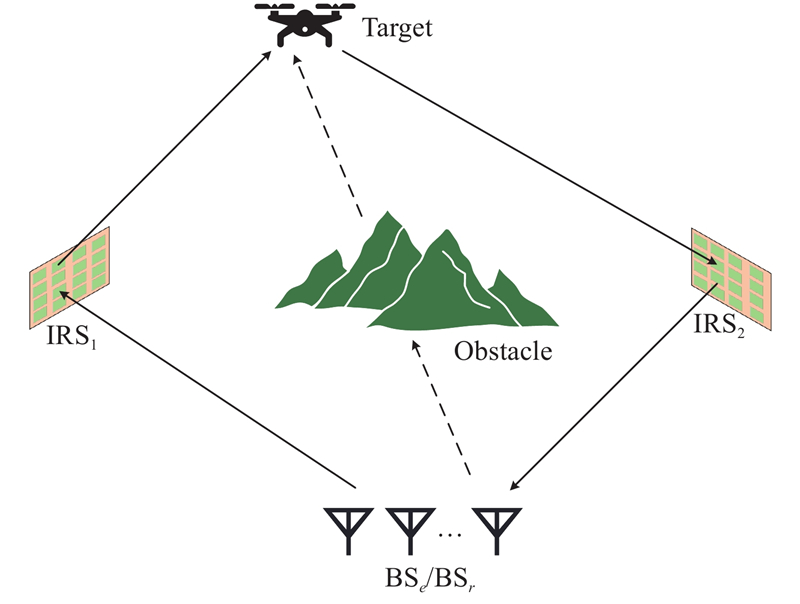
Fig 2
IRS-aided DOA estimation geometric model"
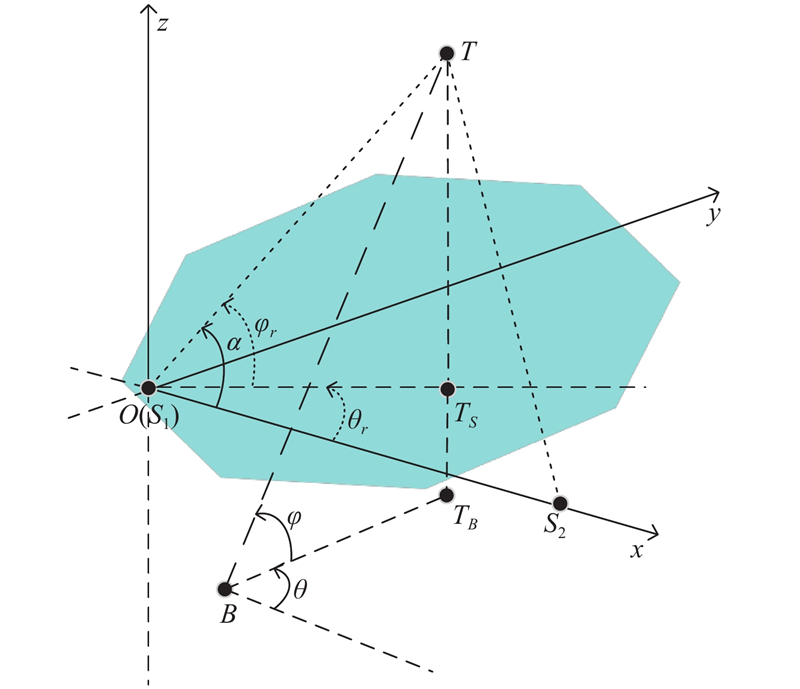
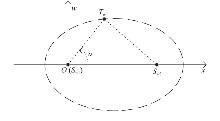
Fig 3
IRS-aided DOA estimation ellipse model"
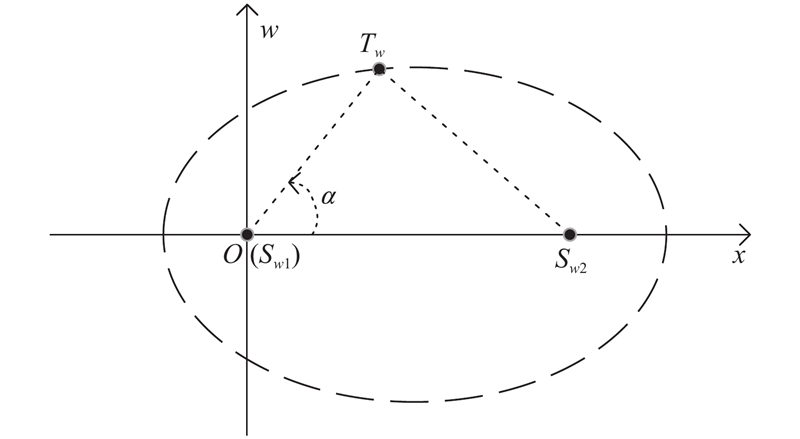
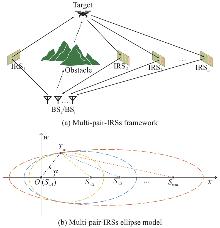
Fig 4
Multi-IRSs aided DOA estimation framework"
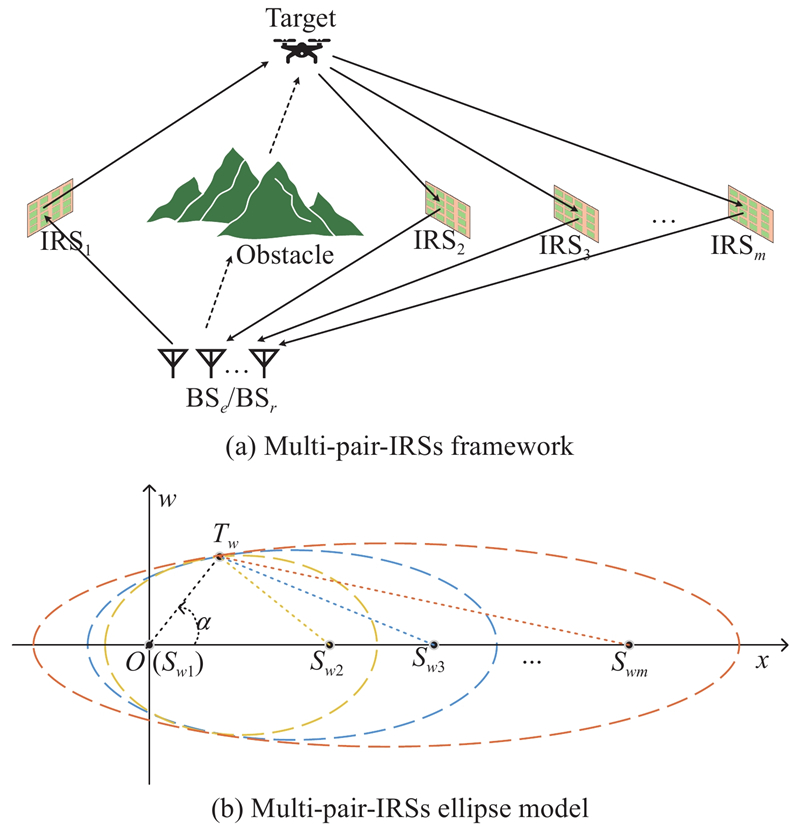
Fig 5
$ {\bf MAE}_{{\boldsymbol{\theta}}} $ and $ {\bf MAE}_{{\boldsymbol{\varphi}}} $ versus $ {\boldsymbol{e}} $ with $ {\boldsymbol{\varDelta}} = {\boldsymbol{1}}^\circ $"
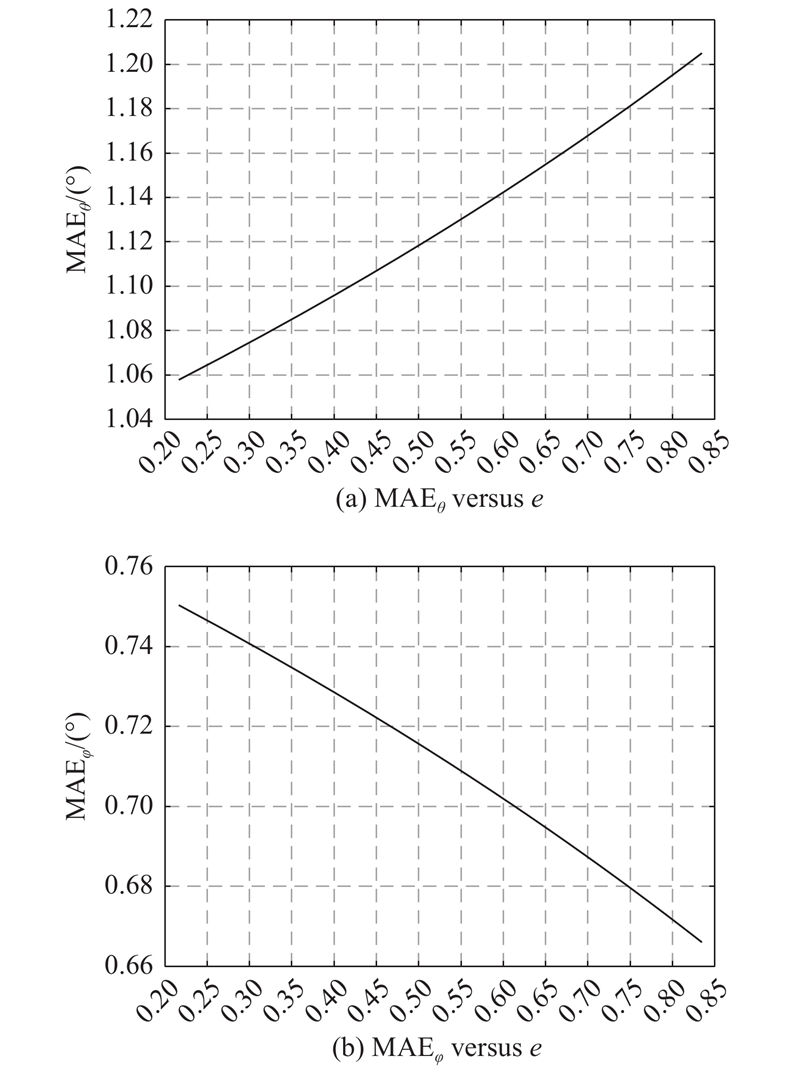
Fig 6
$ {\bf MAE}_{{\boldsymbol{\theta}}} $ and $ {\bf MAE}_{{\boldsymbol{\varphi}}} $ versus ${\boldsymbol{ M}} $ with ${\boldsymbol{ \varDelta}} {\boldsymbol{=}} {\boldsymbol{1}}^\circ $"
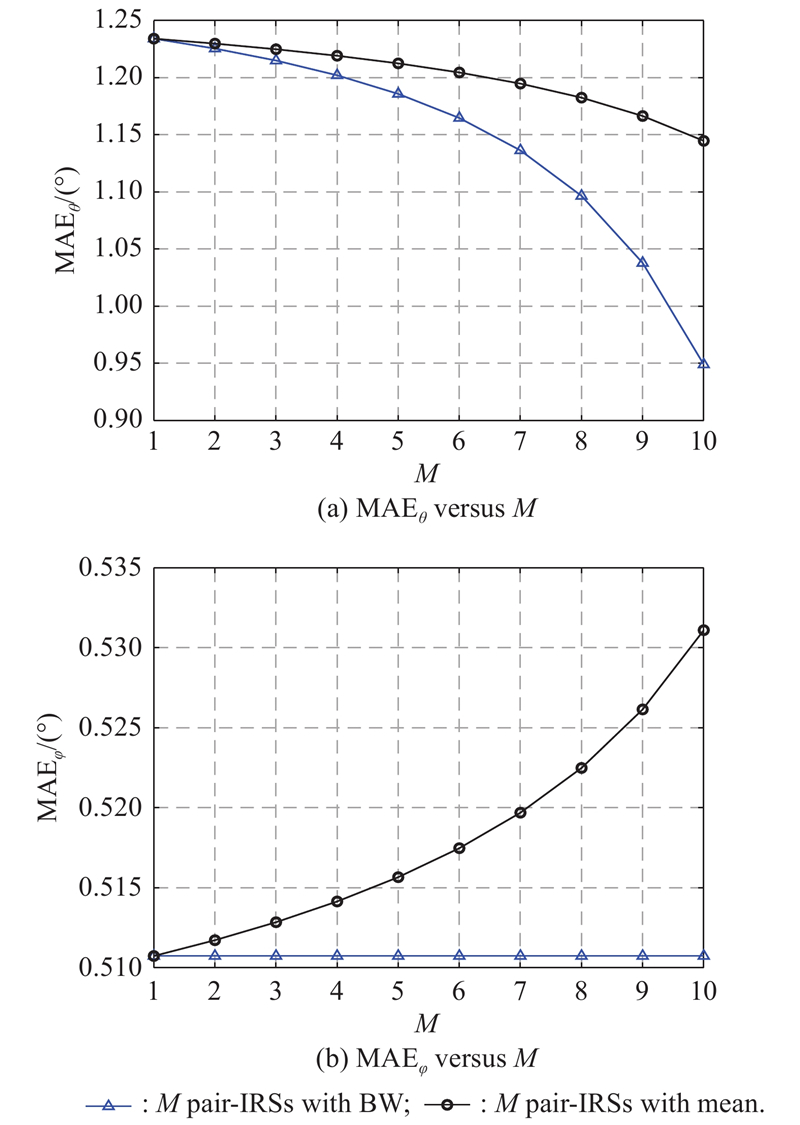
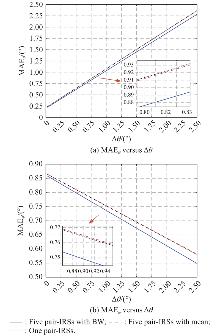
Fig 7
$ {\bf MAE}_{{\boldsymbol{\theta}}} $ and $ {\bf MAE}_{{\boldsymbol{\varphi}}} $ versus ${\boldsymbol{ \Delta}}{\boldsymbol{ \theta}} $ with $ {\boldsymbol{\Delta \varphi}} {\boldsymbol{= 1}}^\circ $ and $ {\boldsymbol{M=5}} $"
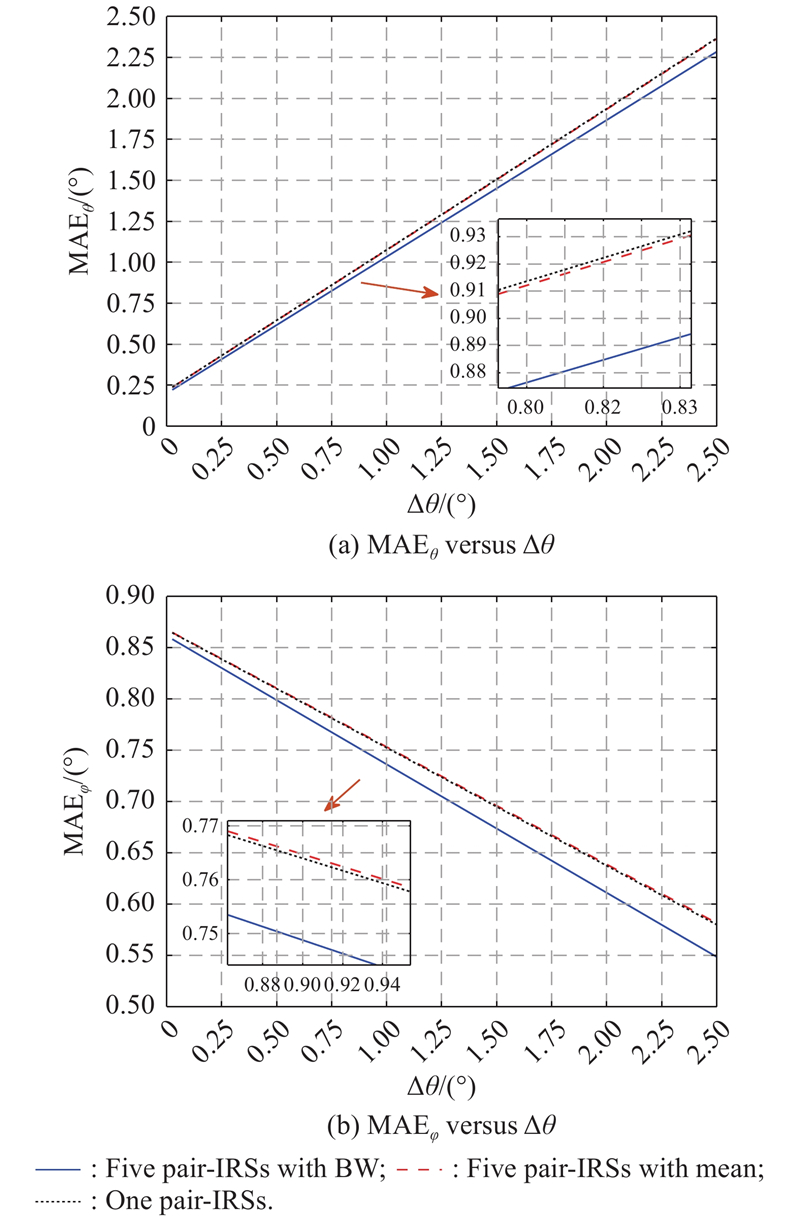
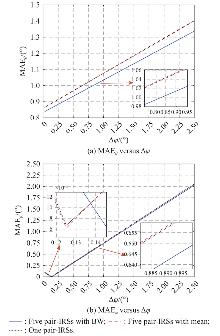
Fig 8
$ {\bf MAE}_{{\boldsymbol{\theta}}} $ and $ {\bf MAE}_{{\boldsymbol{\varphi}}} $ versus ${\boldsymbol{ \Delta \varphi}} $ with ${\boldsymbol{ \Delta \theta = 1}}^\circ $ and $ {\boldsymbol{M=5}} $"
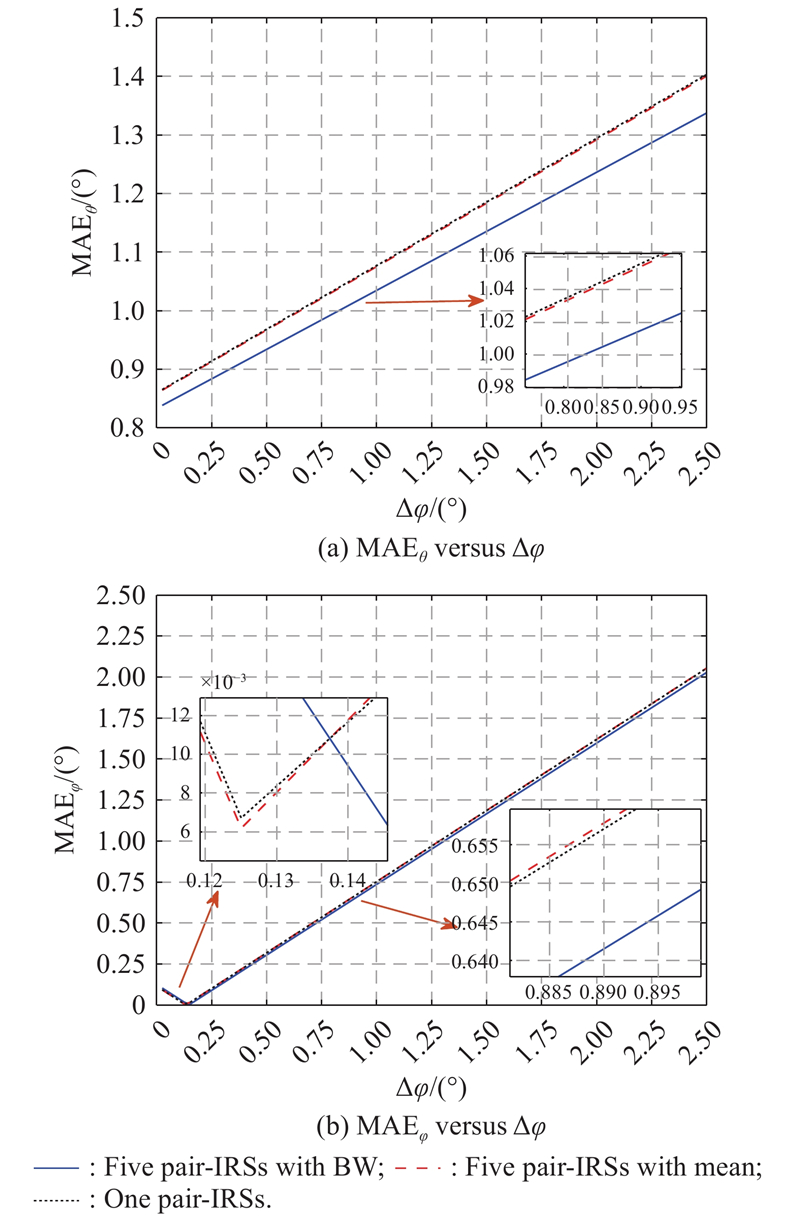
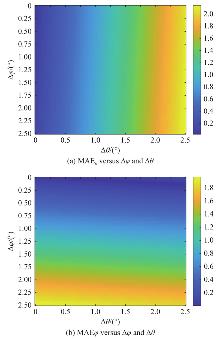
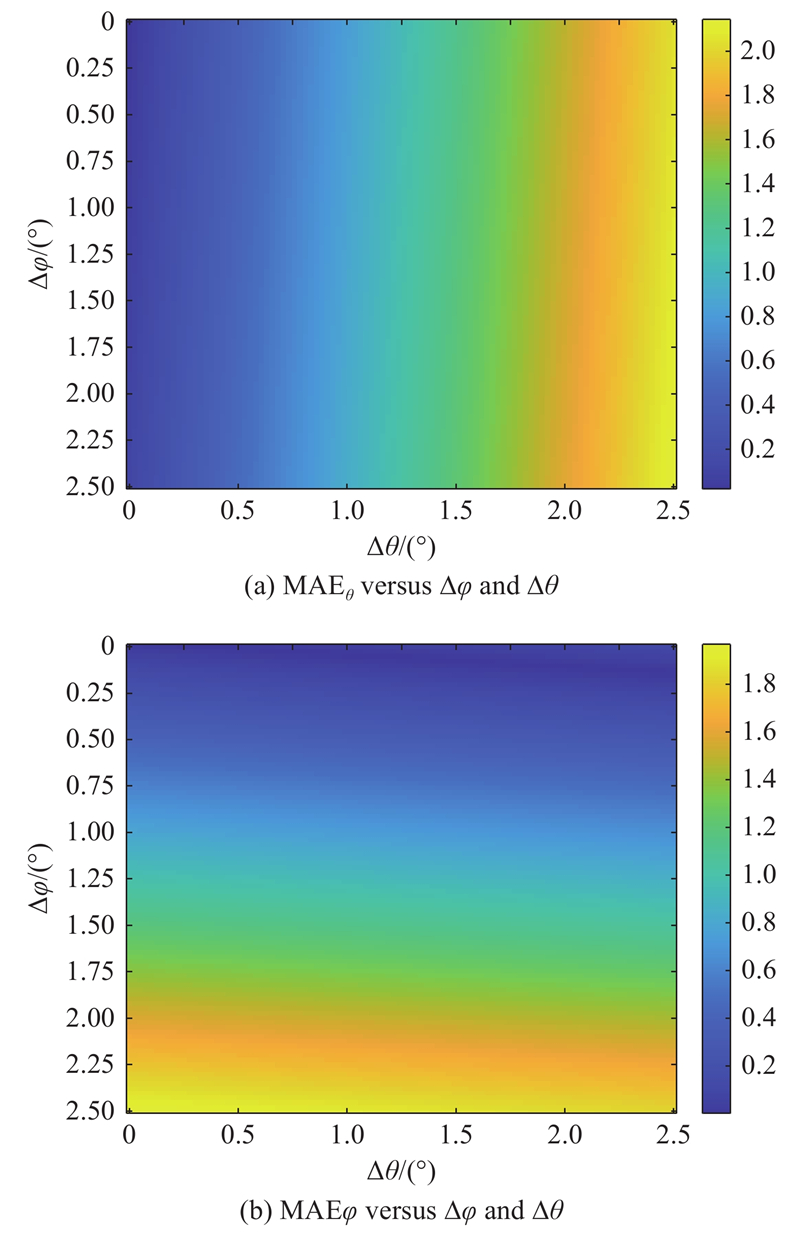
Fig 9
$ {\bf MAE}_{{\boldsymbol{\theta}}} $ and $ {\bf MAE}_{{\boldsymbol{\varphi}}} $ versus $ {\boldsymbol{\Delta}} $ with $ {\boldsymbol{M=5}} $"
| 1 |
Khabbazibasmenj A, Hassanien A, Vorobyov S A, et al Efficient transmit beamspace design for search-free based DOA estimation in MIMO radar. IEEE Trans. on Signal Processing, 2014, 62 (6): 1490.
doi: 10.1109/TSP.2014.2299513 |
| 2 |
Ghelfi P, Laghezza F, Scotti F, et al A fully photonics-based coherent radar system. Nature, 2014, 507 (7492): 341.
doi: 10.1038/nature13078 |
| 3 |
Schmidt R Multiple emitter location and signal parameter estimation. IEEE Trans. on Antennas and Propagation, 1986, 34 (3): 276.
doi: 10.1109/TAP.1986.1143830 |
| 4 |
Rao B D, Hari K V S Performance analysis of root-MUSIC. IEEE Trans. on Acoustics, Speech, and Signal Processing, 1989, 37 (12): 1939.
doi: 10.1109/29.45540 |
| 5 |
Kundu D Modified MUSIC algorithm for estimating DOA of signals. Signal Processing, 1996, 48 (1): 85.
doi: 10.1016/0165-1684(95)00126-3 |
| 6 | Li X P, Liu Z, Shi Z L, et al. MUSIC with capped Frobenius norm: efficient robust direction-of-arrival estimator[J]. IEEE Trans. on Aerospace and Electronic Systems, 2023, 59(6): 8090. |
| 7 |
Zeng W J, So H C, Huang L ℓp-MUSIC: robust direction-of-arrival estimator for impulsive noise environments. IEEE Trans. on Signal Processing, 2013, 61 (17): 4296.
doi: 10.1109/TSP.2013.2263502 |
| 8 |
Roy R, Kailath T ESPRIT-estimation of signal parameters via rotational invariance techniques. IEEE Trans. on Acoustics, Speech, and Signal Processing, 1989, 37 (7): 984.
doi: 10.1109/29.32276 |
| 9 |
Qian C, Huang L, Sidiropoulos N D, et al Enhanced PUMA for direction-of-arrival estimation and its performance analysis. IEEE Trans. on Signal Processing, 2016, 64 (16): 4127.
doi: 10.1109/TSP.2016.2543206 |
| 10 | Zhang R, Xia W W, Yan F, et al A single-site positioning method based on TOA and DOA estimation using virtual stations in NLOS environment. China Communications, 2019, 16 (2): 146. |
| 11 | Guvenc I, Chong C C A survey on TOA based wireless localization and NLOS mitigation techniques. IEEE Communications Surveys & Tutorials, 2009, 11 (3): 107. |
| 12 |
Chan Y T, Tsui W Y, So H C, et al Time-of-arrival based localization under NLOS conditions. IEEE Trans. on Vehicular Technology, 2006, 55 (1): 17.
doi: 10.1109/TVT.2005.861207 |
| 13 |
Muirhead D, Imran M A, Arshad K A survey of the challenges, opportunities and use of multiple antennas in current and future 5G small cell base stations. IEEE Access, 2016, 4, 2952.
doi: 10.1109/ACCESS.2016.2569483 |
| 14 | Xu Z H, Guo S S, Chen J H, et al. Multi-domain features based NLOS target localization method for MIMO UWB radar[J]. IEEE Sensors Journal, 2023, 23(23): 29314. |
| 15 |
Basar E, Di Renzo M, De Rosny J, et al Wireless communications through reconfigurable intelligent surfaces. IEEE Access, 2019, 7, 116753.
doi: 10.1109/ACCESS.2019.2935192 |
| 16 | Jiang Z M, Rihan M, Zhang P, et al Intelligent reflecting surface aided dual-function radar and communication system. IEEE Systems Journal, 2021, 16 (1): 475. |
| 17 |
Chen H Y, Bai Y C, Wang Q, et al DOA estimation assisted by reconfigurable intelligent surfaces. IEEE Sensors Journal, 2023, 23 (12): 13433.
doi: 10.1109/JSEN.2023.3273862 |
| 18 | Wen F Q, Shi J P, Lin Y, et al. Joint DOD and DOA estimation for NLOS target using IRS-aided bistatic MIMO radar[J]. IEEE Trans. on Vehicular Technology, 2024, 73(10): 15798. |
| 19 | Chen Z, Tang J, Huang L, et al Robust target positioning for reconfigurable intelligent surface assisted MIMO radar system. IEEE Trans. on Vehicular Technology, 2023, 72 (11): 15098. |
| 20 |
Zhang G L, Zhang D H, Deng H Y, et al Practical passive indoor localization with intelligent reflecting surface. IEEE Trans. on Mobile Computing, 2024, 23 (12): 12477.
doi: 10.1109/TMC.2024.3414861 |
| 21 |
Zhang G L, Zhang D H, He Y, et al Multi-person passive WiFi indoor localization with intelligent reflecting surface. IEEE Trans. on Wireless Communications, 2023, 22 (10): 6534.
doi: 10.1109/TWC.2023.3244369 |
| 22 |
Yang L L, Meng F H, Zhang J, et al On the performance of RIS-assisted dual-hop UAV communication systems. IEEE Trans. on Vehicular Technology, 2020, 69 (9): 10385.
doi: 10.1109/TVT.2020.3004598 |
| 23 |
Hua M, Yang L X, Wu Q Q, et al UAV-assisted intelligent reflecting surface symbiotic radio system. IEEE Trans. on Wireless Communications, 2021, 20 (9): 5769.
doi: 10.1109/TWC.2021.3070014 |
| 24 |
Chen P, Chen Z M, Zheng B X, et al Efficient DOA estimation method for reconfigurable intelligent surfaces aided UAV swarm. IEEE Trans. on Signal Processing, 2022, 70, 743.
doi: 10.1109/TSP.2022.3146791 |
| 25 |
Swindlehurst A L, Zhou G, Liu R, et al Channel estimation with reconfigurable intelligent surfaces-a general framework. Proceedings of the IEEE, 2022, 110 (9): 1312.
doi: 10.1109/JPROC.2022.3170358 |
| 26 | Jeong S, Farhang A, Perovic N S, et al Low-complexity joint CFO and channel estimation for RIS-aided OFDM systems. IEEE Wireless Communications Letters, 2021, 11 (1): 203. |
| 27 |
De Araújode G T, De Almeida A L F, Boyer R Channel estimation for intelligent reflecting surface assisted MIMO systems: a tensor modeling approach. IEEE Journal of Selected Topics in Signal Processing, 2021, 15 (3): 789.
doi: 10.1109/JSTSP.2021.3061274 |
| 28 |
Di Renzo M, Zappone A, Debbah M, et al Smart radio environments empowered by reconfigurable intelligent surfaces: how it works, state of research, and the road ahead. IEEE Journal on Selected Areas in Communications, 2020, 38 (11): 2450.
doi: 10.1109/JSAC.2020.3007211 |
| 29 | Liu Y W, Liu X, Mu X D, et al Reconfigurable intelligent surfaces: principles and opportunities. IEEE Communications Surveys & Tutorials, 2021, 23 (3): 1546. |
| 30 | Wu Q Q, Zhang R Towards smart and reconfigurable environment: intelligent reflecting surface aided wireless network. IEEE Communications Magazine, 2019, 58 (1): 106. |
| 31 | Gong S, Lu X, Hoang D T, et al Toward smart wireless communications via intelligent reflecting surfaces: a contemporary survey. IEEE Communications Surveys & Tutorials, 2020, 22 (4): 2283. |
| 32 |
Huang C, Zappone A, Alexandropoulos G C, et al Reconfigurable intelligent surfaces for energy efficiency in wireless communication. IEEE Trans. on Wireless Communications, 2019, 18 (8): 4157.
doi: 10.1109/TWC.2019.2922609 |
| 33 | Zhang Z J, Dai L L, Chen X B, et al Active RIS vs. passive RIS: which will prevail in 6G?[J]. IEEE Trans. on Communications, 2022, 71 (3): 1707. |
| 34 |
Basar E Reconfigurable intelligent surface-based index modulation: a new beyond MIMO paradigm for 6G. IEEE Trans. on Communications, 2020, 68 (5): 3187.
doi: 10.1109/TCOMM.2020.2971486 |
| 35 | Hua M, Wu Q Q, Chen W, et al. Intelligent reflecting surface assisted localization: performance analysis and algorithm design[J]. IEEE Wireless Communications Letters, 2024, 13(1): 84. |
| 36 | Hua M, Chen G J, Meng K T, et al. 3D multi-target localization via intelligent reflecting surface: protocol and analysis[J]. IEEE Trans. on Wireless Communications, 2024, 23(11): 16527. |
| 37 | Wen F Q, Wang H, Gui G, et al. Polarized intelligent reflecting surface aided 2D-DOA estimation for NLOS sources[J]. IEEE Trans. on Wireless Communications, 2024, 23(7): 8085. |
| 38 | Xiong W X, Cheng G, Schindelhauer C, et al Robust matrix completion for elliptic positioning in the presence of outliers and missing data. IEEE Trans. on Geoscience and Remote Sensing, 2023, 61, 5105912. |
| 39 | Özdogan Ö, Björnson E, Larsson E G Intelligent reflecting surfaces: physics, propagation, and pathloss modeling. IEEE Wireless Communications Letters, 2019, 9 (5): 581. |
| 40 |
Pan C H, Zhou G, Zhi K D, et al An overview of signal processing techniques for RIS/IRS-aided wireless systems. IEEE Journal of Selected Topics in Signal Processing, 2022, 16 (5): 883.
doi: 10.1109/JSTSP.2022.3195671 |
| 41 |
Yang L, Yang J X, Xie W W, et al Secrecy performance analysis of RIS-aided wireless communication systems. IEEE Trans. on Vehicular Technology, 2020, 69 (10): 12296.
doi: 10.1109/TVT.2020.3007521 |
| 42 |
Wang J L, Fang J, Li H B, et al Intelligent reflecting surface-assisted NLOS sensing with OFDM signals. IEEE Trans. on Signal Processing, 2024, 72, 5322.
doi: 10.1109/TSP.2024.3498861 |
| 43 |
Rui L, Ho K C Elliptic localization: performance study and optimum receiver placement. IEEE Trans. on Signal Processing, 2014, 62 (18): 4673.
doi: 10.1109/TSP.2014.2338835 |
| [1] | Chao JIA, Caiping SONG, Lingyu WANG, Guolong CUI, Shisheng GUO, Jie GU, Yong JIA. Non-line-of-sight target localization in unknown L-shaped corridor based UWB MIMO radar [J]. Journal of Systems Engineering and Electronics, 2025, 36(3): 681-693. |
| [2] | Yashuai CAO, Tiejun LYU, Wei NI. Twin-timescale design for IRS-assisted MIMO system with outdated CSI [J]. Journal of Systems Engineering and Electronics, 2024, 35(6): 1380-1387. |
| [3] | Abdul Hayee SHAIKH, Xiaoyu DANG, Daqing HUANG. Triad-displaced ULAs configuration for non-circular sources with larger continuous virtual aperture and enhanced degrees of freedom [J]. Journal of Systems Engineering and Electronics, 2024, 35(1): 81-93. |
| [4] | Zhaoyu LIU, Wenli ZHANG, Jingyue ZHENG, Shisheng GUO, Guolong CUI, Lingjiang KONG, Kun LIANG. Non-LOS target localization via millimeter-wave automotive radar [J]. Journal of Systems Engineering and Electronics, 2023, 34(5): 1171-1181. |
| [5] | Tao WU, Zhenghong DENG, Xiaoxiang HU, Ao LI, Jiwei XU. DOA estimation of incoherently distributed sources using importance sampling maximum likelihood [J]. Journal of Systems Engineering and Electronics, 2022, 33(4): 845-855. |
| [6] | Ying CHEN, Xiang WANG, Zhitao HUANG. Underdetermined DOA estimation via multiple time-delay covariance matrices and deep residual network [J]. Journal of Systems Engineering and Electronics, 2021, 32(6): 1354-1363. |
| [7] | Fenggang Yan, Yi Shen, Ming Jin, and Xiaolin Qiao. Computationally efficient direction finding using polynomial rooting with reduced-order and real-valued computations [J]. Systems Engineering and Electronics, 2016, 27(4): 739-. |
| [8] | Hongqi Yu, David Day-Uei Li, Kun Zhang, Jietao Diao, and Haijun Liu. Wideband direction-of-arrival estimation based on cubic spline function [J]. Journal of Systems Engineering and Electronics, 2015, 26(4): 688-. |
| [9] | Lei Shen, Zhiwen Liu, Xiaoming Gou, and Yougen Xu. Polynomial-rooting based fourth-order MUSIC for direction-of-arrival estimation of noncircular signals [J]. Journal of Systems Engineering and Electronics, 2014, 25(6): 942-948. |
| [10] | Xiang Wang, Zhitao Huang, and Yiyu Zhou. Underdetermined DOA estimation and blind separation of non-disjoint sources in time-frequency domain based on sparse representation method [J]. Journal of Systems Engineering and Electronics, 2014, 25(1): 17-25. |
| Viewed | ||||||
|
Full text |
|
|||||
|
Abstract |
|
|||||
