
Journal of Systems Engineering and Electronics ›› 2026, Vol. 37 ›› Issue (3): 933-951.doi: 10.23919/JSEE.2026.000127
• SYSTEMS ENGINEERING • Previous Articles Next Articles
Yaodong WANG1,2( ), Yue CAO3(), Houman YU2(), Yusheng LIU1,*()
Received:2024-07-31
Online:2026-06-18
Published:2026-06-29
Contact:
Yusheng LIU
E-mail:yaodong1217@163.com;ycao@zjut.edu.cn;htq501@139.com;ysliu@cad.zju.edu.cn
Supported by:Yaodong WANG, Yue CAO, Houman YU, Yusheng LIU. An MBPLE-enabled architecture design method for remote sensing satellites[J]. Journal of Systems Engineering and Electronics, 2026, 37(3): 933-951.
Add to citation manager EndNote|Reference Manager|ProCite|BibTeX|RefWorks
Fig 1
Typical development process of RSS"
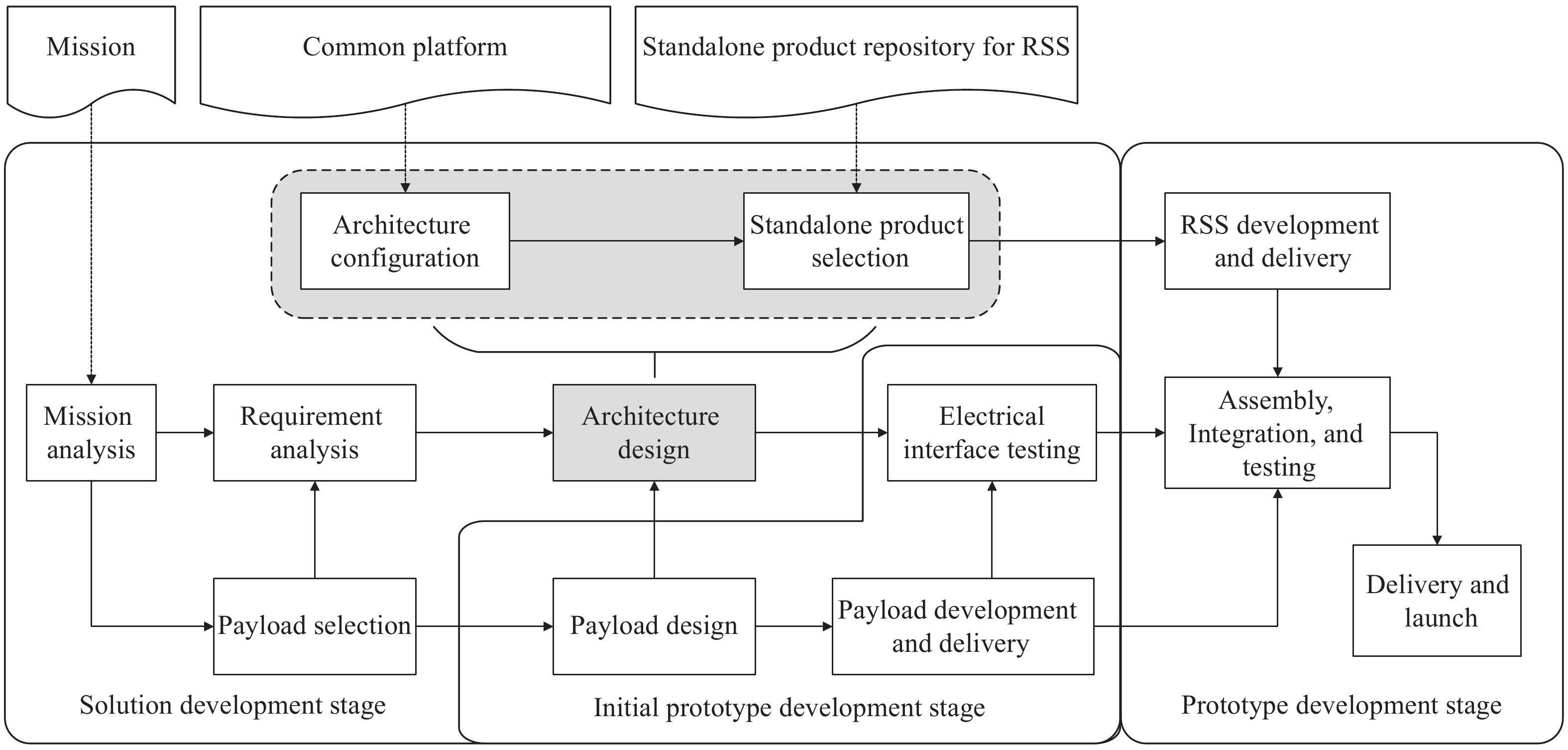
Fig 2
MBPLE basic idea"
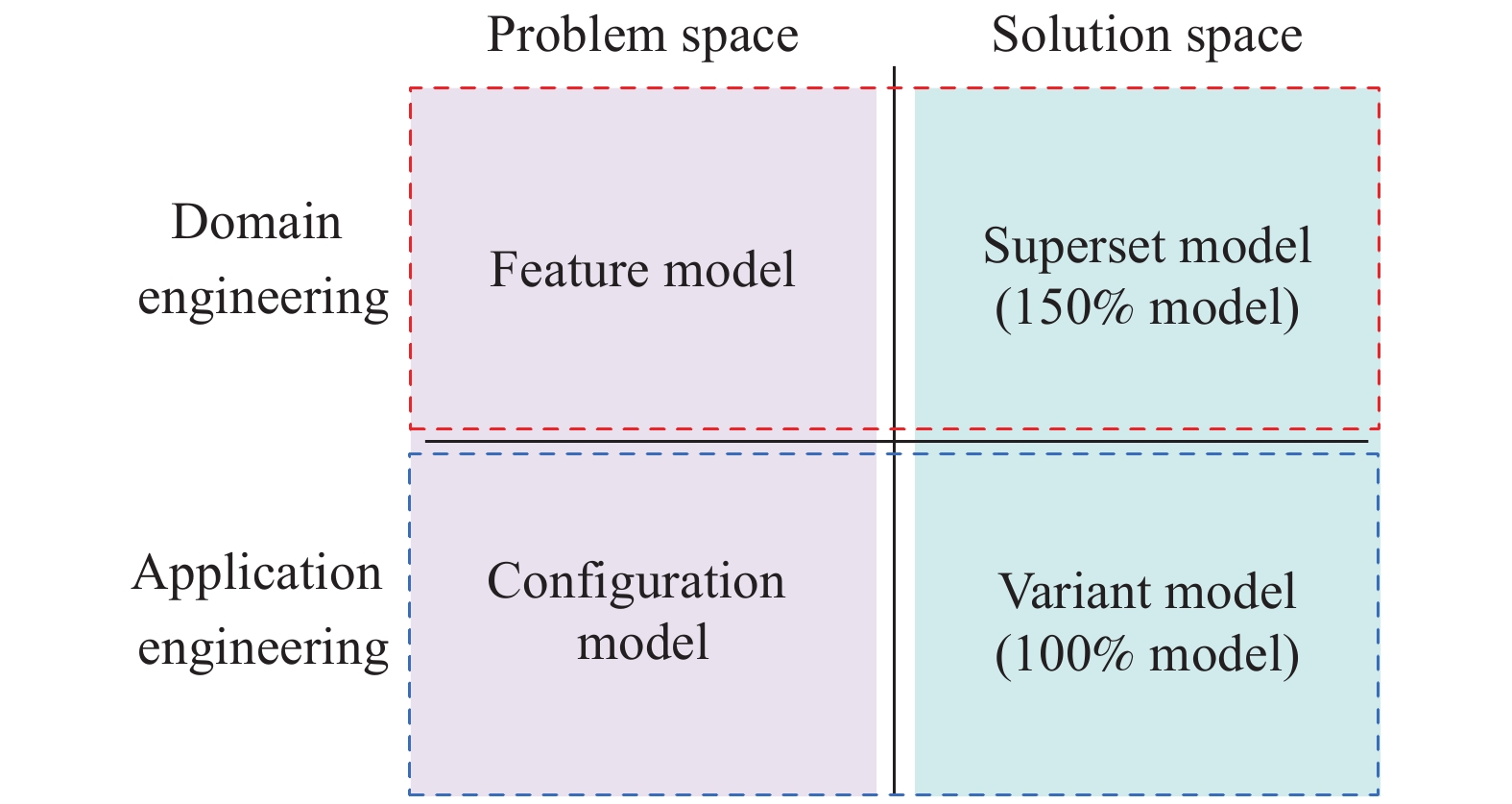
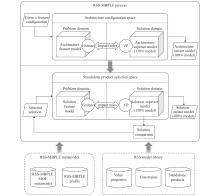
Fig 3
Method overview"
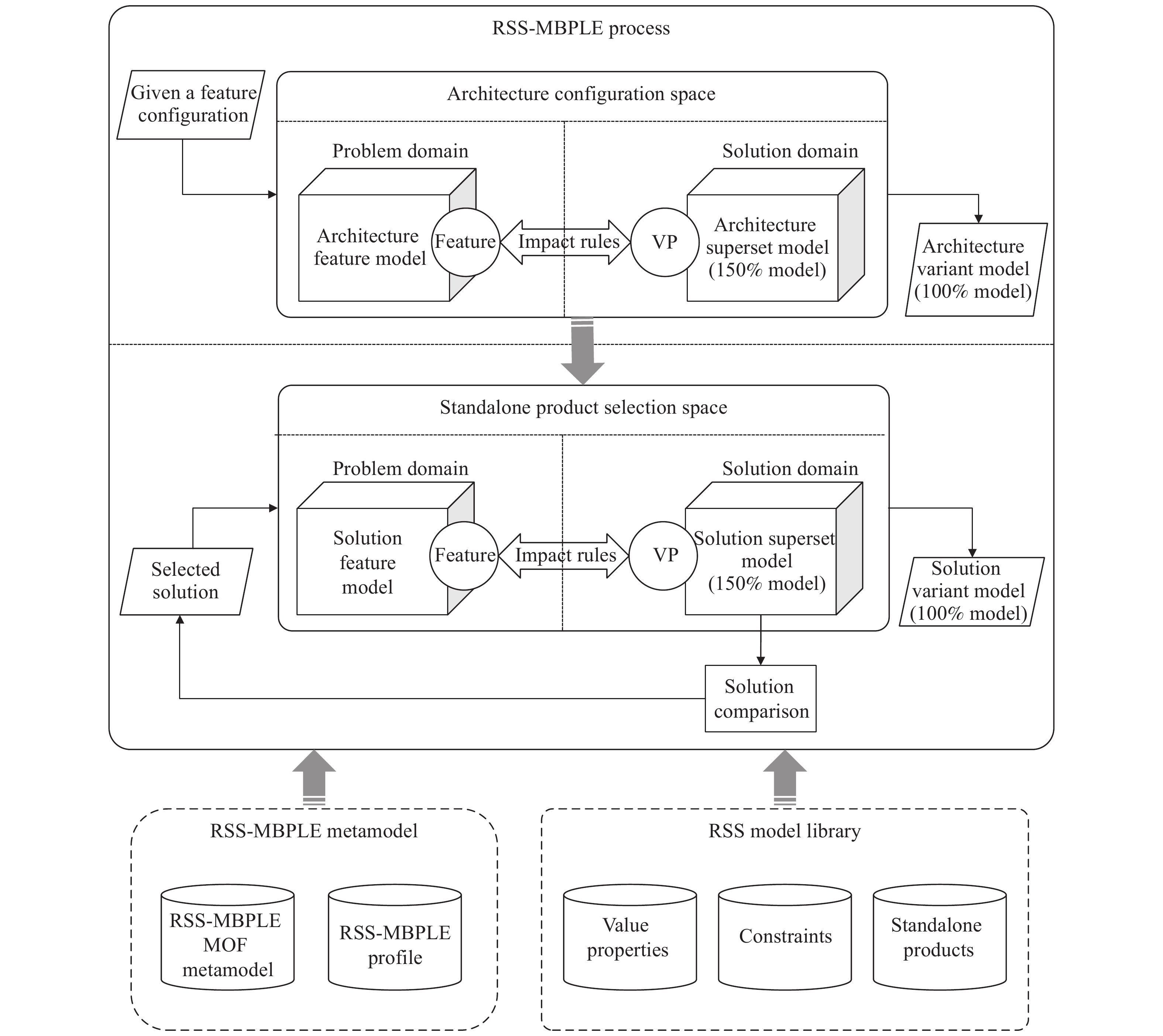
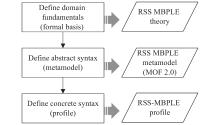
Fig 4
Overview of the domain modeling process"
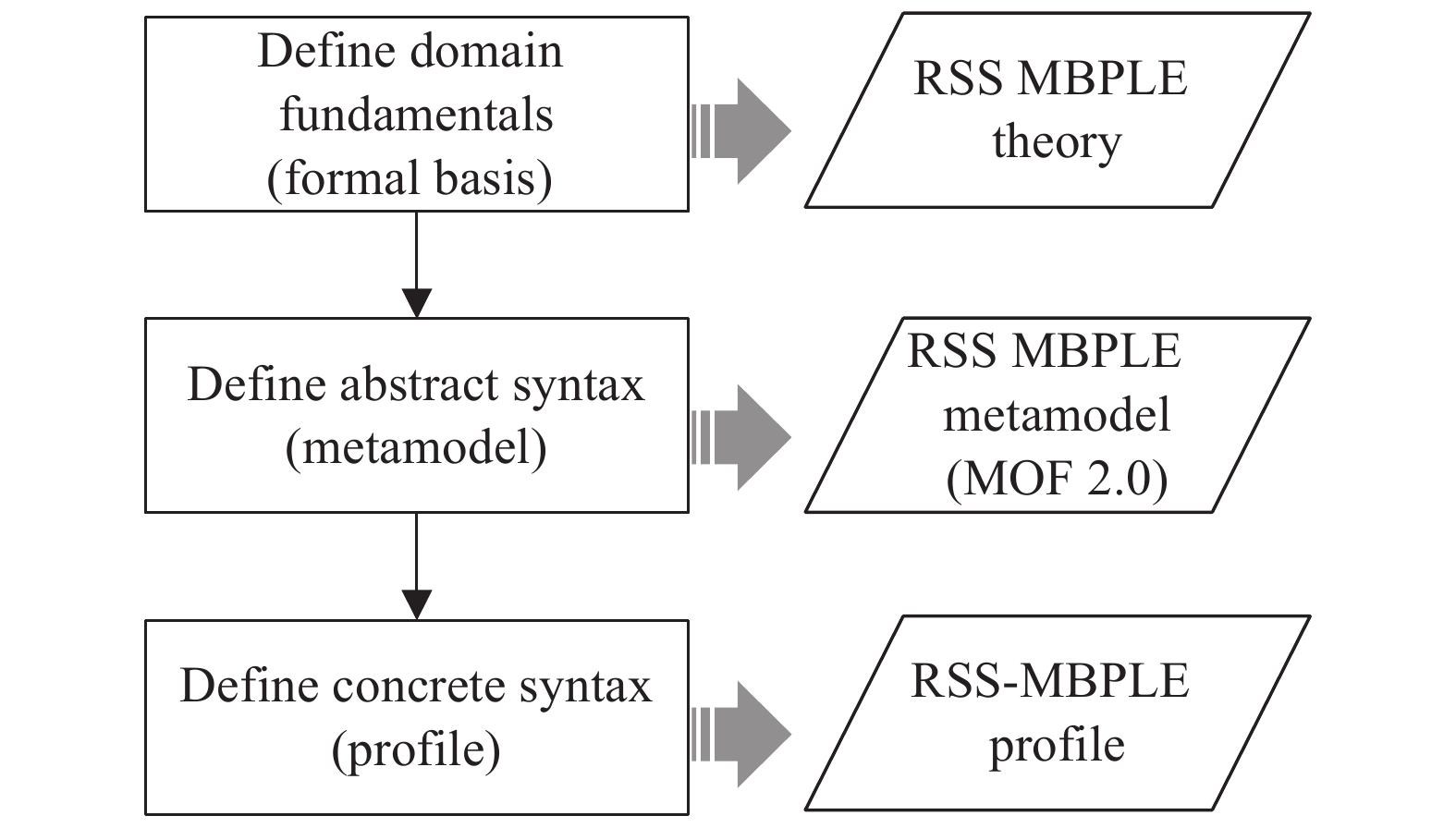
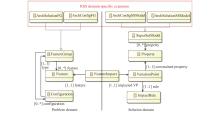
Fig 5
RSS-MBPLE metamodel"
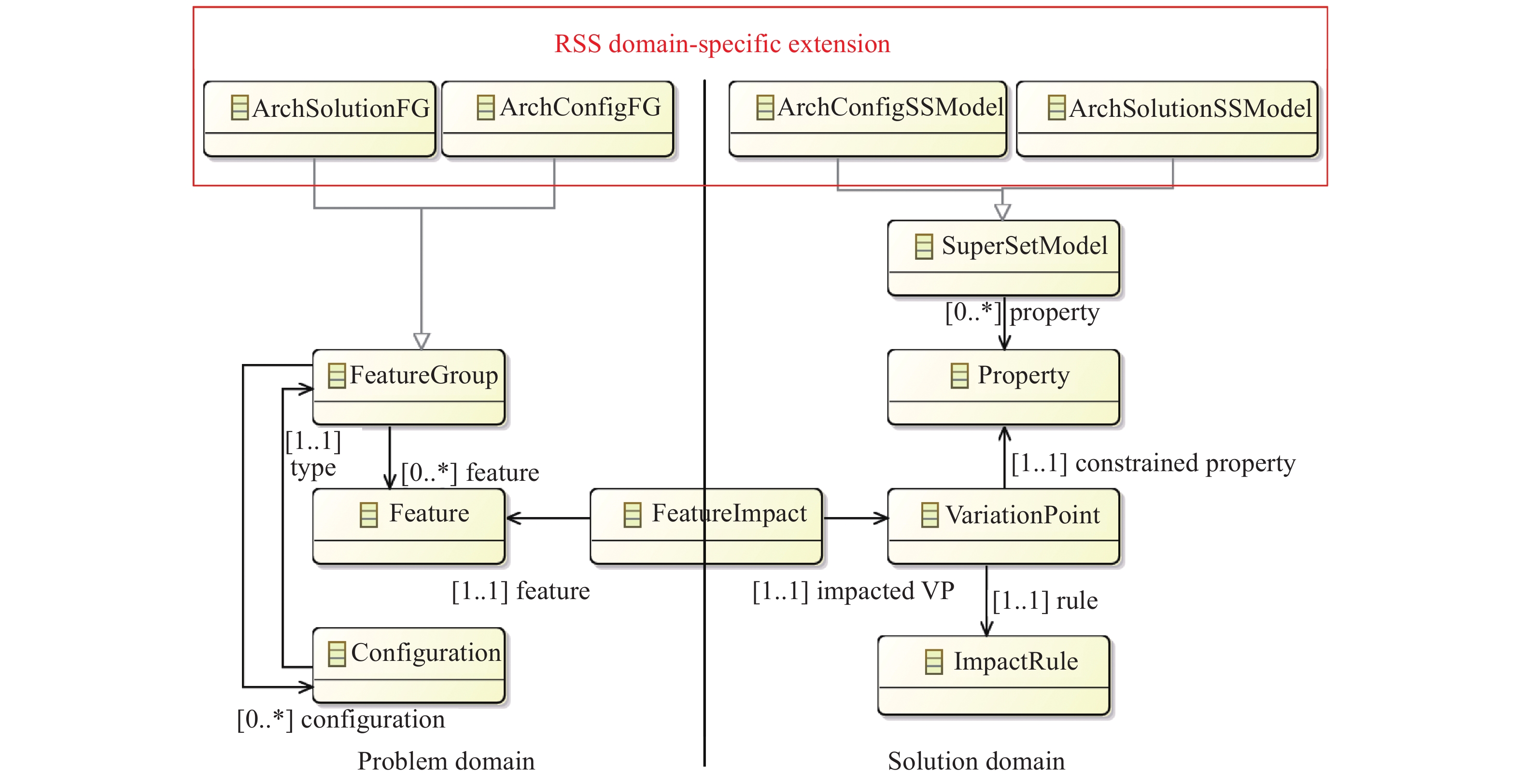
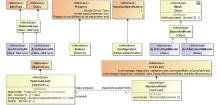
Fig 6
RSS-MBPLE profile"
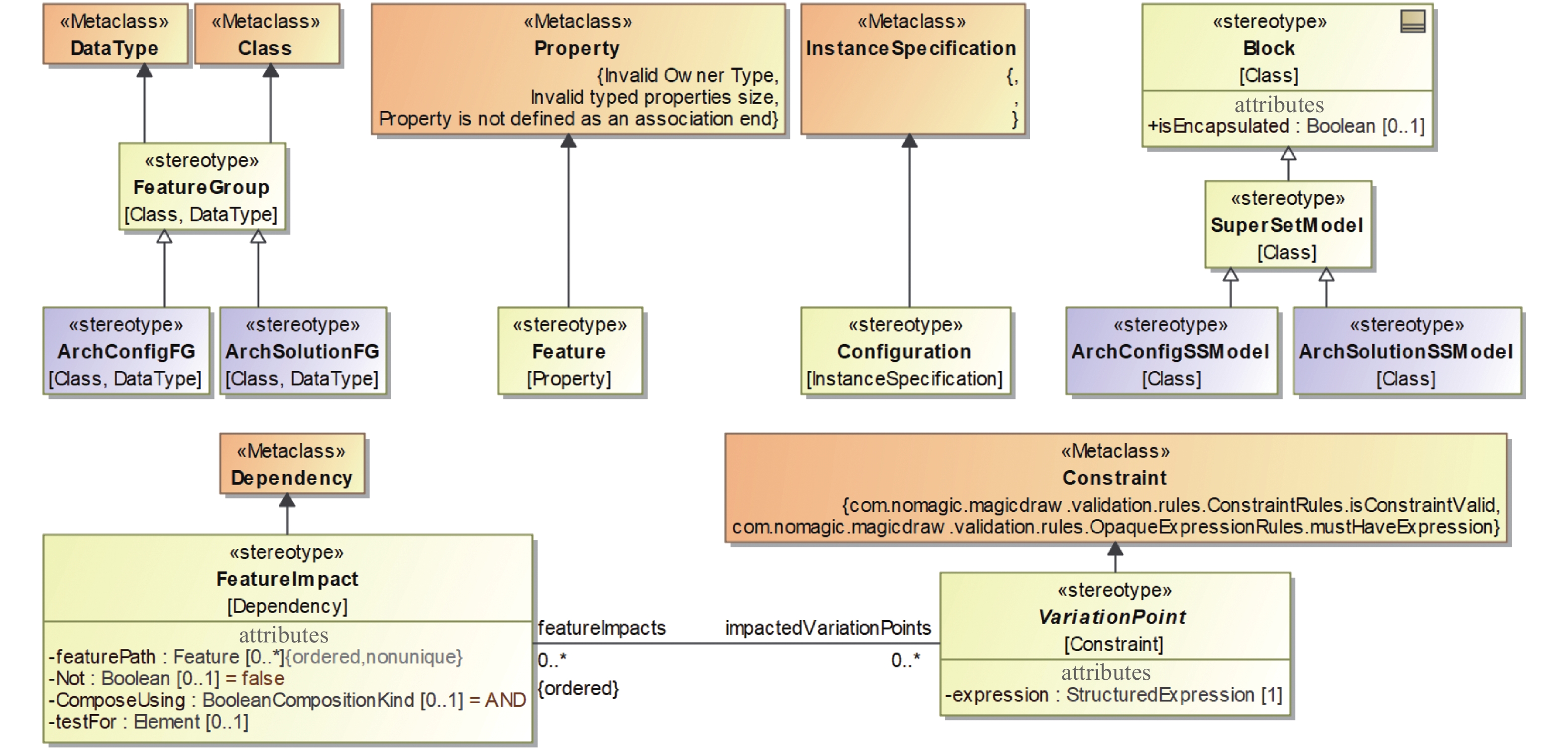
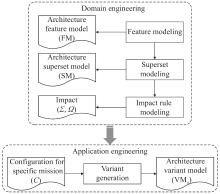
Fig 7
Architecture configuration process"
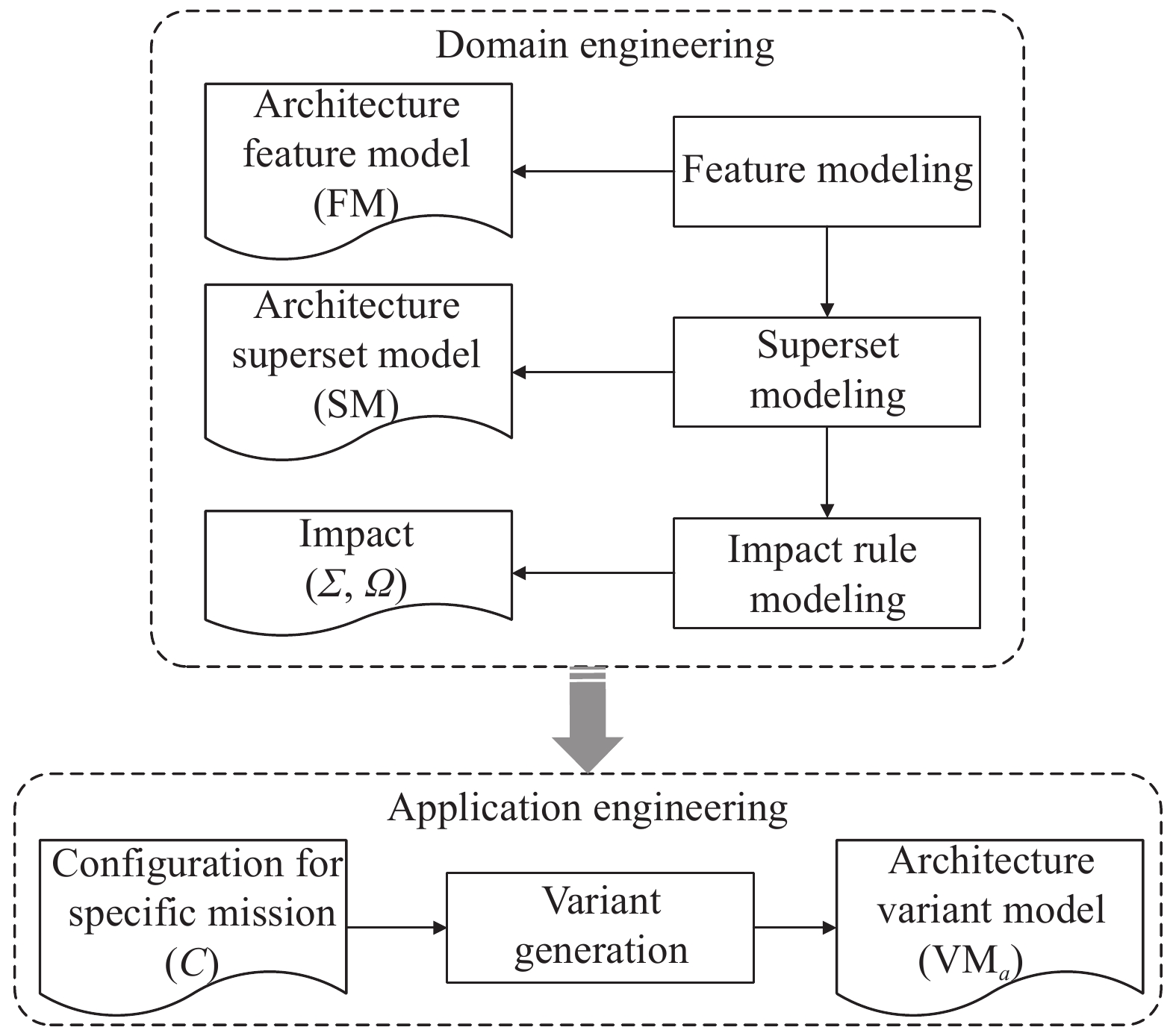
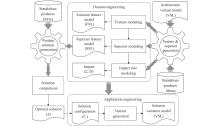
Fig 8
Solution selection process"
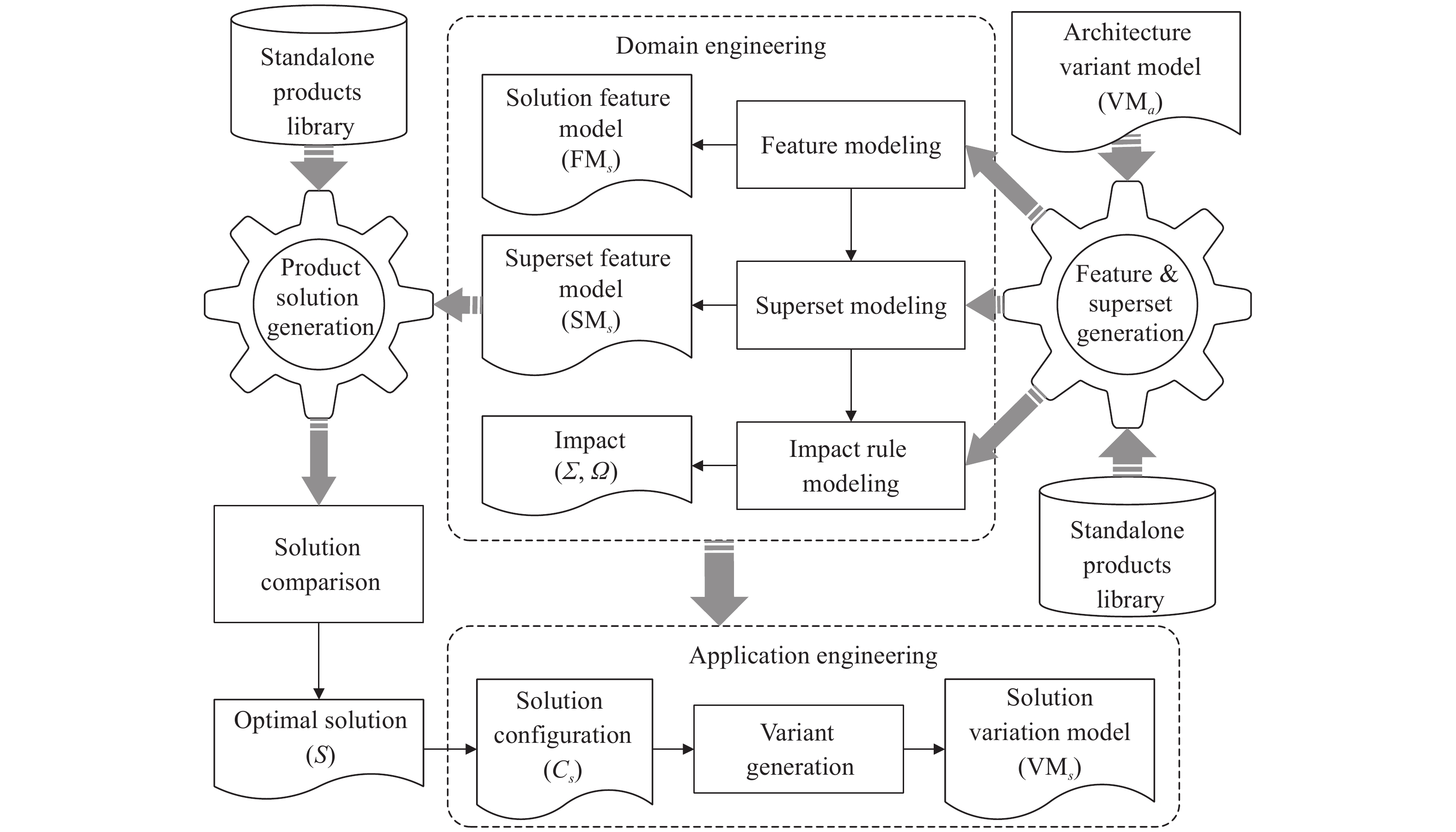
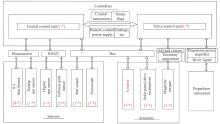
Fig 9
General architecture of the control subsystem"
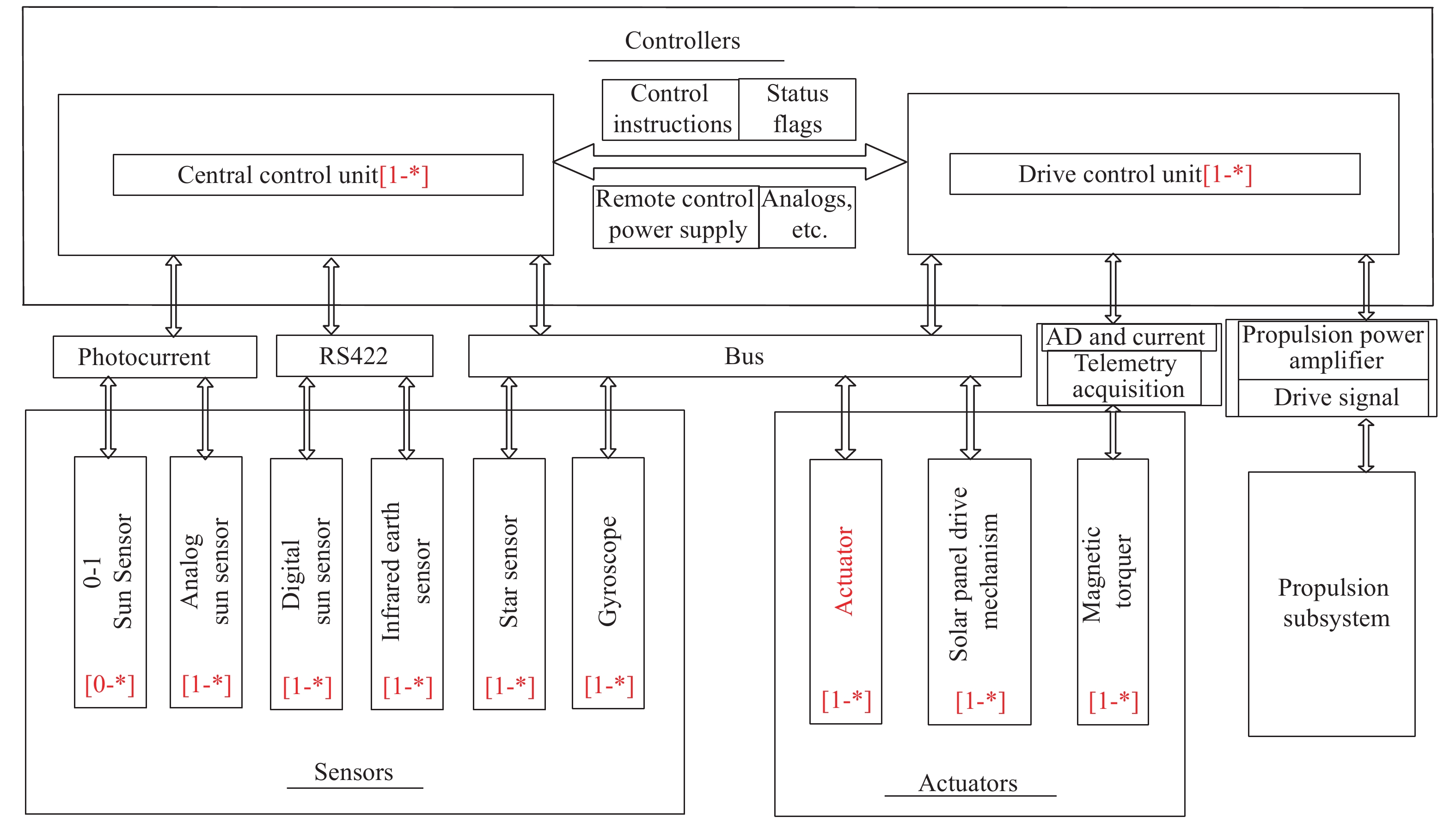
Table 1
Typical configurations of RSS"
| Typical configuration | Application description |
| Low orbit stable | Applicable to satellites working in low orbit in steady state or with general attitude maneuvering/side swinging capability |
| Low orbit agile | Applicable to satellites with high requirements for low orbit attitude maneuvering capability |
| Medium and high orbit stable | Applicable to satellites working in medium and high orbit in steady state or with general attitude maneuvering/side swinging capability |
| Medium, high, and low orbit agile | Applicable to medium, high, and low orbits, with high system integration, high-precision measurement, pointing, and rapid maneuvering capability can be achieved through the optional three-supervision platform, achieving comprehensive performance improvement |
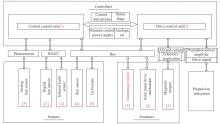
Fig 10
Typical configuration of low-orbit stable RSS control subsystem"
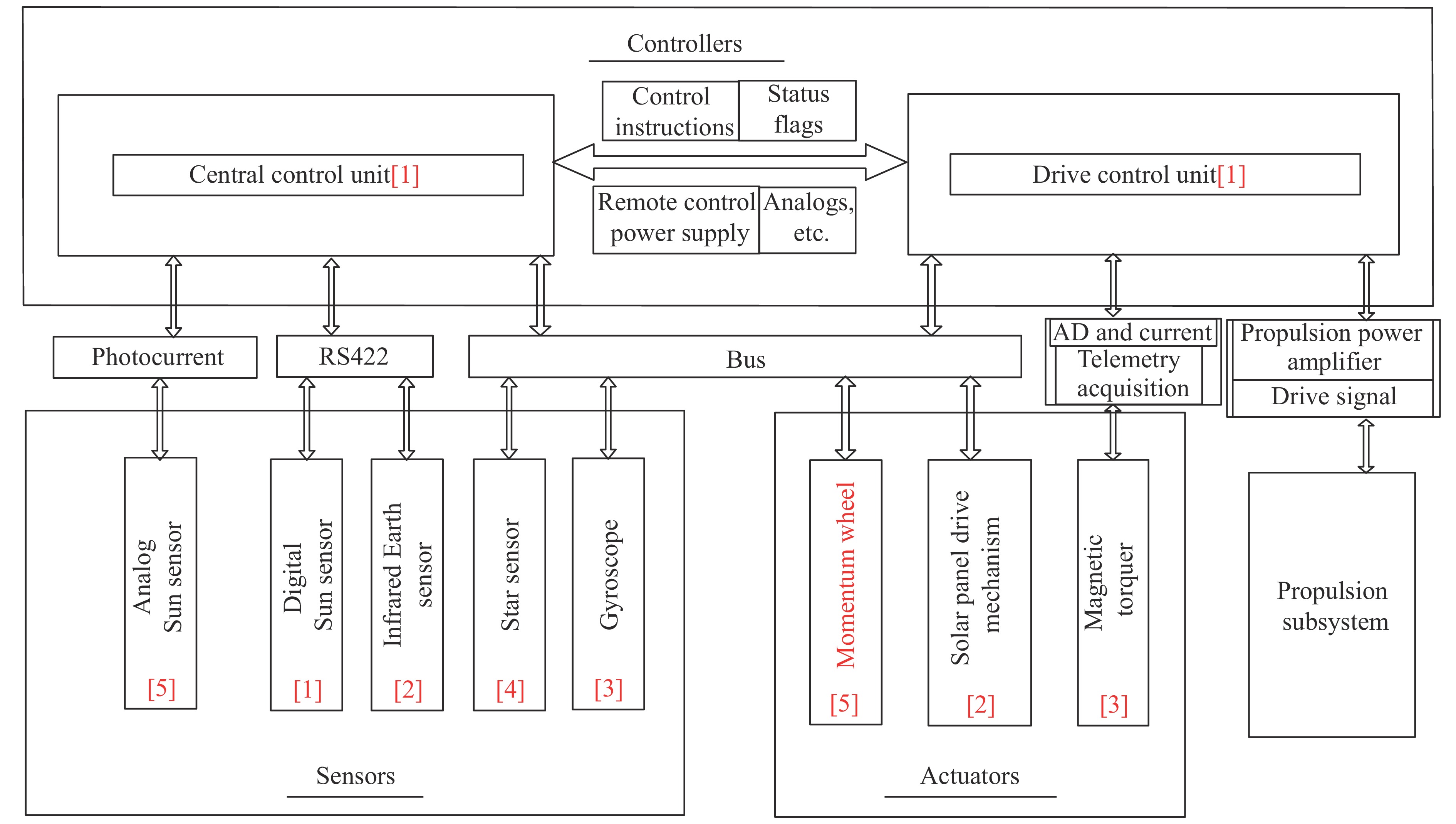
Table 2
List of available star sensor products"
| Number | Name | Product technical status | Application |
| 1 | High-precision star sensor APS VI type | Measurement accuracy (3σ): 3″(x/y), 25″(z) Optical axis thermal drift better than 0.3″/℃ Stray light suppression angle: 35° Dynamic performance: 3°/s Data update rate: 12 Hz Weight: probe 800g; line box 700g Power consumption: probe 1.8 W; line box 5W Power supply: 20−50 V, relay mode configurable Data interface: RS422, | Applicable to low, medium, and high orbits |
| 2 | High-precision star sensor APS II type | Measurement accuracy (3σ): When the absolute value of angular velocity is less than 0.1º/s, single head: x/y≤1"; z≤30" Two probes: When the installation angle is 90°, ≤0.7"(x/y); ≤0.7"(z) When the installation angle is 60°, ≤0.9"(x/y); ≤1.0"(z) Three probes: When the installation angle is 90°, ≤0.6"(x/y); ≤0.6"(z) When the installation angle is 60°, ≤0.8"(x/y); ≤1.0"(z) Optical axis thermal drift is better than 0.3″/℃ (15℃−25℃) Sunlight suppression angle 30° Earth-air light suppression angle 30° Dynamic performance: 2°/s Data update rate: 8 Hz Weight: Probe ≤3.7 kg, circuit box ≤7 kg Dimensions: Probe 156 mm×170 mm×392 mm Line box 144 mm×196 mm×258.5 mm Power consumption: Probe ≤4 W, Line box ≤45 W. Data interface: 1553B interface Power supply: +28−+42 V | Applicable to low, medium, and high orbits |
| 3 | Ultra-high precision star sensor APS I type | Field of view (°): 2×2; Sensitive magnitude (Mv): +10.5; Optical axis pointing accuracy (3σ): 0.3"; Update rate (Hz): 8; Dynamic performance (°/s): 0.2; Working temperature (℃): −30−+40; Sunlight suppression angle (°): 35; Body size (mm×mm×mm): Probe: 360×360 ×655; Line: 190×110 ×157; Weight (kg): Probe: to be determined; Line: to be determined; Electrical interface: RS422/1553B/LVDS; Power consumption (W): Probe: 2; Line: 10; Design life (a): 15; | Applicable to low, medium, and high orbits |
| 4 | Ultra-high precision star sensor APS II | Measurement accuracy (3σ): When angular velocity ≤0.1/s, better than 0.5″ (X/Y); Angular velocity 0.1−1 /s, better than 1″ (X/Y) Angular velocity 1−2/s, better than 2″ (X/Y) Angular velocity 2−5/s, better than 15″ (X/Y) Optical axis thermal drift is better than 0.1″/℃ (15℃−25℃) Sunlight suppression angle 30° Earth-air light suppression angle 30° Dynamic performance: 5°/s Data update rate: 8 Hz Weight: probe ≤5 kg, circuit box ≤10 kg Dimensions: probe 156 mm×170 mm×392 mm Circuit box 144 mm×196 mm×258.5 mm Power consumption: probe ≤4 W, circuit box ≤45 W. Data interface: 1553B interface Power supply: +28−+42 V | Applicable to low, medium orbits |
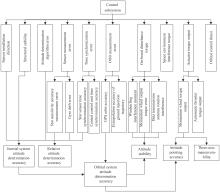
Fig 11
Decomposition of control subsystem indicators"
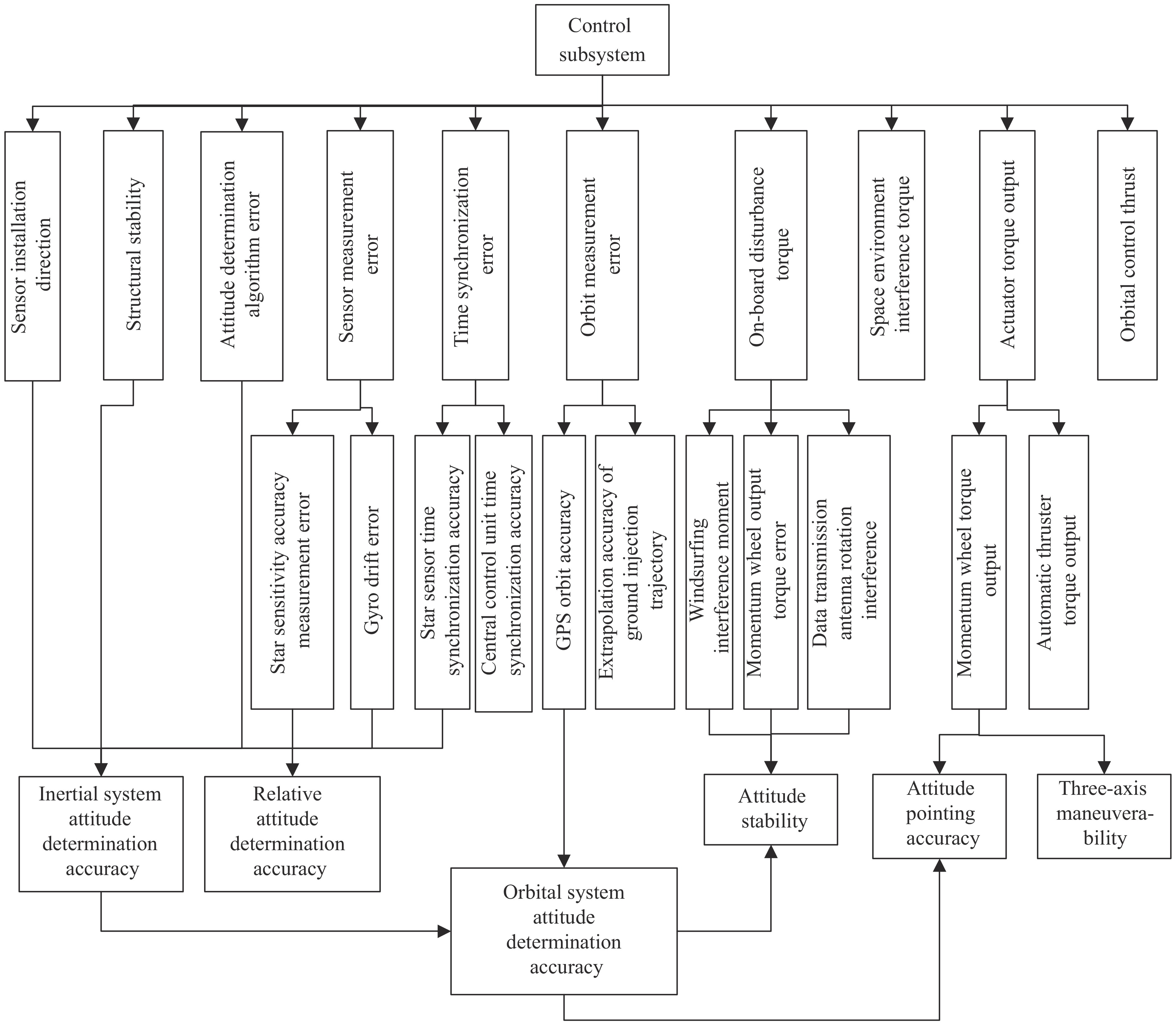
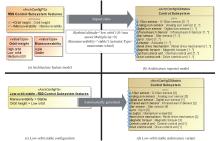
Fig 12
Control subsystem architecture configuration process"
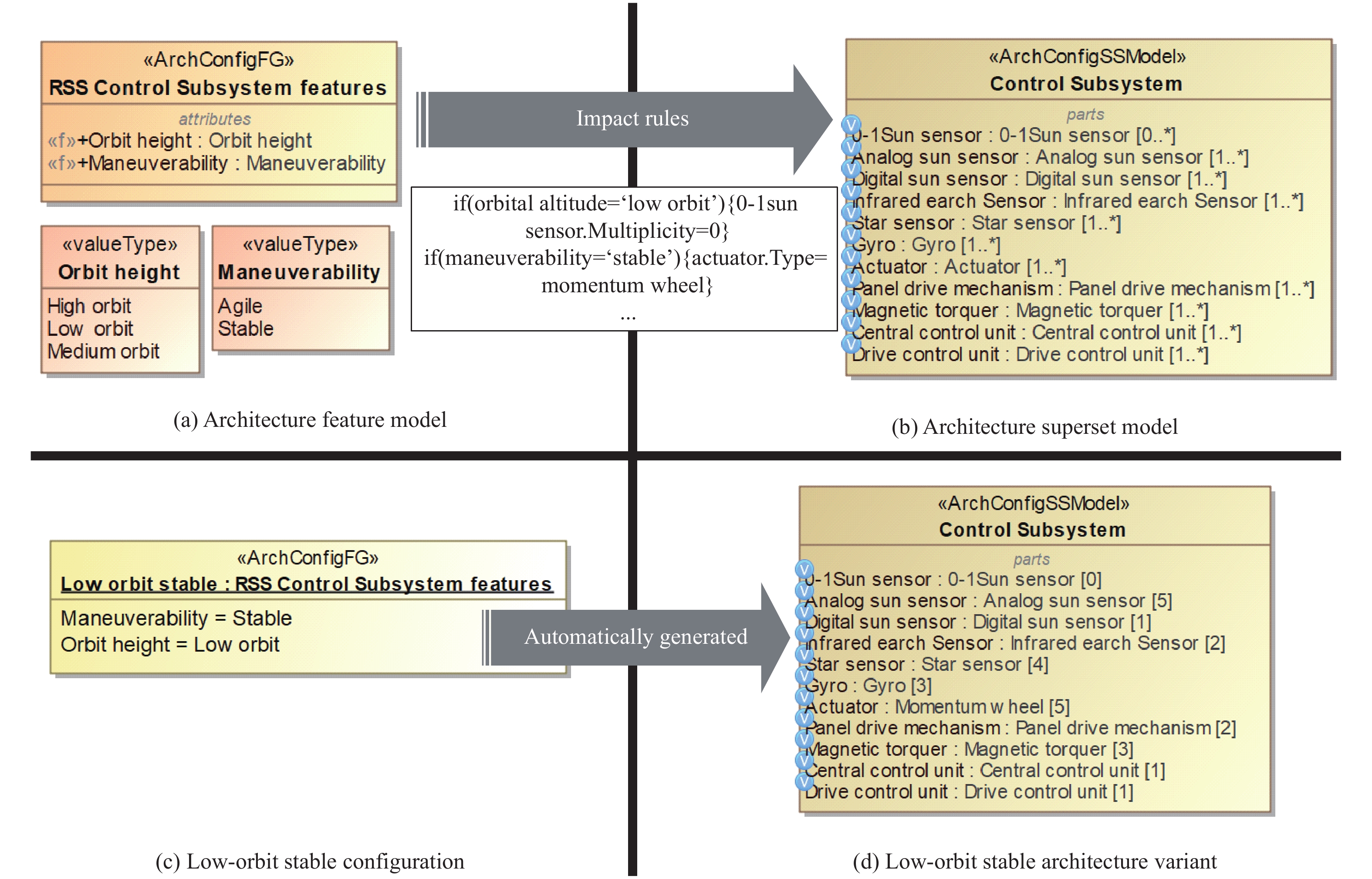
Fig 13
Control subsystem solution feature model and superset model"

Fig 14
Five solutions of the control subsystem"
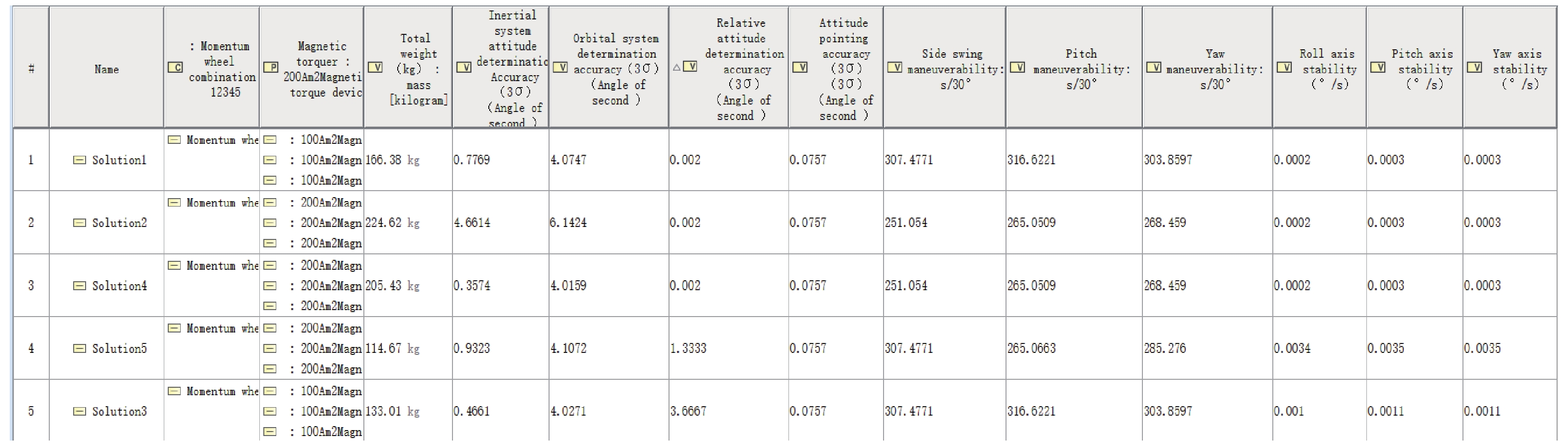
Fig 15
Comparison of indicators of the five solutions"
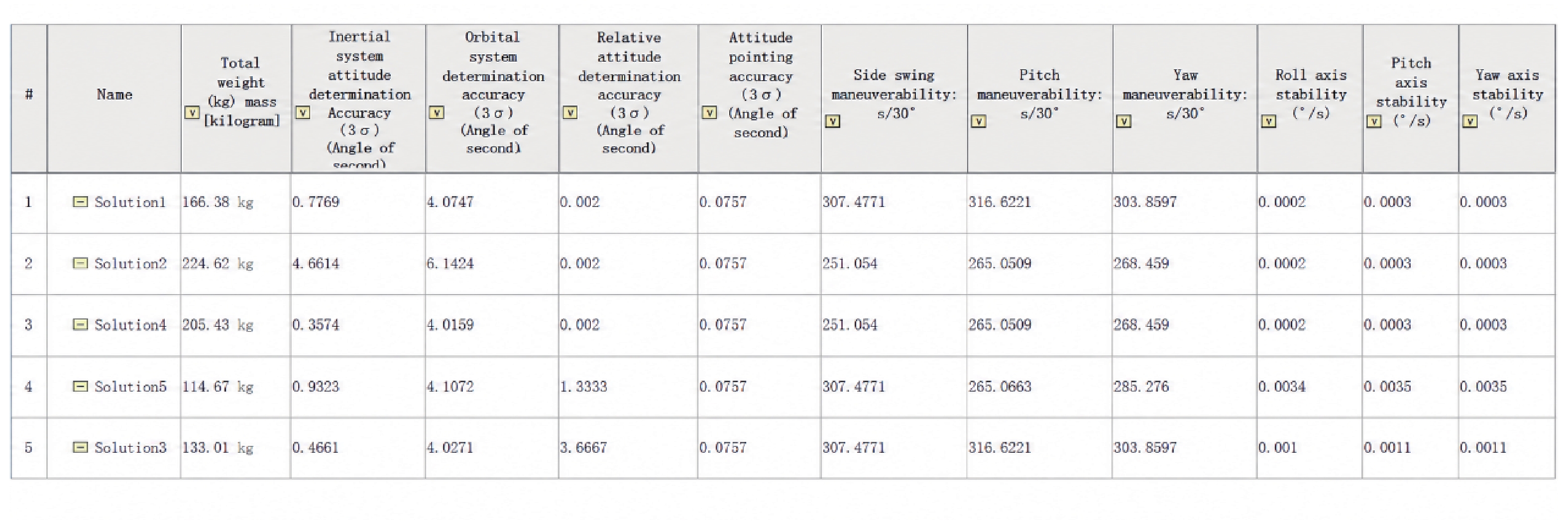
Fig 16
Configuration and solution variant of Solution 5"
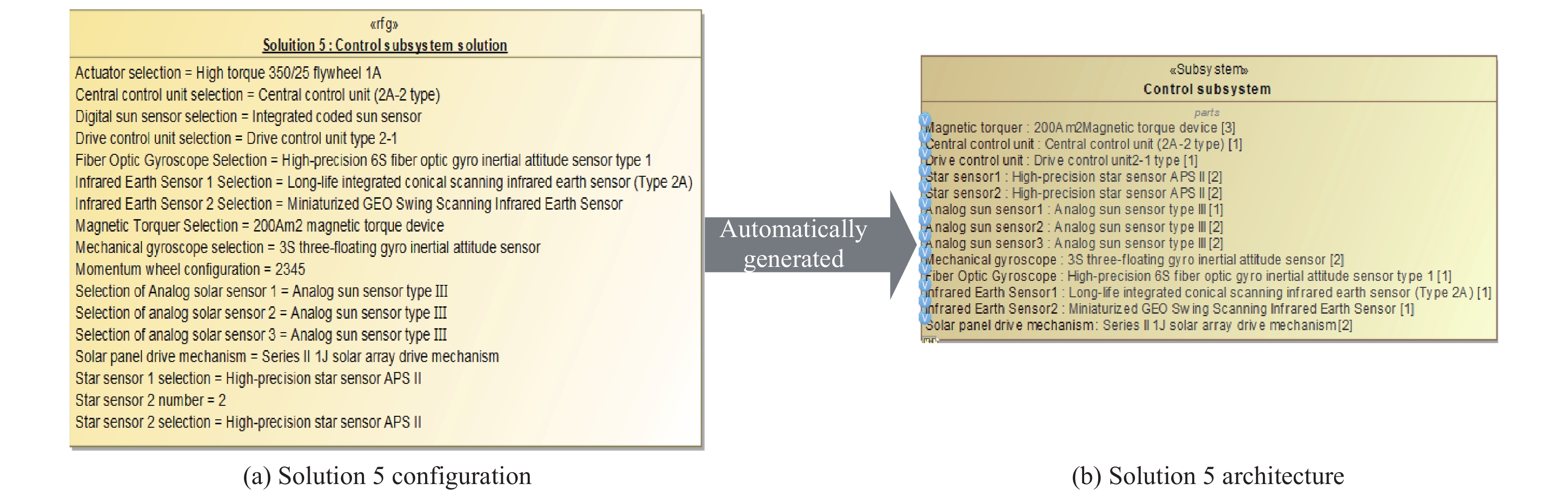
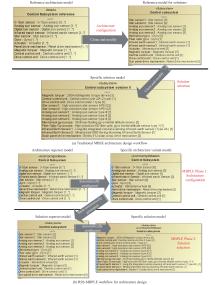
Fig 17
Comparison between traditional MBSE and RSS-MBPLE workflows"

| 1 | RAMOS A L, FERREIRA J V, BARCELÓ J Model-based systems engineering: an emerging approach for modern systems. IEEE Trans. on Systems, Man, and Cybernetics, Part C (Applications and Reviews), 2011, 42 (1): 101- 111. |
| 2 |
MADNI A M, SIEVERS M Model-based systems engineering: motivation, current status, and research opportunities. Systems Engineering, 2018, 21 (3): 172- 190.
doi: 10.1002/sys.21438 |
| 3 |
KANG K C, LEE J, DONOHOE P Feature-oriented product line engineering. IEEE Software, 2002, 19 (4): 58- 65.
doi: 10.1109/MS.2002.1020288 |
| 4 |
HAUSE M, HUMMELL J Model-based product line engineering–enabling product families with variants. INCOSE Insight, 2019, 22 (2): 43- 48.
doi: 10.1109/aero.2015.7119108 |
| 5 |
LYKINS H, FRIEDENTHAL S, MEILICH A Adapting UML for an object oriented systems engineering method (OOSEM). INCOSE International Symposium, 2000, 10 (1): 490- 497.
doi: 10.1002/j.2334-5837.2000.tb00416.x |
| 6 | DOUGLASS B P. Agile systems engineering[M]. Waltham: Morgan Kaufmann, 2015. |
| 7 |
MORKEVICIUS A, ALEKSANDRAVICIENE A, et al Towards a aommon systems engineering methodology to cover a complete system development process. INCOSE International Symposium, 2020, 30 (1): 138- 152.
doi: 10.1002/j.2334-5837.2020.00713.x |
| 8 |
CHEN R R, LIU Y S, FAN H R, et al An integrated approach for automated physical architecture generation and multi-criteria evaluation for complex product design. Journal of Engineering Design, 2019, 30 (2−3): 63- 101.
doi: 10.1080/09544828.2018.1563287 |
| 9 | GAO S, CAO Y, LI Y Q, et al. Reusability, reconfigurability and efficiency optimization of satellite network modeling and simulation. IEEE Access, 2023: 13: 122035−122058. |
| 10 |
FU C, LIU J B, WANG S D Building SysML model graph to support the system model reuse. IEEE Access, 2021, 9, 132374- 132389.
doi: 10.1109/ACCESS.2021.3115165 |
| 11 |
CAO Y, LIU Y S, YE X P, et al An automated approach for execution sequence-driven software and physical co-design of mechatronic systems based on hybrid functional ontology. Computer Aided Design, 2021, 131, 102942.
doi: 10.1016/j.cad.2020.102942 |
| 12 | PAHL G, BEITZ W. Engineering design-a systematic approach. 3rd ed. London: Springer-Verlag, 2007. |
| 13 | GÓNGORA H G C, FERROGALINI M, MOREAU C. How to boost product line engineering with MBSE-a case study of a rolling stock product line. Proc. of the 5th International Conference on Complex Systems Design & Management, 2015: 239–256. |
| 14 |
YOUNG B, CLEMENTS P Model based engineering and product line engineering: combining two powerful approaches at raytheon. INCOSE Insight, 2019, 22 (2): 67- 75.
doi: 10.1002/inst.12248 |
| 15 | BILIC D, BROSSE E, SADOVYKH A, et al. An integrated model-based tool chain for managing variability in complex system design. Proc. of the ACM/IEEE 22nd International Conference on Model Driven Engineering Languages and Systems Companion, 2019: 288–293. |
| 16 |
TEKİNDERDOĞAN B, ÖZCAN M K, YAKıN İ, et al Model-based systems product line engineering of physical protection systems. INCOSE International Symposium, 2021, 31 (1): 1- 15.
doi: 10.1002/j.2334-5837.2021.00822.x |
| 17 | FORLINGIERI M. The four dimensions of variability and their impact on MBPLE: how to approach variability in the development of aircraft product lines at Airbus. Proc. of the 16th International Working Conference on Variability Modelling of Software-Intensive Systems, 2022. DOI: 10.1145/3510466.3511275. |
| 18 |
COLLETTI R A, QAMAR A, NUESCH S P, et al Best practice patterns for variant modeling of activities in model-based systems engineering. IEEE Systems Journal, 2020, 14 (3): 4165- 4175.
doi: 10.1109/JSYST.2019.2939246 |
| 19 |
FORLINGIERI M, WEILKIENS T Two variant nodeling nethods for MBPLE at airbus. INCOSE International Symposium, 2022, 32 (1): 1097- 1113.
doi: 10.1002/iis2.12984 |
| 20 | ARIFIN H H, KIT H, DAI J, et al. Model-based product line engineering with genetic algorithms for automated component selection. Proc. of the 4th International Conference on Complex Systems Design & Management Asia and of the 12th Conference on Complex Systems Design & Management, 2021: 287−310. |
| 21 | WAGNER H, ZUCCARO C. Managing variability in digital twins and system development through product line engineering. Proc. of the IEEE International Symposium on Systems Engineering, 2024. DOI: 10.1109/ISSE63315.2024.10741090. |
| 22 | LAMEH J, DUBRAY A, JANKOVIC M Towards a configuration management integration to feature models in model-based product line engineering. Proceedings of the Design Society, 2023, 3 (7): 3581- 3590. |
| 23 | WAGNER H, RÖSSLER W, ZUCCARO C. How to structure variability in large-scale complex engineered systems. Proc. of the Tag des Systems Engineering, 2023: 272–279. |
| 24 | ESSOUSSI M H, VIVOT P, DELOYE L, et al. Large legacy systems design maintainability through modeling. Proc. of the ERTS 2024, 2024: 1–10. |
| 25 | COLLETTI R A, QAMAR A, NUESCH S, et al. Variant modeling for multi-perspective, multi-fidelity systems simulation. Recent Trends and Advances in Model Based Systems Engineering. Cham: Springer, 2022. |
| 26 |
COLLETTI R A, QAMAR A, BAILEY W, et al A variable reference architecture for the management and configuration of ground vehicle simulations. Innovations in Systems and Software Engineering, 2024, 20 (3): 185- 207.
doi: 10.1007/s11334-022-00441-x |
| 27 | BAJAJ M, FRIEDENTHAL S, SEIDEWITZ E. Systems modeling language (SysML v2) support for digital engineering. INCOSE Insight 2022, 25(1): 19–24. |
| 28 | EPP J, ROBERT T, RUCH O, et al. Towards SysML v2 as a variability modeling language. Proc. of ACM/IEEE International Conference on Model Driven Engineering Languages and Systems Companion, 2023: 251–256. |
| 29 | EPP J, ROBERT T, RUCH O, et al Transitioning towards SysML v2 as a variability modeling language. Innovations in Systems and Software Engineering, 2024, 20 (2): 585- 596. |
| 30 |
LU J Z, WANG G X, YAN Y, et al Semantic model-based systems engineering based on KARMA: a research and practice roadmap 2025. INCOSE International Symposium, 2022, 32 (1): 706- 720.
doi: 10.1002/iis2.12959 |
| 31 |
LU J Z, WANG G X, MA J D, et al General modeling language to support model-based systems engineering formalisms (Part 1). INCOSE International Symposium, 2020, 30 (1): 323- 338.
doi: 10.1002/j.2334-5837.2020.00725.x |
| 32 |
WADA A, KOMATSU Y, TATE D, et al Phased demonstrations of MBSE in small demonstration satellite series: development of system model and environment for full application of MBSE. INCOSE International Symposium, 2023, 33 (1): 1188- 1202.
doi: 10.1002/iis2.13077 |
| 33 | SELIC B. A Systematic approach to domain-specific language design using UML. Proc. of the 10th IEEE International Symposium on Object and Component-Oriented Real-Time Distributed Computing, 2007: 2–9. |
| 34 |
ZHANG B, WU Y F, ZHAO B Y, et al Progress and challenges in intelligent remote sensing satellite systems. IEEE Journal of Selected Topics in Applied Earth Observations and Remote Sensing, 2022, 15, 1814- 1822.
doi: 10.1109/JSTARS.2022.3148139 |
| [1] | Xiaoxue Zhang, Shu Tang, Aimin Luo, and Xueshan Luo. System deployment optimization in architecture design [J]. Journal of Systems Engineering and Electronics, 2014, 25(2): 237-248. |
| Viewed | ||||||
|
Full text |
|
|||||
|
Abstract |
|
|||||
