
Journal of Systems Engineering and Electronics ›› 2026, Vol. 37 ›› Issue (1): 171-183.doi: 10.23919/JSEE.2026.000002
• DEFENCE ELECTRONICS TECHNOLOGY • Previous Articles Next Articles
Zhicheng WANG1,*( ), Huiming JIANG2(), Hui XU1(), Gao SUN1(), Jialian SHENG1()
Received:2024-07-29
Accepted:2025-04-16
Online:2026-02-18
Published:2026-03-09
Contact:
Zhicheng WANG
E-mail:wangzhicheng@sjtu.edu.cn;hmjiang@usst.edu.cn;fionaxuhui@163.com;gao_sun@163.com;SJL_Jialian@163.com
About author:Supported by:Zhicheng WANG, Huiming JIANG, Hui XU, Gao SUN, Jialian SHENG. Multi-affinity clustering analysis based graph learning for multichannel signal utilization[J]. Journal of Systems Engineering and Electronics, 2026, 37(1): 171-183.
Add to citation manager EndNote|Reference Manager|ProCite|BibTeX|RefWorks
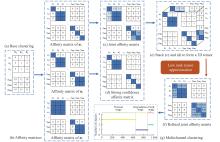
Fig 1
Detailed procedures"
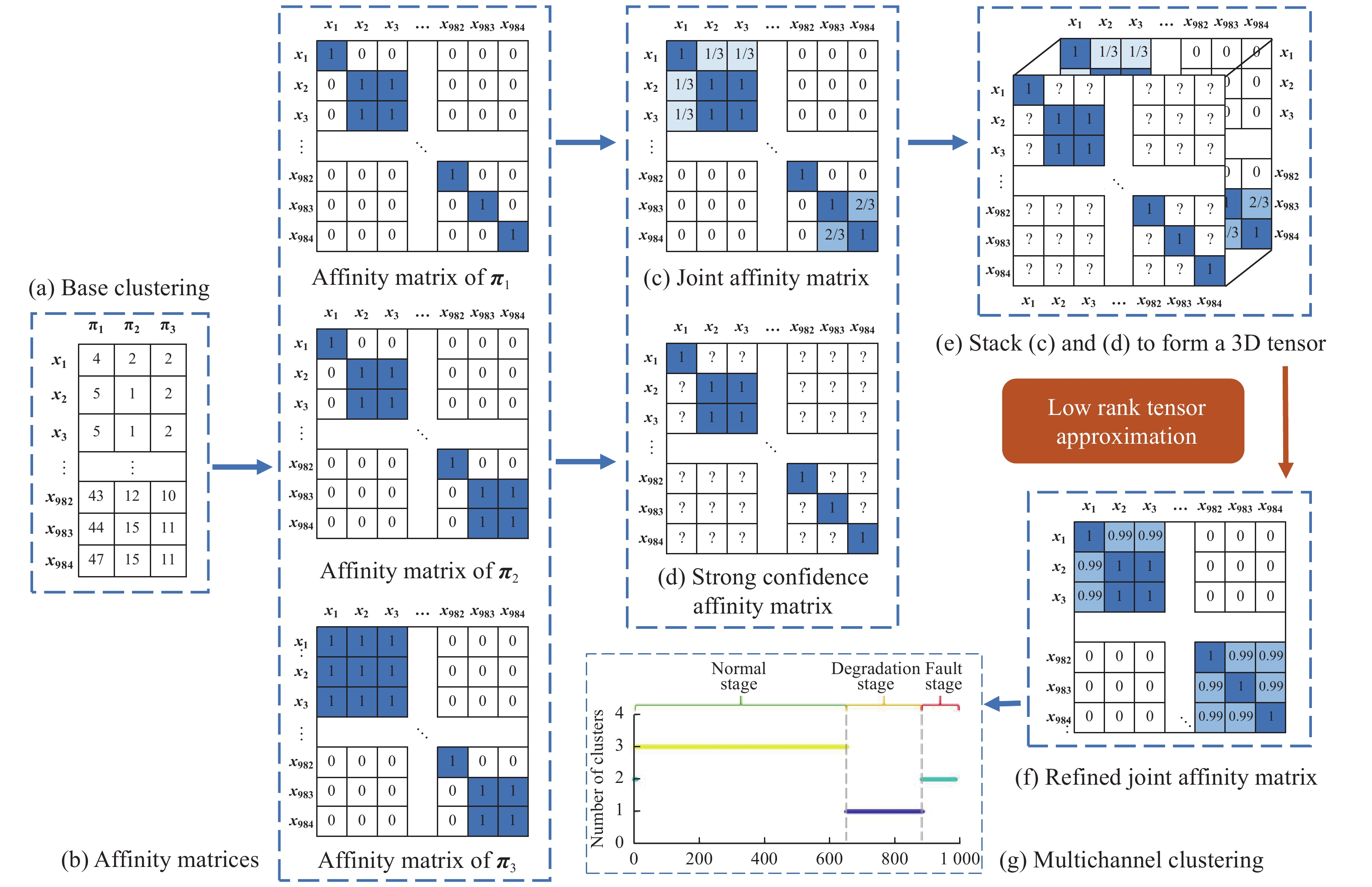
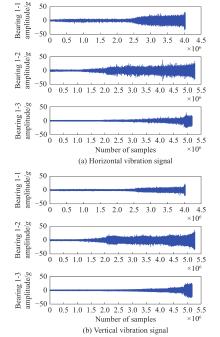
Fig 2
Two-channel full life cycle signals of bearings"
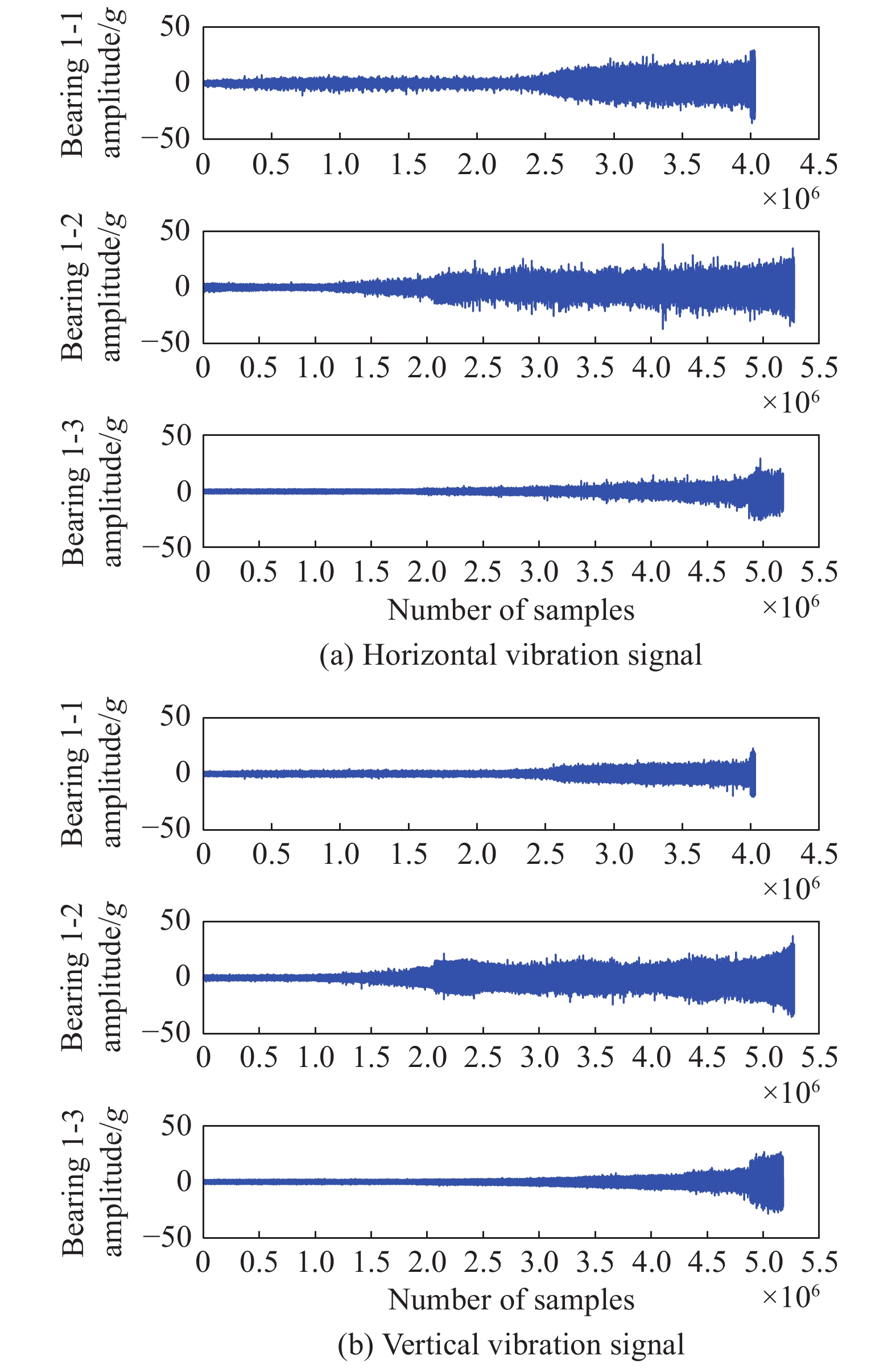
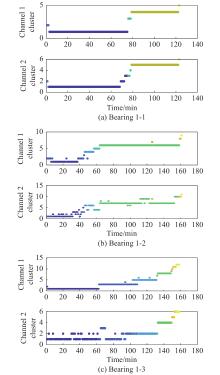
Fig 3
Base clustering results based on AKSC"
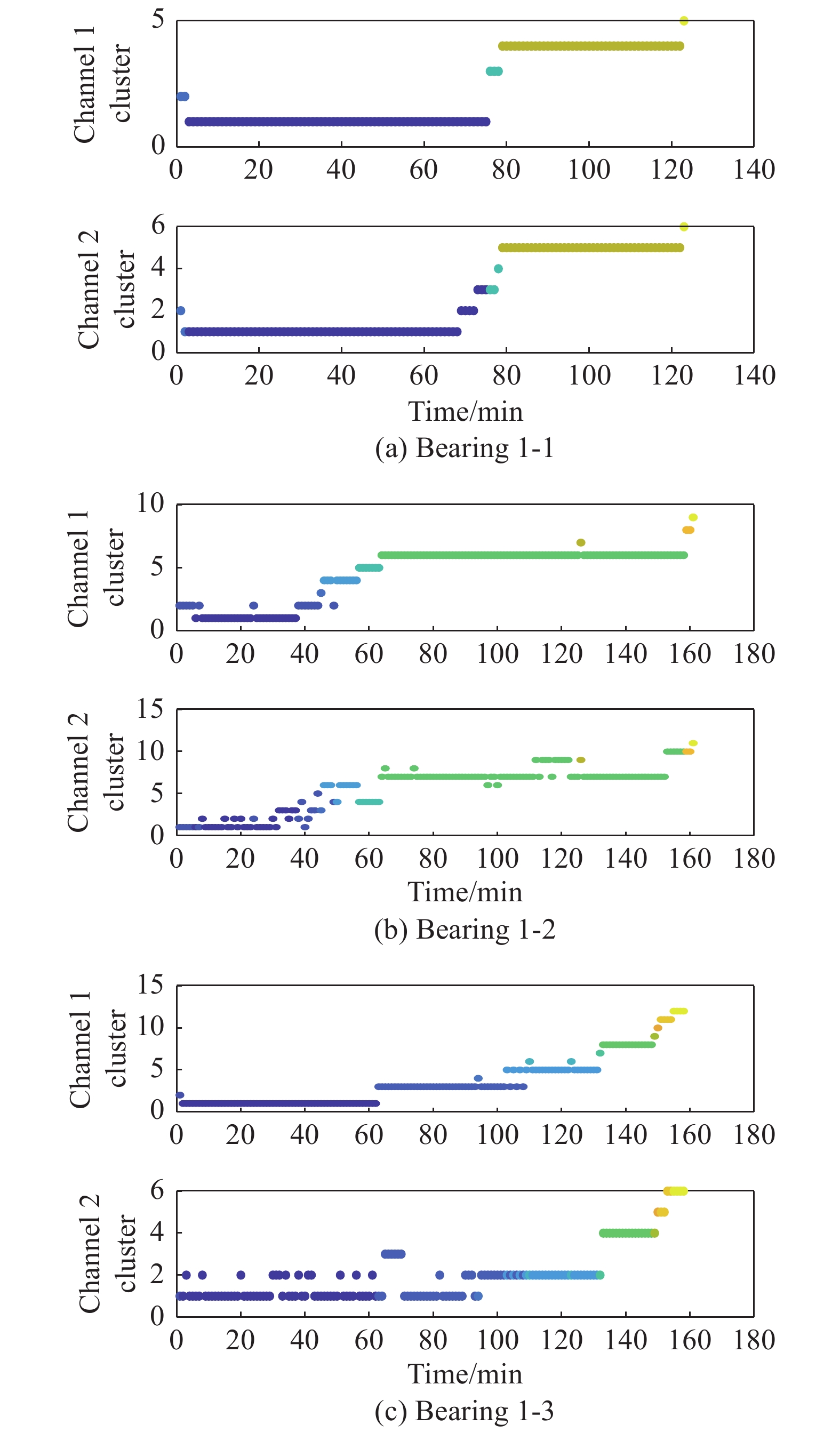
Fig 4
Multichannel clustering results based on the proposed method"
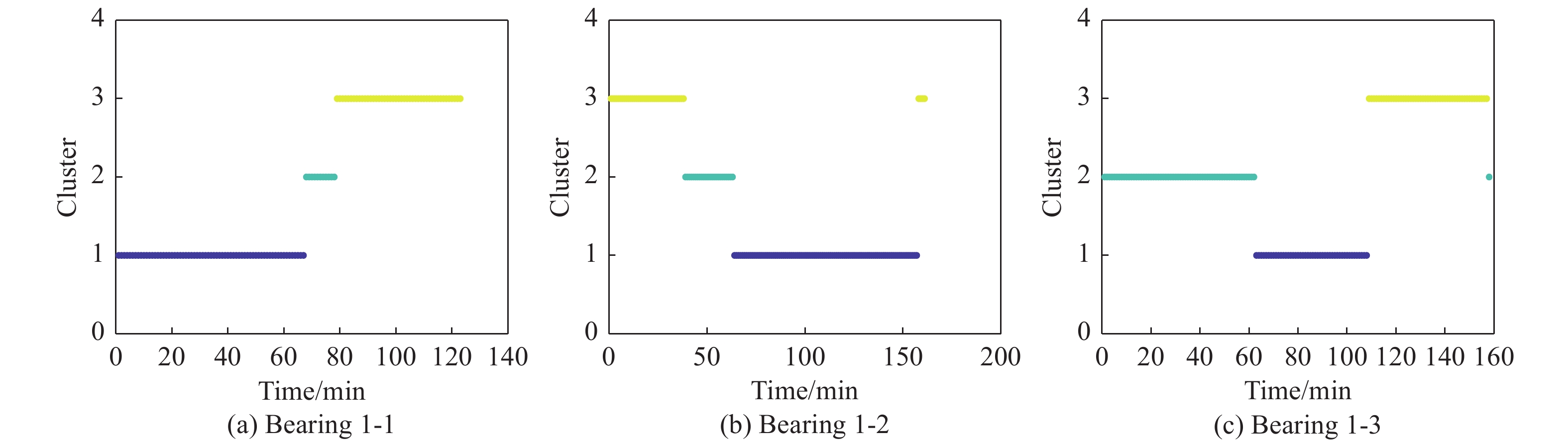
Fig 5
Two-channel RMS plots of the evaluated bearings"
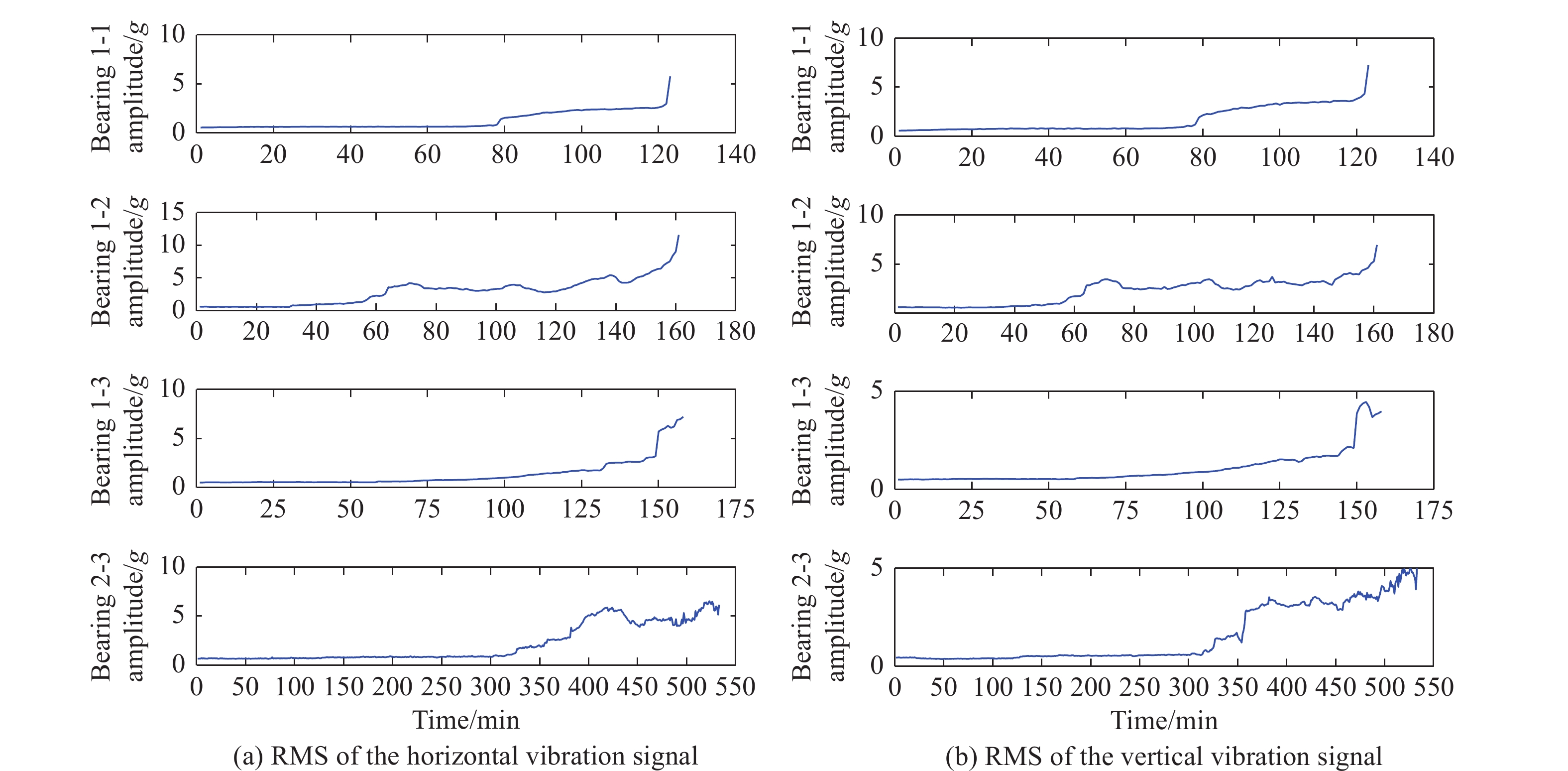
Fig 6
Time plots and envelope spectra of Bearing 1-1 at different states"
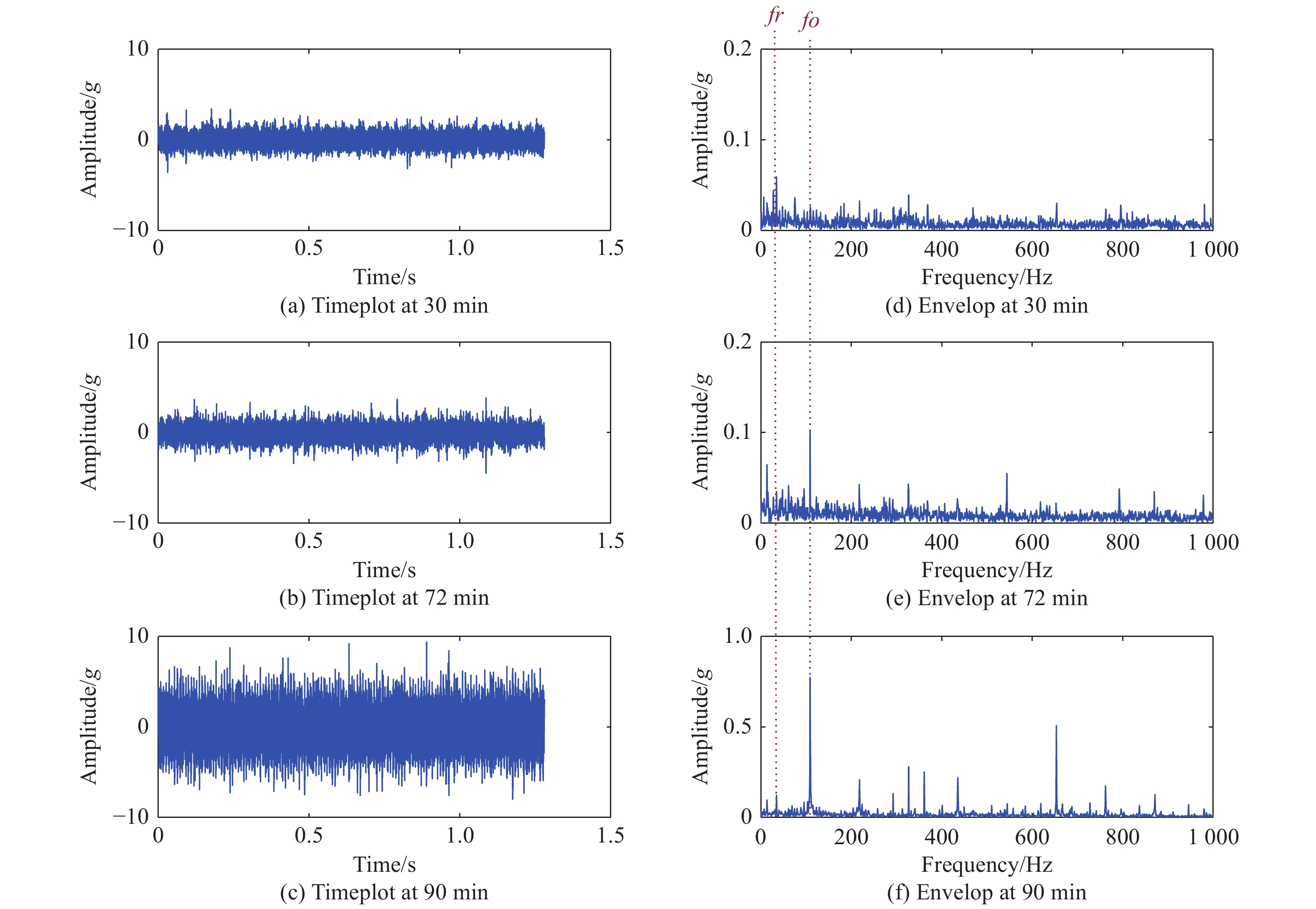
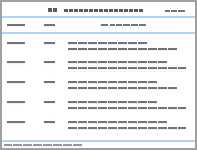
Table 1
Health state assessment results min"
| Bearing | Degradation stages | |||
| Normal state | Early fault | Fault development | Complete failure | |
| 1-1 | 1−67 | 68−78 | 79−123 | − |
| 1-2 | 1−38 | 39−63 | 64−157 | 157−161 |
| 1-3 | 1−62 | 63−108 | 109−157 | 158 |
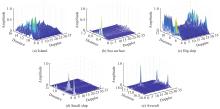
Fig 7
Examples of RDMs for different targets (50th frame)"
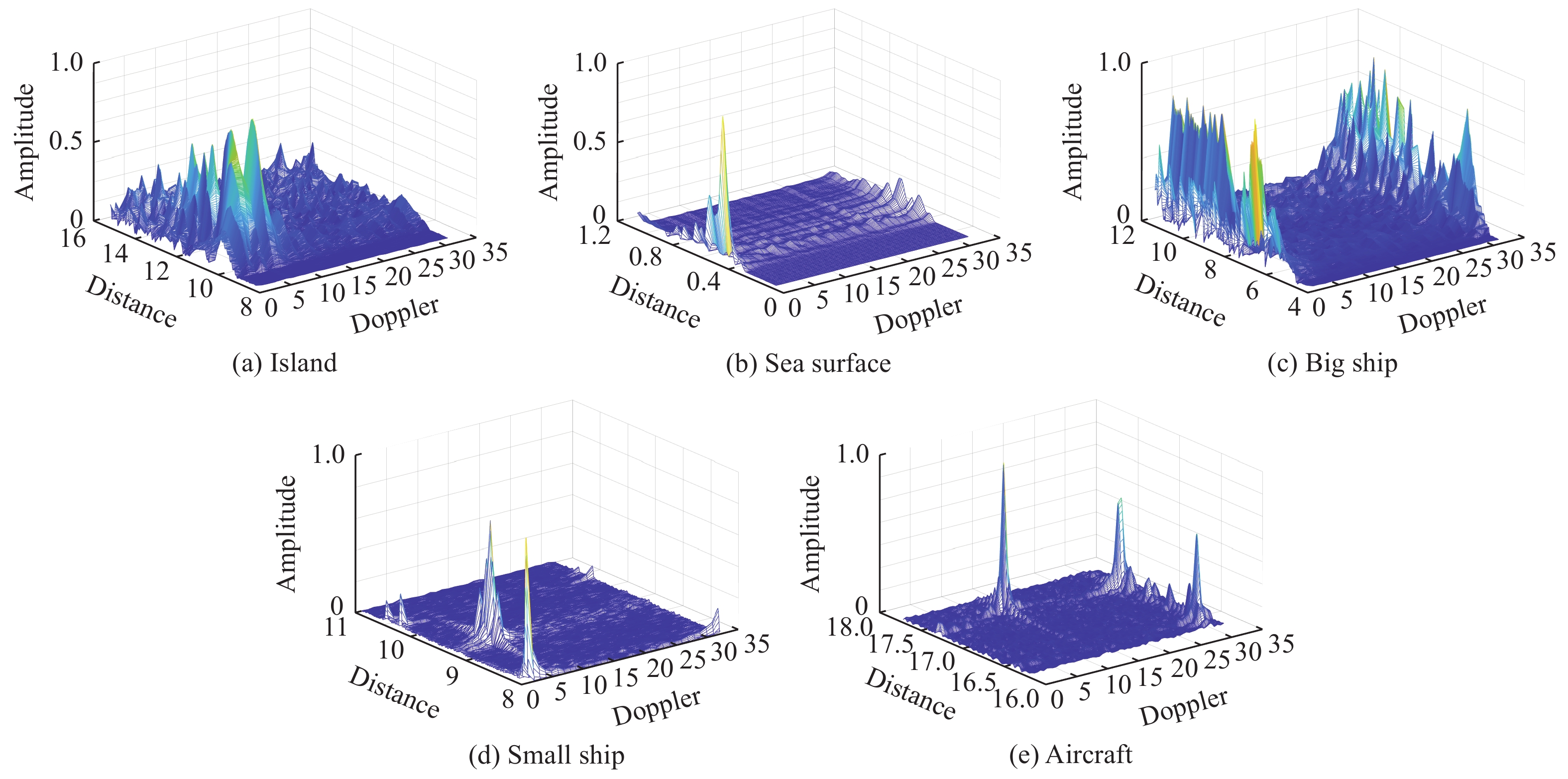
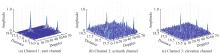
Fig 8
Different channel signals in the 50th frame of an aircraft"
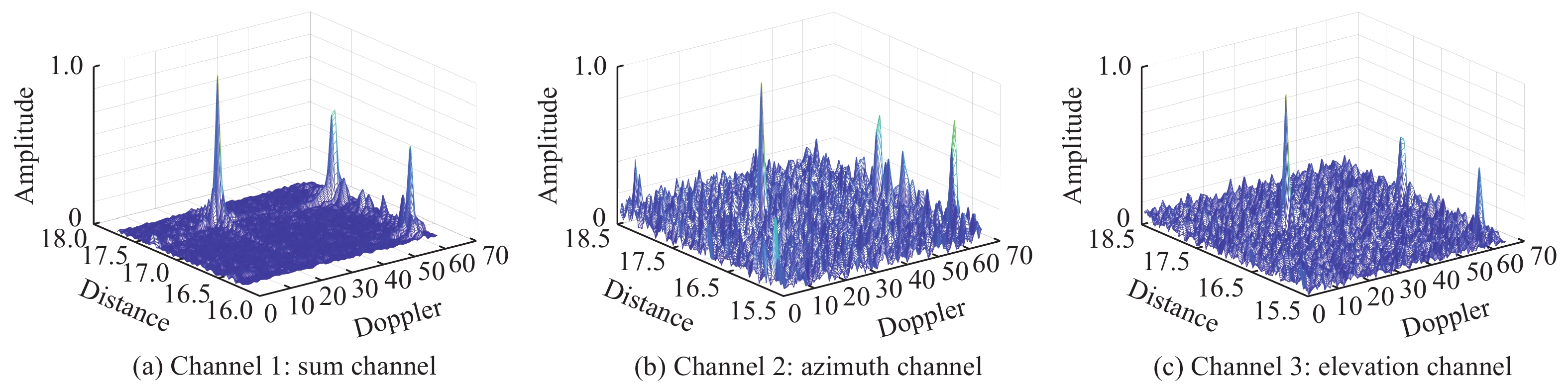
Fig 9
Feature distributions"
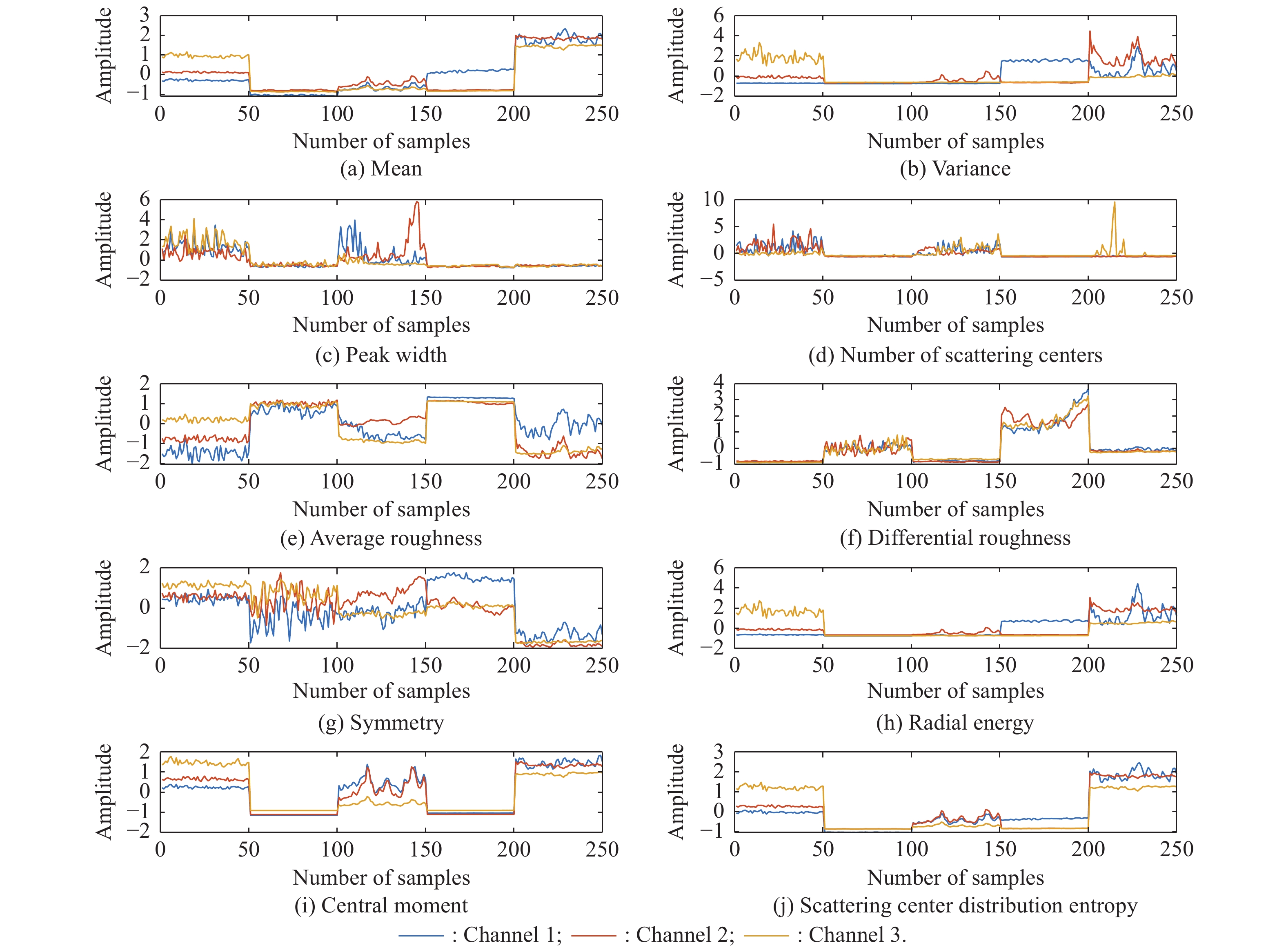
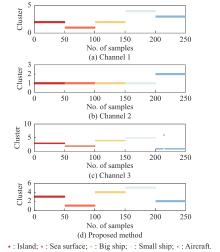
Fig 10
Clustering results"
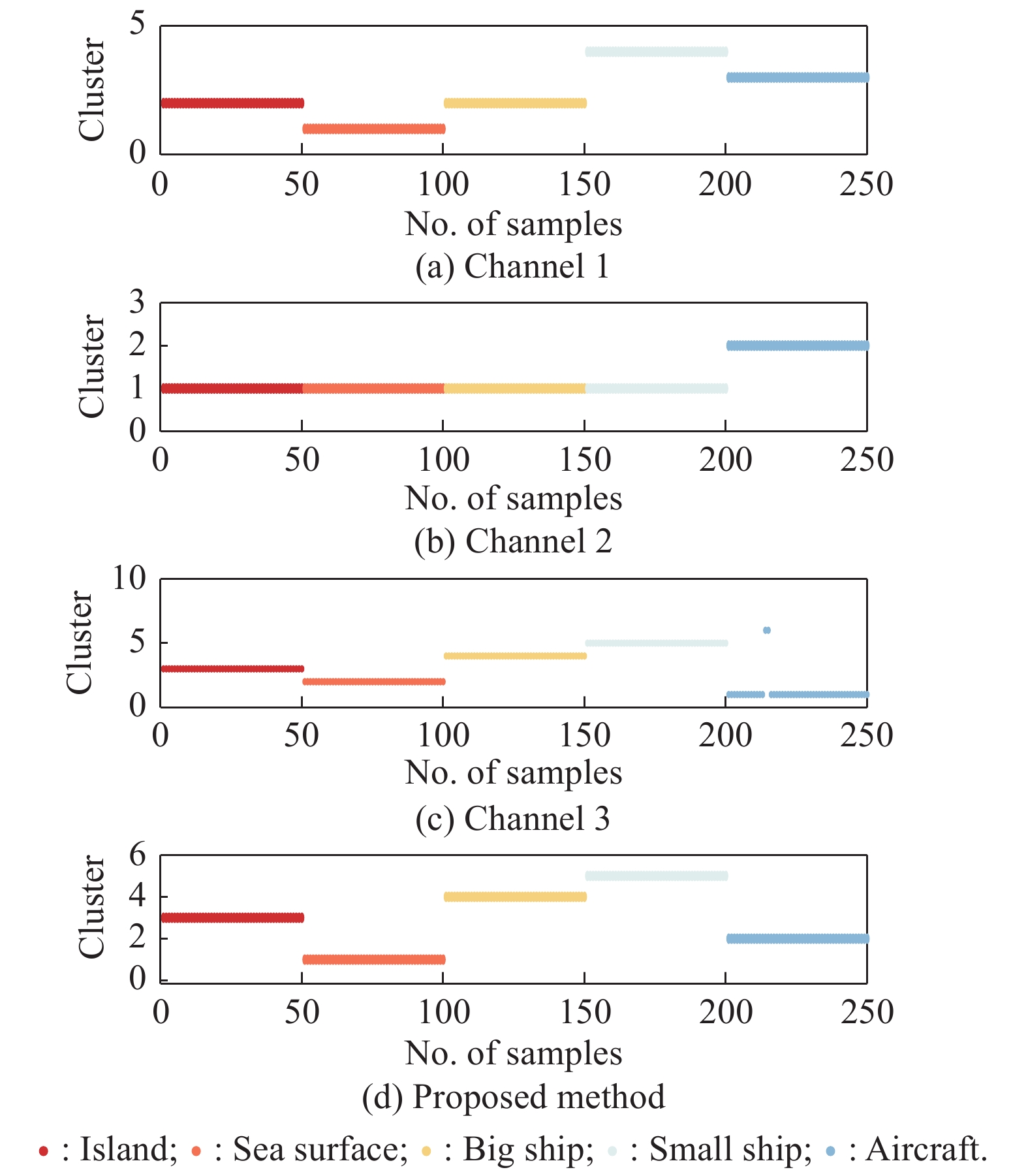
Fig 11
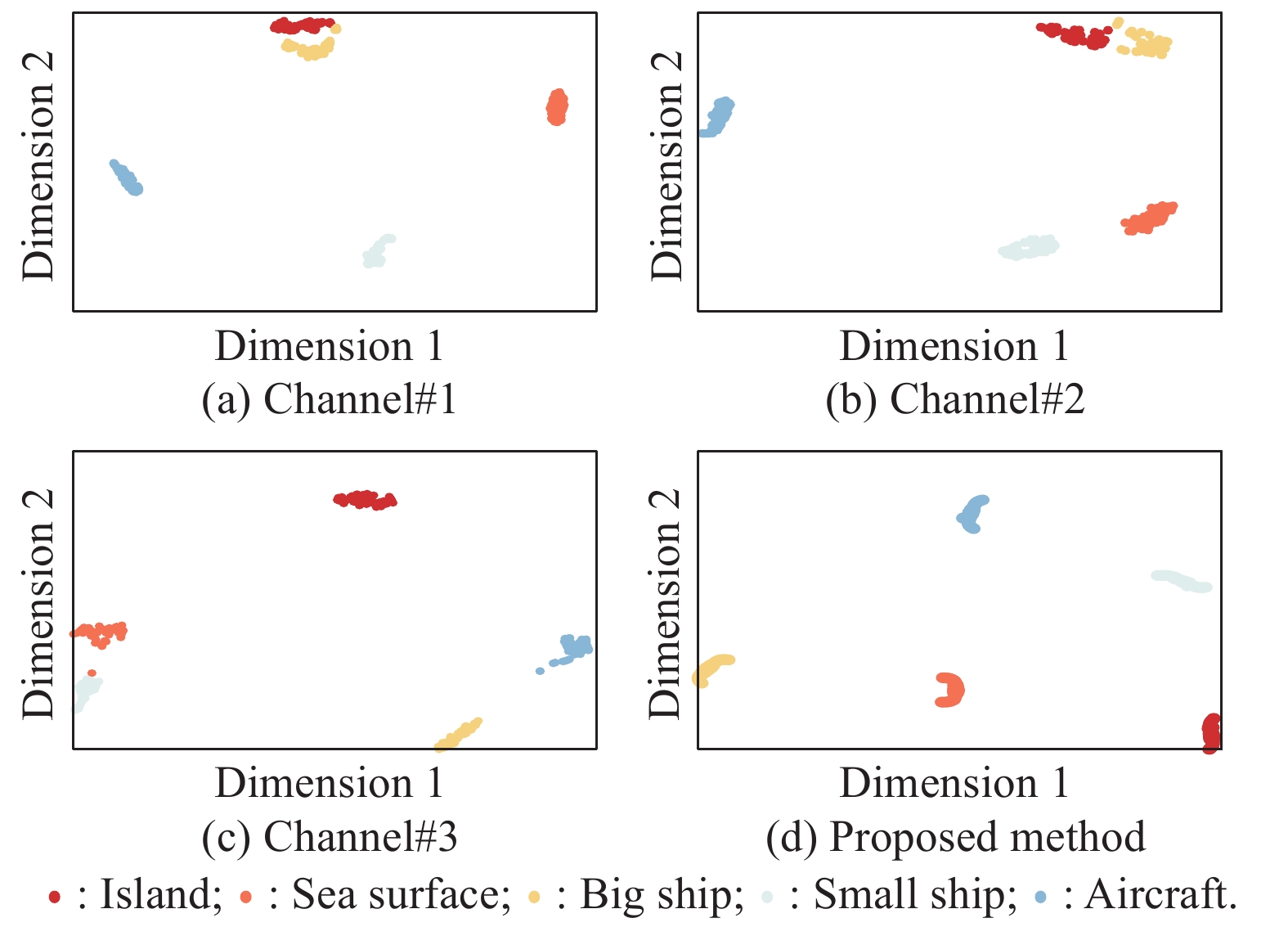
t-SNE for feature vectors in SC"
| 1 |
YUAN J, SONG Z T, JIANG H M, et al The Msegram: a useful multichannel feature synchronous extraction tool for detecting rolling bearing faults. Mechanical Systems and Signal Processing, 2023, 187, 109923.
doi: 10.1016/j.ymssp.2022.109923 |
| 2 |
CHEN S, LUO F, TIAN M, et al Short-time maritime target detection based on polarization scattering characteristics. Journal of Systems Engineering and Electronics, 2024, 35 (1): 55- 64.
doi: 10.1088/1361-6501/aca5a8 |
| 3 |
JIANG H M, WU Y, YUAN J, et al Adaptive low-rank tensor estimation model based multichannel weak fault detection for bearings. Sensors, 2024, 24 (12): 3762.
doi: 10.1016/j.ress.2022.108356 |
| 4 |
ZHOU K Y, LU N Y, JIANG B, et al Review on uncertainty analysis and information fusion diagnosis of aircraft control system. Journal of Systems Engineering and Electronics, 2024, 35 (5): 1245- 1263.
doi: 10.1109/JSEN.2023.3310672 |
| 5 |
FU S, LIN L, WANG Y, et al MCA-DTCN: a novel dual-task temporal convolutional network with multi-channel attention for first prediction time detection and remaining useful life prediction. Reliability Engineering & System Safety, 2024, 241, 109696.
doi: 10.1109/tim.2020.3014033 |
| 6 |
WANG B, LEI Y G, LI N P, et al Multiscale convolutional attention network for predicting remaining useful life of machinery. IEEE Trans. on Industrial Electronics, 2021, 68 (8): 7496- 7504.
doi: 10.1016/j.inffus.2013.10.002 |
| 7 |
ZHANG K F, YUAN J, JIANG H M, et al A novel weighted sparsity index based on multichannel fused graph spectra for machine health monitoring. Mechanical Systems and Signal Processing, 2024, 215, 111417.
doi: 10.1109/tim.2021.3132051 |
| 8 |
LIU F, HUANG H D, LIU Y B, et al Performance degradation assessment for coaxial bearings using kernel JADE and two-class model. IEEE Trans. on Instrumentation and Measurement, 2021, 70, 3501112.
doi: 10.1016/j.ymssp.2021.108679 |
| 9 | MANN S, WILL C, REISSLAND T, et al High-precision interferometric radar for sheet thickness monitoring. IEEE Trans. on Microwave Theory and Techniques, 2018, 66 (6): 3153- 3166. |
| 10 |
JIA L N, WANG Y, SONG Y X, et al The detection technology of high-power microwave: a review. IEEE Trans. on Instrumentation and Measurement, 2024, 73, 4500517.
doi: 10.1137/07070111X |
| 11 |
QU L L, WU H X, YANG T H, et al Dynamic hand gesture classification based on multichannel radar using multistream fusion 1-D convolutional neural network. IEEE Sensors Journal, 2022, 22 (24): 24083- 24093.
doi: 10.1109/TSP.2017.2690524 |
| 12 |
TANG B, YANG Q, ZHANG Y, et al Three-dimensional micro-motion feature extraction of the vibrating target based on multi-channel radar in the terahertz band. Sensors, 2020, 20 (1): 8.
doi: 10.1109/ACCESS.2019.2906784 |
| 13 |
JIANG X M, LAI Y X, WANG S J, et al Using polarization-diverse wave-coefficients for aerospace target recognition. IEEE Access, 2020, 8, 143033- 143041.
doi: 10.1109/ACCESS.2019.2943497 |
| 14 | JIA Y H, LIU H, HOU J H, et al. Clustering ensemble meets low-rank tensor approximation. Proc. of the National Conference on Artificial Intelligence, 2021: 7970−7978. |
| 15 |
VON LUXBURG U A tutorial on spectral clustering. Statistics and Computing, 2007, 17, 395- 416.
doi: 10.1007/s11222-007-9033-z |
| 16 |
CHEN J X, LI D P, HUANG R Y, et al Aero-engine remaining useful life prediction method with self-adaptive multimodal data fusion and cluster-ensemble transfer regression. Reliability Engineering & System Safety, 2023, 234, 109236.
doi: 10.1109/LSP.2022.3217441 |
| 17 |
HU S Z, ZHANG C K, ZOU G L, et al Deep multiview clustering by pseudo-label guided contrastive learning and dual correlation learning. IEEE Trans. on Neural Networks and Learning Systems, 2025, 36 (2): 3646- 3658.
doi: 10.1109/TNNLS.2024.3354731 |
| 18 | ZHAO H D, DING Z M, FU Y, et al. Multi-view clustering via deep matrix factorization. Proc. of the 31st AAAI Conference on Artificial Intelligence, 2017: 2921−2927. |
| 19 | ZHU M T, LI Y J, WANG S F Model-based time series clustering and interpulse modulation parameter estimation of multifunction radar pulse sequences. IEEE Trans. on Aerospace and Electronic Systems, 2021, 57 (6): 3673- 3690. |
| 20 | LIAN B B, CHEN H, WU C J, et al. Fast spectral clustering algorithm based on wavelet basis decomposition. Proc. of the IEEE 4th Information Technology, Networking, Electronic and Automation Control Conference, 2020: 446−452. |
| 21 |
XIE Y, LIN B Q, QU Y Y, et al Joint deep multi-view learning for image clustering. IEEE Trans. on Knowledge and Data Engineering, 2021, 33 (11): 3594- 3606.
doi: 10.1109/TKDE.2020.2973981 |
| 22 | CARON M, BOJANOWSKI P, JOULIN A, et al. Deep clustering for unsupervised learning of visual features. Proc. of the 15th European Conference on Computer Vision, 2018: 139−156. |
| 23 |
TONG T, GAN J Z, WEN G Q, et al One-step spectral clustering based on self-paced learning. Pattern Recognition Letters, 2020, 135, 8- 14.
doi: 10.1016/j.patrec.2020.03.035 |
| 24 |
ZHU X F, LI X L, ZHANG S C Graph PCA hashing for similarity search. IEEE Trans. on Multimedia, 2017, 19 (9): 2033- 2044.
doi: 10.1109/TMM.2017.2703636 |
| 25 |
KILMER M E, BRAMAN K, HAO N, et al Third-order tensors as operators on matrices: a theoretical and computational framework with applications in imaging. SIAM Journal on Matrix Analysis and Applications, 2013, 34 (1): 148- 172.
doi: 10.1137/110841229 |
| 26 |
ZENG W, ZHANG X, BAI Y Method for multispectral images denoising based on tensor-singular value decomposition. Journal of Applied Remote Sensing, 2017, 11, 011009.
doi: 10.1109/tkde.2011.149 |
| 27 |
LU C Y, FENG J S, CHEN Y D, et al Tensor robust principal component analysis with a new tensor nuclear norm. IEEE Trans. on Pattern Analysis and Machine Intelligence, 2020, 42 (4): 925- 938.
doi: 10.1177/0954406215608892 |
| 28 |
MARTIN C D, SHAFER R, LARUE B An order-p tensor factorization with applications in imaging. SIAM Journal on Scientific Computing, 2013, 35 (1): A474- A490.
doi: 10.3390/ma14206077 |
| 29 |
JIA Y H, KWONG S, HOU J H Semi-supervised spectral clustering with structured sparsity regularization. IEEE Signal Processing Letters, 2018, 25 (3): 403- 407.
doi: 10.1109/LSP.2018.2791606 |
| 30 | WANG B, LEI Y G, LI N P, et al A hybrid prognostics approach for estimating remaining useful life of rolling element bearings. IEEE Trans. on Reliability, 2018, 69 (1): 401- 412. |
| 31 |
LEI Y G, HE Z J, ZI Y Y, et al Fault diagnosis of rotating machinery based on multiple ANFIS combination with GAs. Mechanical Systems and Signal Processing, 2007, 21 (5): 2280- 2294.
doi: 10.1016/j.ymssp.2006.11.003 |
| 32 |
EREN L, DEVANEY M J Bearing damage detection via wavelet packet decomposition of the stator current. IEEE Trans. on Instrumentation and Measurement, 2004, 53 (2): 431- 436.
doi: 10.1109/TIM.2004.823323 |
| 33 |
JIANG H M, YUAN J, ZHAO Q, et al A robust performance degradation modeling approach based on Student’s T-HMM and nuisance attribute projection. IEEE Access, 2020, 8, 49629- 49644.
doi: 10.1109/ACCESS.2020.2980019 |
| 34 | NIU Y L, XU J W, LIAO G S, et al Clutter suppression approach for missile-borne HPRF radar with sum-difference antenna. Systems Engineering and Electronics, 2023, 45 (8): 2455- 2462. |
| 35 |
HANIF A, MUAZ M, HASAN A, et al Micro-Doppler based target recognition with radars: a review. IEEE Sensors Journal, 2022, 22 (4): 2948- 2961.
doi: 10.1109/JSEN.2022.3141213 |
| 36 | DAVIES D L, BOULDIN D W A cluster separation measure. IEEE Trans. on Pattern Analysis and Machine Intelligence, 1979, 1 (2): 224- 227. |
| [1] | Hongcheng YIN, Hua YAN. Parametric modeling and applications of target scattering centers: a review [J]. Journal of Systems Engineering and Electronics, 2024, 35(6): 1411-1427. |
| [2] | Xiaobo DUAN, Qiucen FAN, Wenhao BI, An ZHANG. Belief exponential divergence for D-S evidence theory and its application in multi-source information fusion [J]. Journal of Systems Engineering and Electronics, 2024, 35(6): 1454-1468. |
| [3] | Xueling YANG, Gong ZHANG, Hu SONG. Ship recognition based on HRRP via multi-scale sparse preserving method [J]. Journal of Systems Engineering and Electronics, 2024, 35(3): 599-608. |
| [4] | Zhenyu HE, Xiaodong ZHUGE, Junxiang WANG, Shihao YU, Yongjun XIE, Yuxiong ZHAO. Half space object classification via incident angle based fusion of radar and infrared sensors [J]. Journal of Systems Engineering and Electronics, 2022, 33(5): 1025-1031. |
| [5] | Pengcheng GUO, Zheng LIU, Jingjing WANG. Radar group target recognition based on HRRPs and weighted mean shift clustering [J]. Journal of Systems Engineering and Electronics, 2020, 31(6): 1152-1159. |
| [6] | Jiayun CHANG, Xiongjun FU, Wen JIANG, Min XIE. Wideband radar detector based on characteristic parameters of echoes [J]. Journal of Systems Engineering and Electronics, 2019, 30(5): 897-904. |
| [7] | Wenbo LIU, Jiawen YUAN, Gong ZHANG, Qian SHEN. HRRP target recognition based on kernel joint discriminant analysis [J]. Journal of Systems Engineering and Electronics, 2019, 30(4): 703-708. |
| [8] | Ahmed ABDALLA, Mohaned Giess Shokrallah AHMED, Yuan ZHAO, Ying XIONG, Bin TANG. Deceptive jamming suppression in multistatic radar based on coherent clustering [J]. Journal of Systems Engineering and Electronics, 2018, 29(2): 269-277. |
| [9] | Long Li, Zheng Liu, and Tao Li. Radar high resolution range profile recognition via multi-SV method [J]. Systems Engineering and Electronics, 2017, 28(5): 879-889. |
| [10] | Rui Zhang and Min Zhang. SAR target recognition based on active contour without edges [J]. Systems Engineering and Electronics, 2017, 28(2): 276-281. |
| [11] | Bingsheng Liu, Sijia Guo, Kaijing Yan, Ling Li, and Xueqing Wang. Double weight determination method for experts of complex multi-attribute large-group decision-making in interval-valued intuitionistic fuzzy environment [J]. Systems Engineering and Electronics, 2017, 28(1): 88-. |
| [12] | Jingqing Li, Sisan He, Cunqian Feng, and Yizhe Wang. Method for compensating translational motion of rotationally symmetric target based on local symmetry cancellation [J]. Systems Engineering and Electronics, 2017, 28(1): 36-. |
| [13] | Fei Gao, Jingyuan Mei, Jinping Sun, Jun Wang, Erfu Yang, and Amir Hussain. Target detection and recognition in SAR imagery based on KFDA [J]. Journal of Systems Engineering and Electronics, 2015, 26(4): 720-. |
| [14] | Ning Tang, Xunzhang Gao, and Xiang Li. ISAR target recognition based on non-negative sparse coding [J]. Journal of Systems Engineering and Electronics, 2012, 23(6): 849-857. |
| [15] | Qingyu Hou?,Feng Chen,Hongwei Liu,and Zheng Bao. New statistical model for radar HRRP target recognition [J]. Journal of Systems Engineering and Electronics, 2010, 21(2): 204-210. |
| Viewed | ||||||
|
Full text |
|
|||||
|
Abstract |
|
|||||
