
Journal of Systems Engineering and Electronics ›› 2026, Vol. 37 ›› Issue (2): 604-615.doi: 10.23919/JSEE.2026.000064
• SYSTEMS ENGINEERING • Previous Articles
Zhenxing ZHANG( ), Rennong YANG(), Ying ZHANG(), Qi SONG()
Received:2024-04-07
Accepted:2026-03-27
Online:2026-04-18
Published:2026-04-30
Contact:
Ying ZHANG
E-mail:2207621676@qq.com;786918169@qq.com;jialnzuo@163.com;827145476@qq.com
About author:Supported by:Zhenxing ZHANG, Rennong YANG, Ying ZHANG, Qi SONG. Optimizing force aggregation: SATC-ALO and SOM hybrid clustering model[J]. Journal of Systems Engineering and Electronics, 2026, 37(2): 604-615.
Add to citation manager EndNote|Reference Manager|ProCite|BibTeX|RefWorks
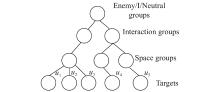
Fig 1
Abstract layer of force aggregation"
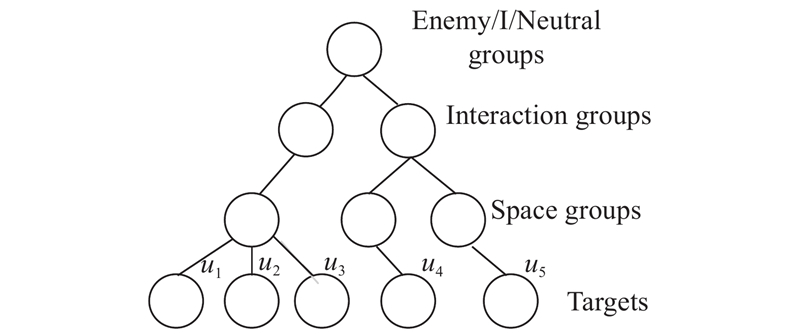
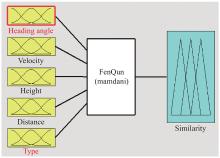
Fig 2
Fuzzy inference system"
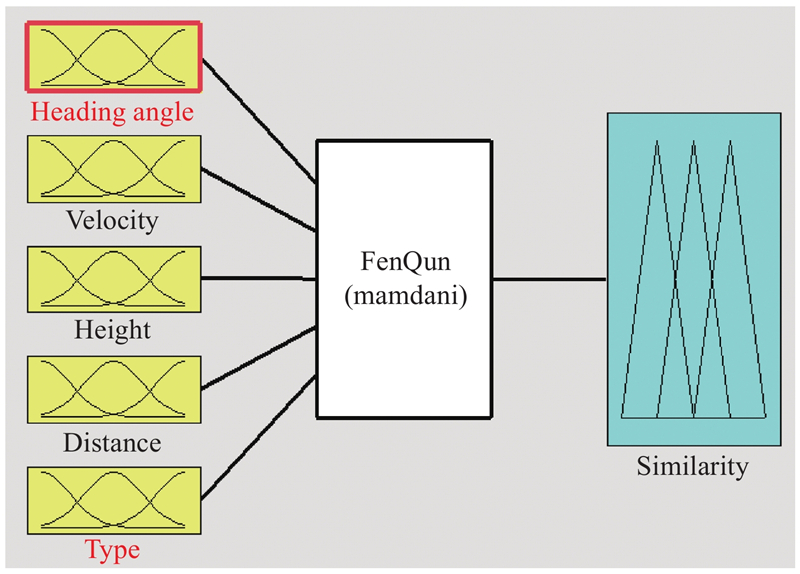
Fig 3
Member function of fuzzy inference system"
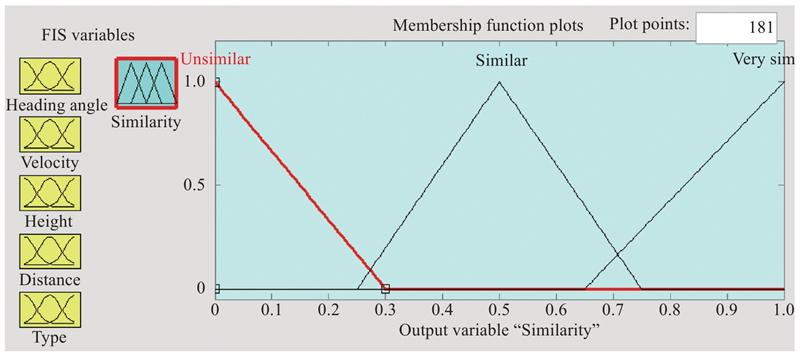
Fig 4
Determination of fuzzy inference system rules"
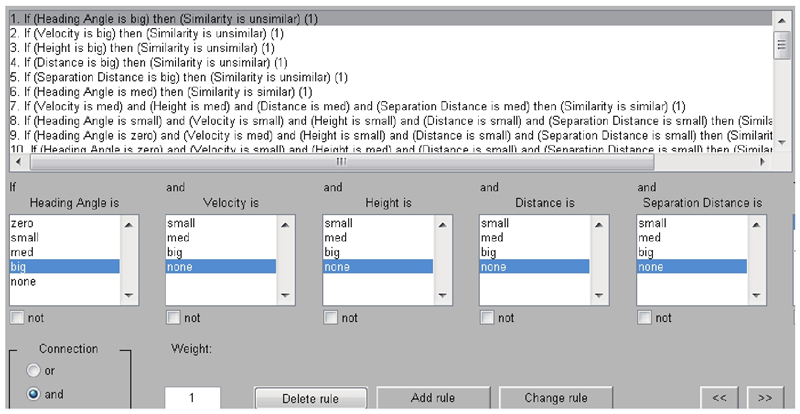
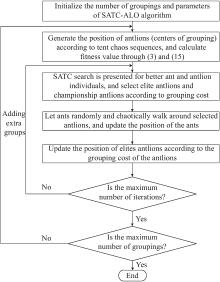
Fig 5
Flow chart of force aggregation algorithm"
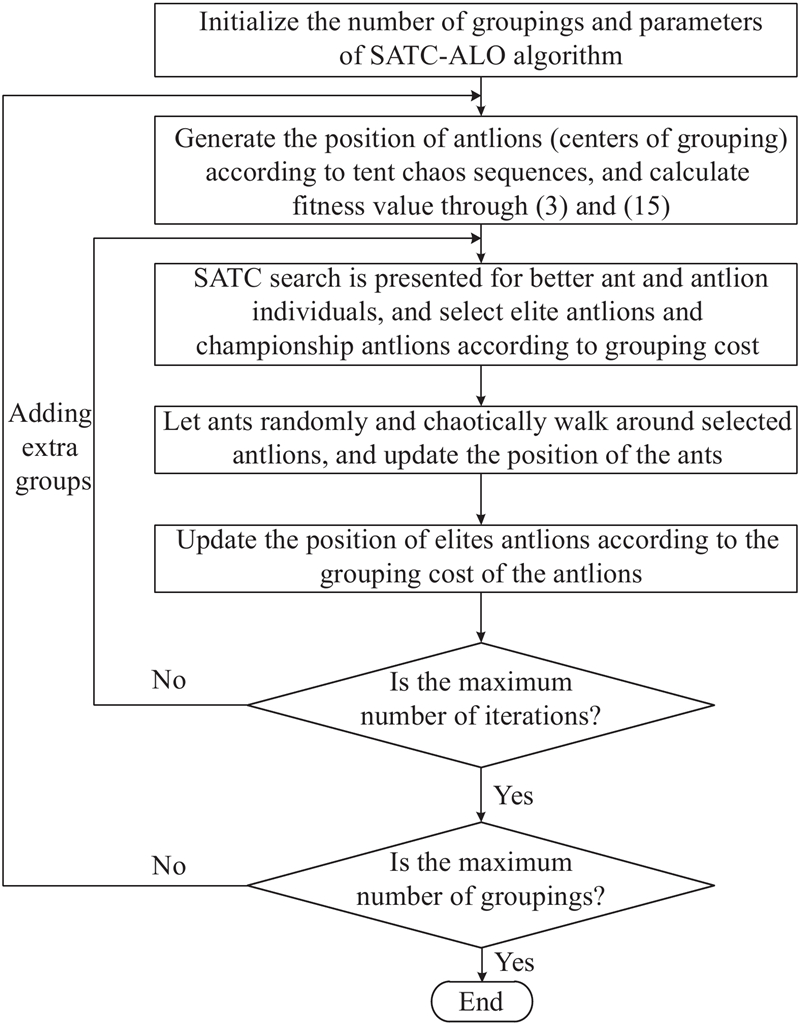
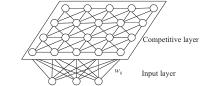
Fig 6
SOM neural network map relation"
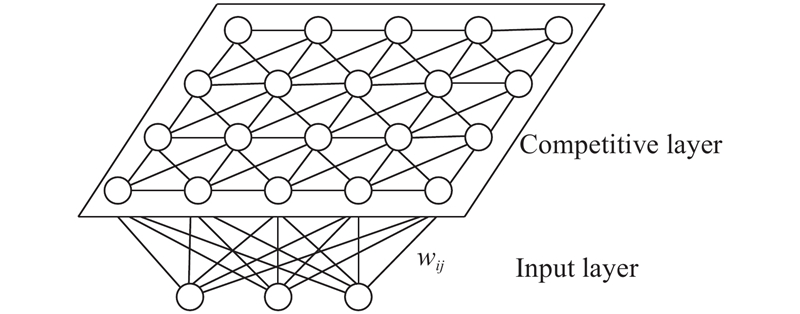
Fig 7
SOM Neighbor connections"
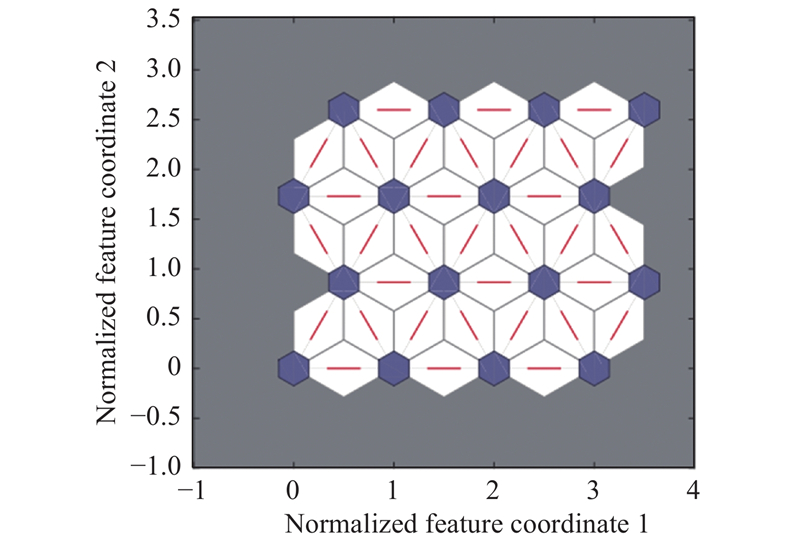
Fig 8
Map space classification"
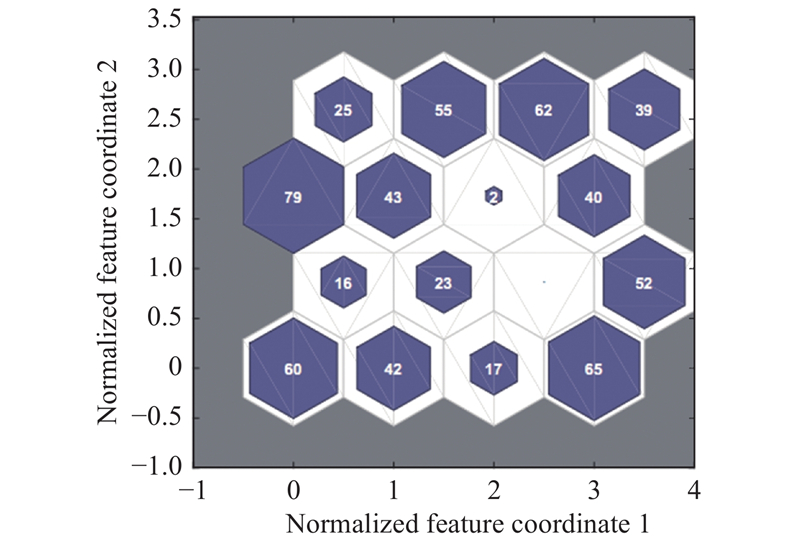
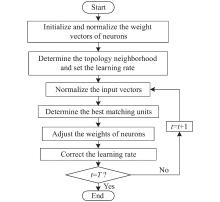
Fig 9
Flow chart of SOM neural network training"
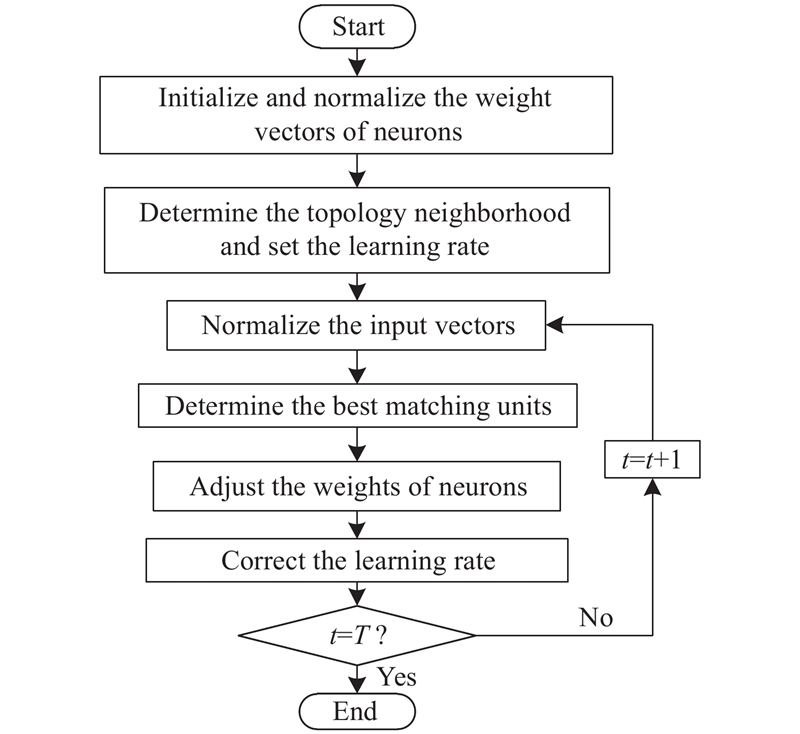
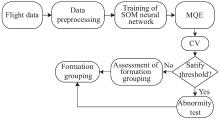
Fig 10
Mapping diagram of SOM neural network"
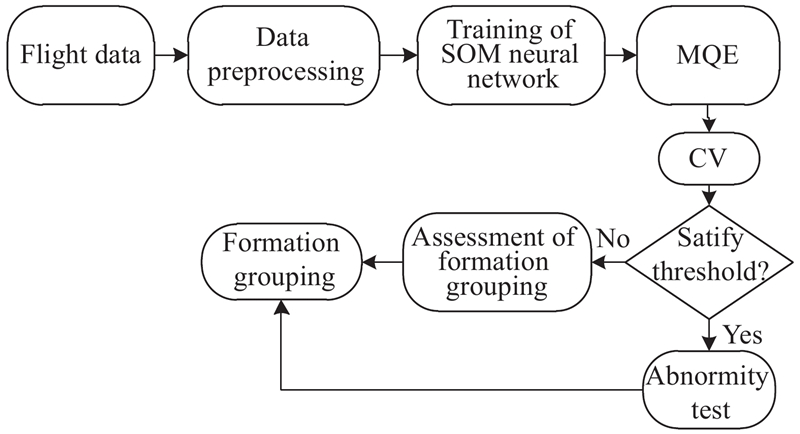
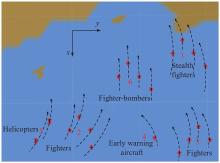
Fig 11
General battle plan of fight scenario"
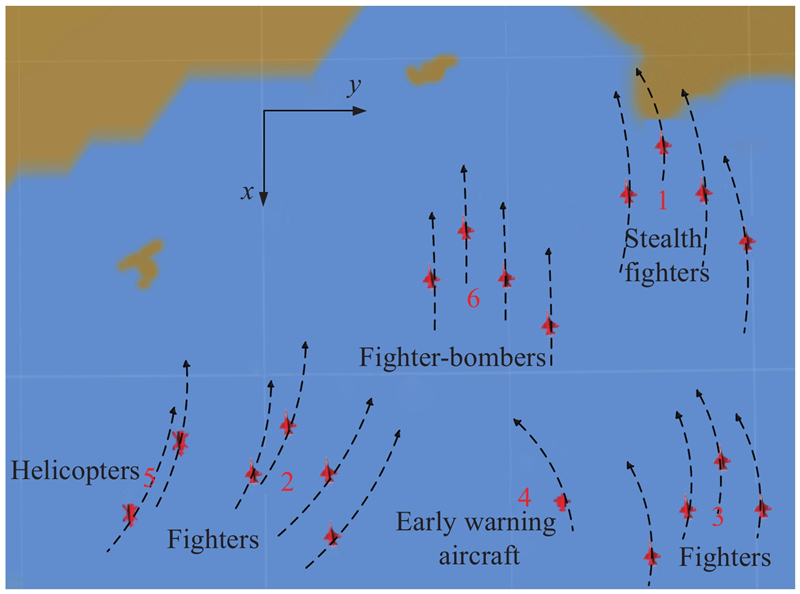
Table 1
Data of a fight scenario"
| Types | Course/(°) | Speed/(m∙s−1) | Height/m | X/m | Y/m |
| 1 | 85 | 980 | 1 450 | 12 100 | 3 000 |
| 1 | 85 | 990 | 1 460 | ||
| 1 | 85 | 995 | 1 465 | ||
| 1 | 85 | 988 | 1 470 | ||
| 2 | 100 | 950 | 5 400 | − | |
| 2 | 100 | 960 | 5 370 | − | |
| 2 | 100 | 962 | 5 310 | − | |
| 2 | 100 | 958 | 5 340 | − | |
| 2 | 65 | 990 | 9 120 | ||
| 2 | 65 | 980 | 9 080 | 930 | |
| 2 | 65 | 970 | 9 040 | 870 | |
| 2 | 65 | 975 | 9 140 | ||
| 3 | 70 | 402 | 9 080 | − | |
| 4 | 97 | 200 | 3 000 | − | |
| 4 | 97 | 213 | 3 060 | − | |
| 5 | 90 | 952 | −420 | ||
| 5 | 90 | 950 | −900 | ||
| 5 | 90 | 955 | 100 | ||
| 5 | 90 | 954 | 490 |
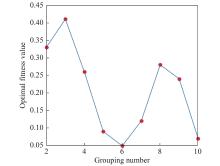
Fig 12
Optimal fitness values of various number of formations"
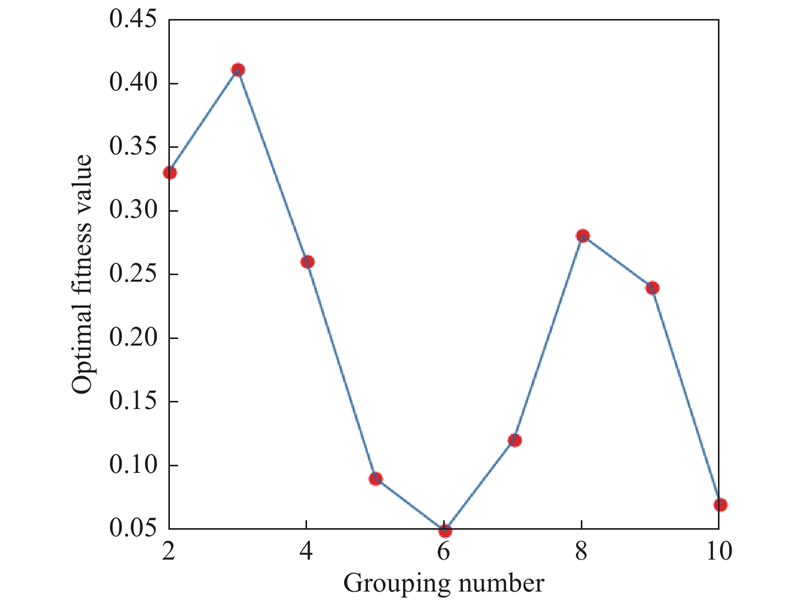
Fig 13
Fitness function curve when the number of formation is 6"
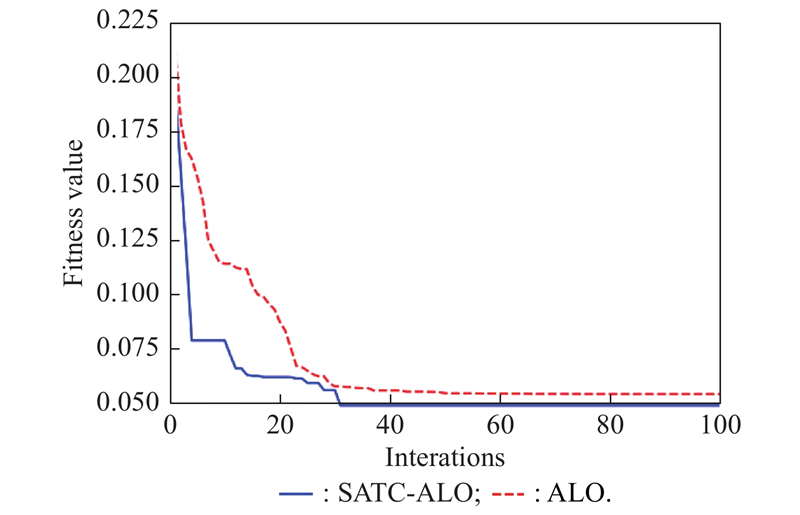
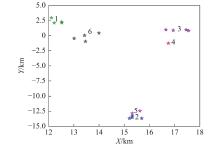
Fig 14
Formation of aircrafts"
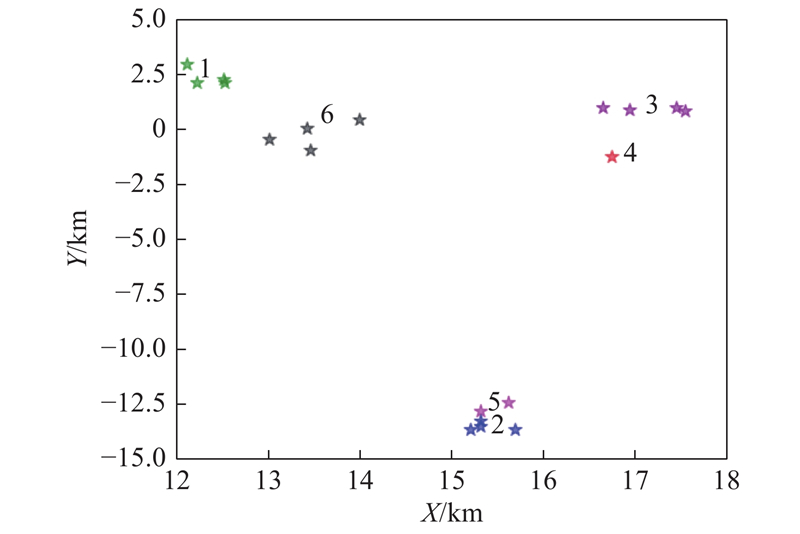
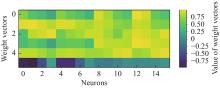
Fig 15
Visualization of SOM neural network vectors"
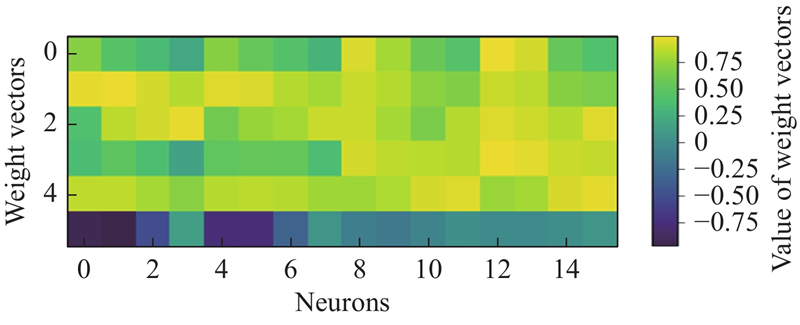
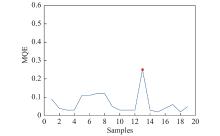
Fig 16
Values of MQE"
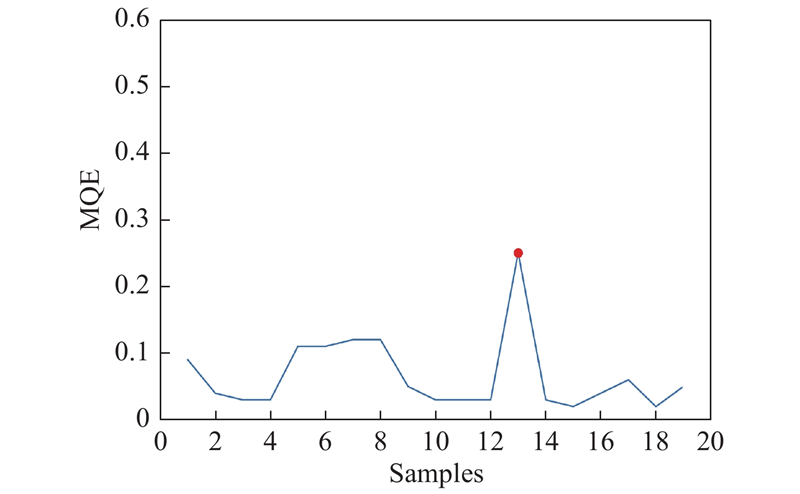
Fig 17
Values of CV"
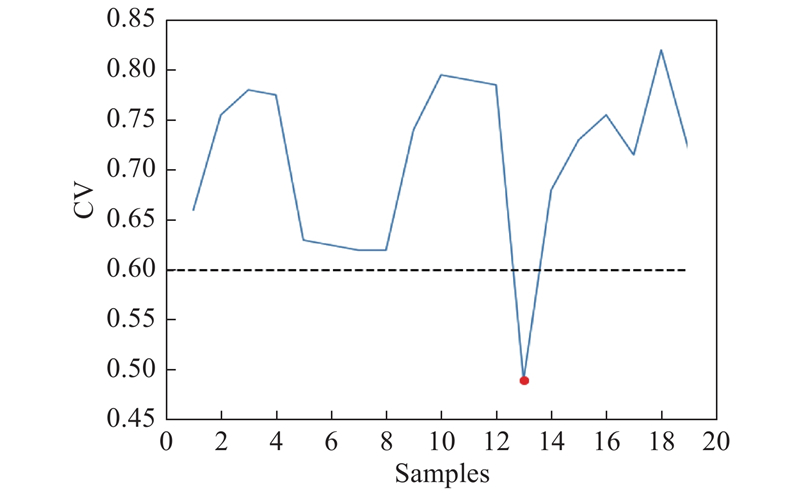
Fig 18
Formation grouping result based on SOM"
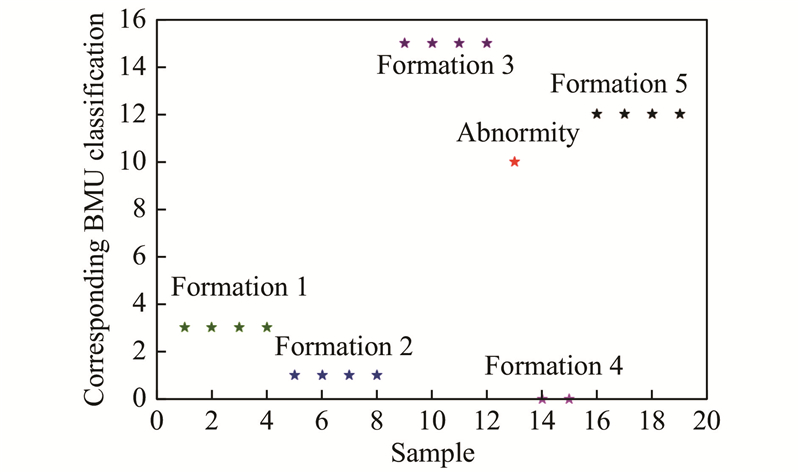
Fig 19
Three-dimensional diagram of formation grouping"
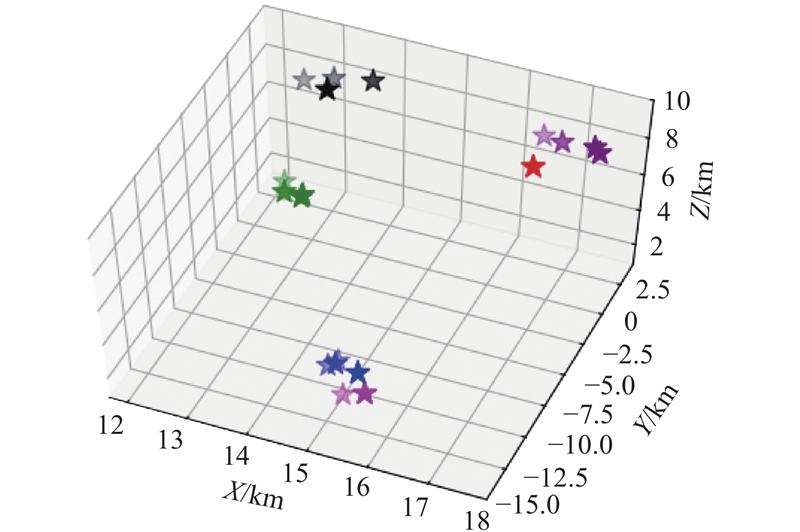
Table 2
Comparison of two classification methods"
| Algorithm | SOM | ALO | SATC-ALO |
| Accuracy/% | 96.1 | 96.7 | 97.2 |
| Average running time/s | 0.82 | 12.17 | 10.63 |
| Peak memory occupancy rate /% | 1.03 | 1.94 | 1.62 |
| 1 | BLACKMAN S S, POPOLI R. Design and analysis of modern tracking systems. Norwood: Artech House, 1999. |
| 2 | ZHANG F, JIA Z, SHENG J G, et al Research for object clustering in situation assessment. Electronic Optics & Control, 2008, 15 (4): 21- 23. |
| 3 | BI P. Study on application of improved Chameleon hierarchical clustering algorithm in target clustering. Hangzhou: Zhejiang University, 2009. (in Chinese) |
| 4 | QI L H, ZHANG A, CAO L Double centroids-weighted support vector clustering algorithm for group-air grouping. Journal of Systems Engineering and Electronics, 2014, 36 (11): 2213- 2218. |
| 5 | YUAN D P, ZHENG J Y, SHI H S Target grouping algorithm based on multiple combat formation. Journal of Computer Science, 2016, 43 (2): 235- 238. |
| 6 | SCHUBERT J. Reliable force aggregation using a refined evidence specification from dempster-shafer clustering. Proc. of the 4th Annual Conference on Information Fusion, 2001: 15−22. |
| 7 | CANTWELL J, SCHUBERT J, WALTER J. Conflict-based force aggregation. Proc. of the 4th International Command and Control Research and Technology, 2003. DOI: 10.1109/ICIF.2003.177377. |
| 8 | CAI Y C. Study on force aggregation in situation assessment. Changsha: National University of Defense Technology, 2006. (in Chinese) |
| 9 | LI W S, WANG B S Target classification method for situation assessment based on fuzzy sets. Journal of Systems Engineering and Electronics, 2005, 27 (7): 1235- 1237. |
| 10 | KUANG F J, JIN Z, XU W H, et al Artificial bee colony algorithm based on self-adaptive tent chaos search. Journal of Control Theory & Applications, 2014, 31 (11): 1502- 1508. |
| 11 | BAO L, ZENG J C. Comparison and analysis of the selection mechanism in the artificial bee colony algorithm. Proc. of the 9th International Conference on Hybrid Intelligent Systems, 2009: 411−416. |
| 12 |
GAO W F, LIU S Y A modified artificial bee colony algorithm. Journal of Computer & Operations Research, 2012, 39 (3): 687- 697.
doi: 10.1016/j.cor.2011.06.007 |
| 13 |
KOHONEN T The self-organizing map. Journal of Neuro-Computing, 1990, 78 (9): 1464- 1480.
doi: 10.32614/cran.package.som |
| 14 | MIRJALILI S The ant lion optimizer. Journal of Advances in Engineering Software, 2015, 83 (C): 80- 98. |
| 15 | LIU F T, TING K M, ZHOU Z H. Isolation forest. Proc. of the 8th IEEE International Conference on Data Mining, 2008: 413−422. |
| 16 | BAY S D, SCHWABACHER M. Mining distance-based outliers in near linear time with randomization and a simple pruning rule. Proc. of the 9th ACM SIGKDD International Conference on Knowledge Discovery and Data Mining, 2003: 29−38. |
| 17 | KNORR E M, NG R T. Algorithms for mining distance-based outliers in large datasets. Proc. of the 24th International Conference on Very Large Data Base, 1998: 392−403. |
| 18 |
SHI T, HORVATH S Unsupervised learning with random forest predictors. Journal of Computational and Graphical Statistics, 2006, 15 (1): 118- 138.
doi: 10.1198/106186006X94072 |
| 19 | STROUD P D, GORDON R C. Automated military unit identification in battlefield simulation. Proc. of the International Society for Optical Engineering, 1997: 375−386. |
| 20 | LONG Z Z, ZHANG C, WANG W P A dynamic framework for target-grouping based on clustering data streams. Journal of Shanghai Jiaotong University, 2010, 44 (7): 921- 925. |
| 21 | KALITA K, PANDYA S B, CEP R, et al. Many-objective ant lion optimizer (MaOALO): a new many-objective optimizer with its engineering applications. Heliyon, 2024, 10(12): e32911. |
| 22 |
AIT HACÈNE OUHAHDA S, CHIBANI SADOUKI S, ACHROUFENE A, et al A discrete adaptive lion optimization algorithm for QoS-driven IoT service composition with global constraints. Journal of Network and Systems Management, 2024, 32 (2): 34.
doi: 10.1007/s10922-024-09808-w |
| 23 |
ZHANG H H, GAN X S, LI S F, et al UAV safe route planning based on PSO-BAS algorithm. Journal of Systems Engineering and Electronics, 2022, 33 (5): 1151- 1160.
doi: 10.23919/JSEE.2022.000111 |
| 24 |
CAO Y S, LYU T J, NI W Twin-timescale design for IRS-assisted MIMO system with outdated CSI. Journal of Systems Engineering and Electronics, 2024, 35 (6): 1380- 1387.
doi: 10.23919/JSEE.2023.000087 |
| 25 |
LI W, WANG Y, JIA L J, et al Battlefield target intelligence system architecture modeling and system optimization. Journal of Systems Engineering and Electronics, 2024, 35 (5): 1190- 1203.
doi: 10.23919/JSEE.2024.000114 |
| [1] | Guoqing SHI, Boyan ZHANG, Jiandong ZHANG, Qiming YANG, Xiaofeng HUANG, Jianyao QUE, Junwei PU, Xiutang GENG. Manipulator tracking technology based on FSRUKF [J]. Journal of Systems Engineering and Electronics, 2024, 35(2): 473-484. |
| [2] | Ya’nan Wang, Yingjie Lei, Yang Lei, Xiaoshi Fan. Multi-factor high-order intuitionistic fuzzy time series forecasting model [J]. Journal of Systems Engineering and Electronics, 2016, 27(5): 1054-1062. |
| [3] | Chen Tieming, Gong Rongsheng & Huang Samuel H.. Integrated knowledge-based modeling and its application for classification problems [J]. Journal of Systems Engineering and Electronics, 2008, 19(6): 1277-1282. |
| [4] |
Zhang Yinan , SMTZ Qingwei, Qwan He , Jzw Yonggao & Quan Tax fan.
Uncertain information fusion with robust adaptive neural networks-fuzzy reasoning
[J]. Journal of Systems Engineering and Electronics, 2006, 17(3): 495-501.
|
| [5] | Ban Xiaojun, Gao Xiaozhi, Huang Xianlin & Ww Tianbao. Analysis of one dimensional and two dimensional fuzzy controllers* [J]. Journal of Systems Engineering and Electronics, 2006, 17(2): 362-373. |
| Viewed | ||||||
|
Full text |
|
|||||
|
Abstract |
|
|||||
