
Journal of Systems Engineering and Electronics ›› 2026, Vol. 37 ›› Issue (3): 800-815.doi: 10.23919/JSEE.2026.000101
• CROSS-DOMAIN ELECTROMAGNETIC PERCEPTION AND COMMUNICATION & NETWORKING TECHNOLOGY (PART I) • Previous Articles Next Articles
Guimei ZHENG1,*( ), Liyuan XIAO1,2(), Yu ZHENG1,2(), Saiyu ZHANG1,2()
Received:2026-01-07
Accepted:2026-04-20
Online:2026-06-18
Published:2026-06-29
Contact:
Guimei ZHENG
E-mail:zheng-gm@163.com;liyuan9880524@163.com;zhy060100@163.com;zsyu2003@163.com
Guimei ZHENG, Liyuan XIAO, Yu ZHENG, Saiyu ZHANG. Cascaded ensemble learning for efficient and high-accuracy direction of arrival estimation[J]. Journal of Systems Engineering and Electronics, 2026, 37(3): 800-815.
Add to citation manager EndNote|Reference Manager|ProCite|BibTeX|RefWorks
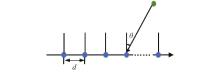
Fig 1
ULA"
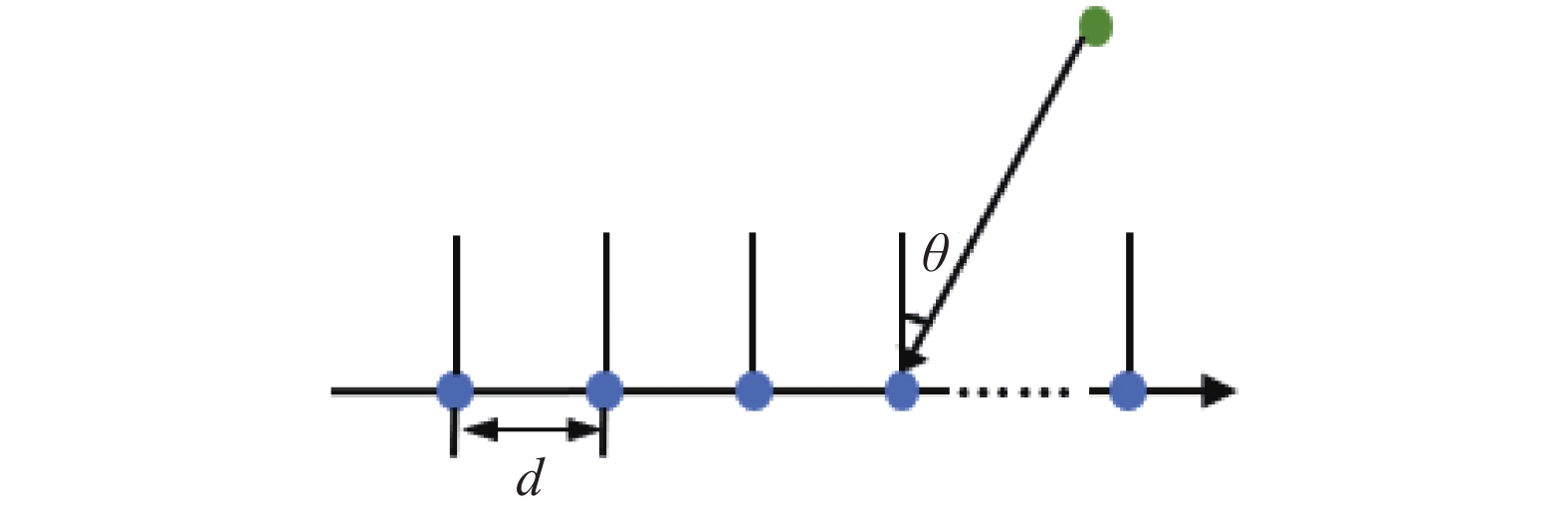
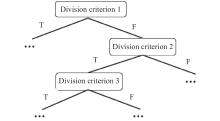
Fig 2
Classification structure of decision tree"
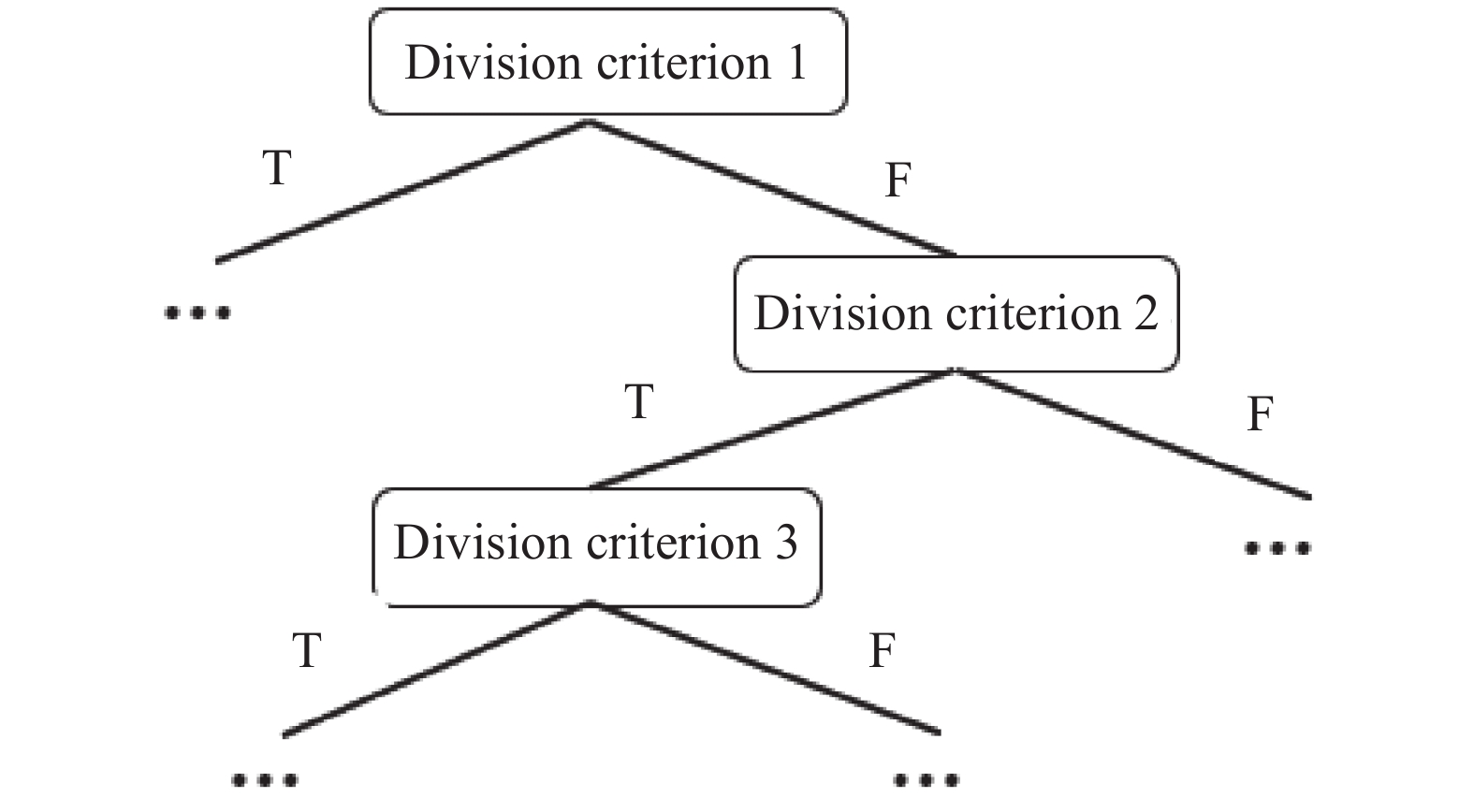
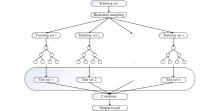
Fig 3
RF algorithm"
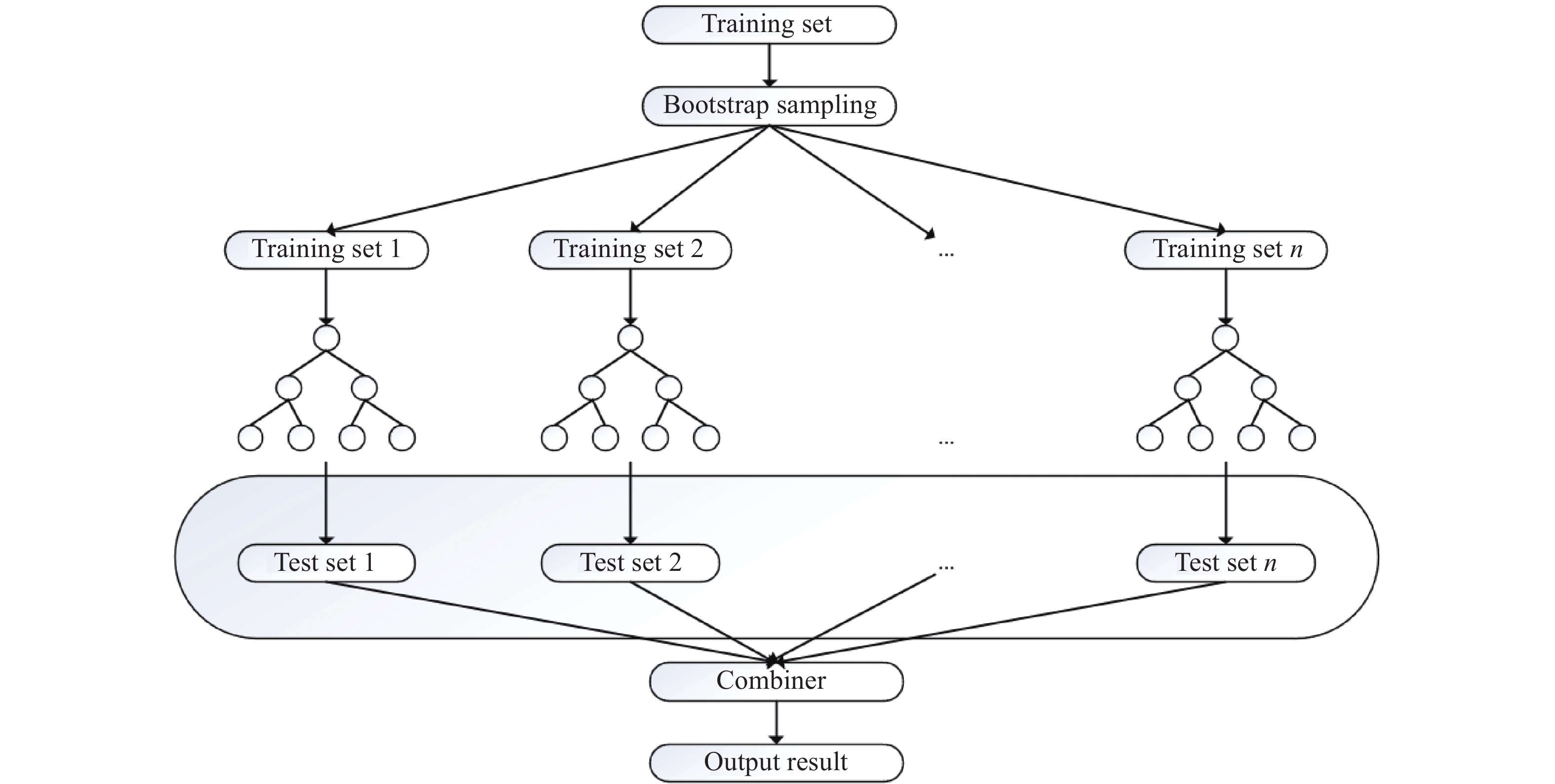
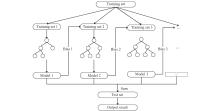
Fig 4
XGBoost framework"
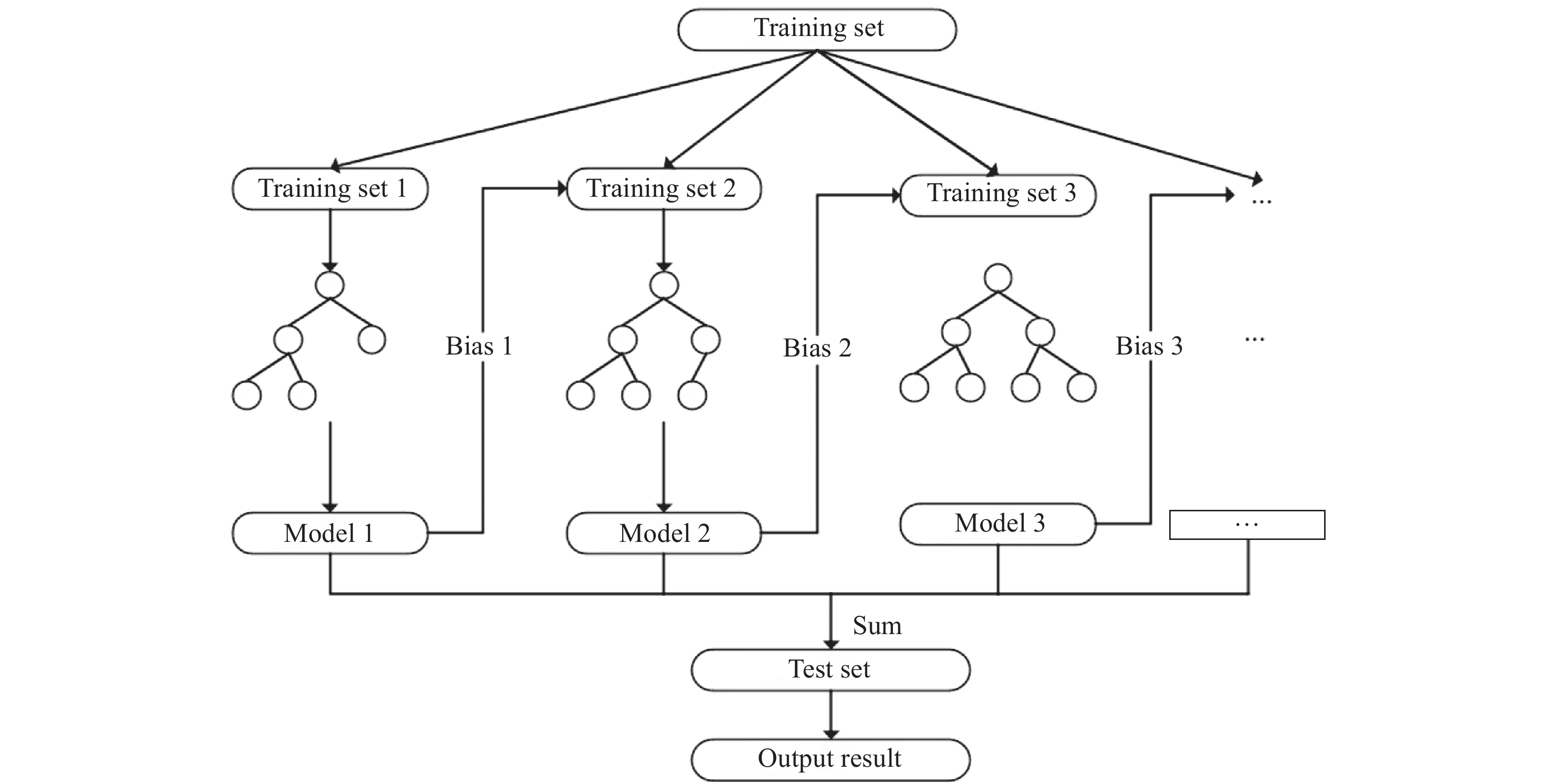
Fig 5
DOA estimation framework"
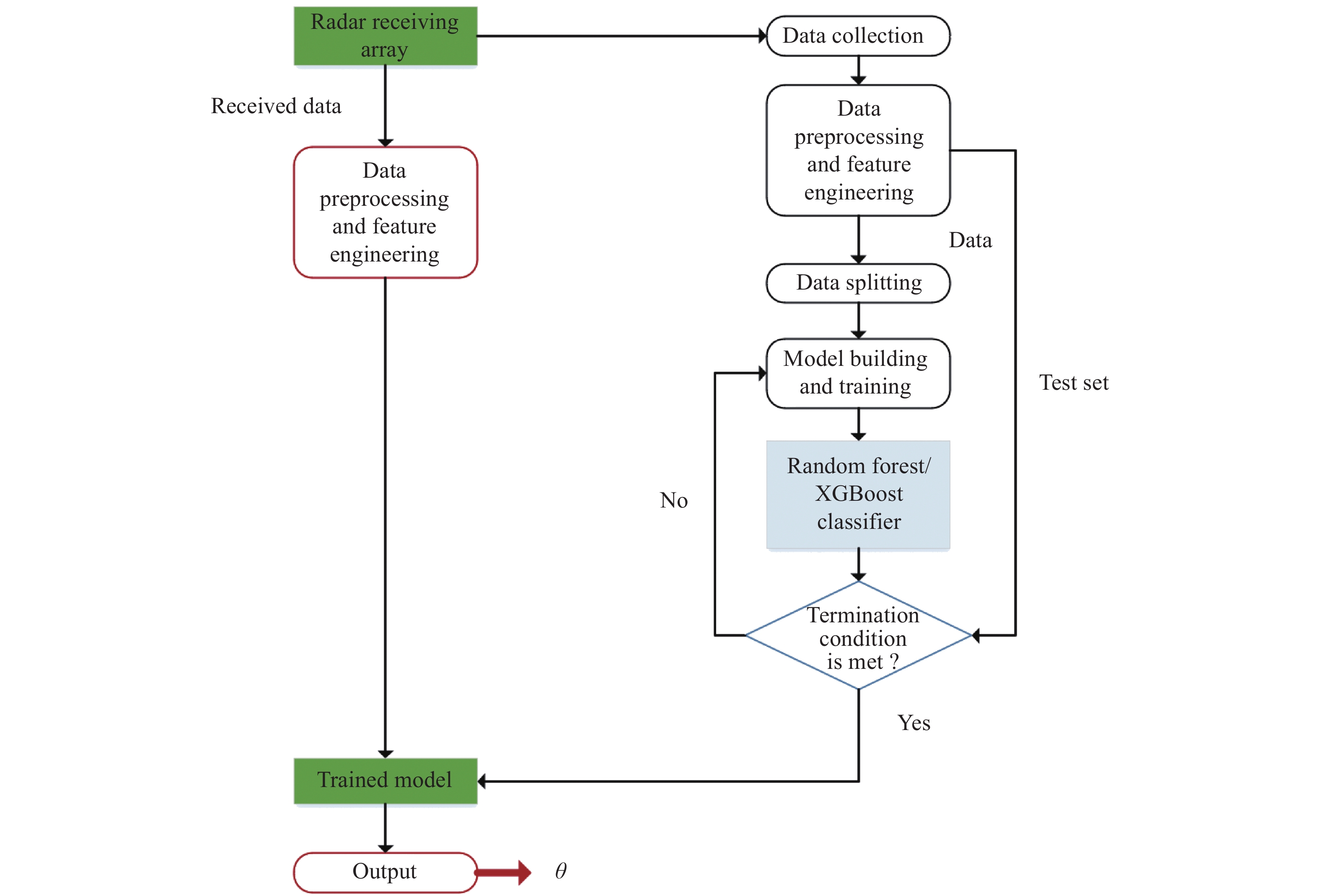
Fig 6
Estimation model"
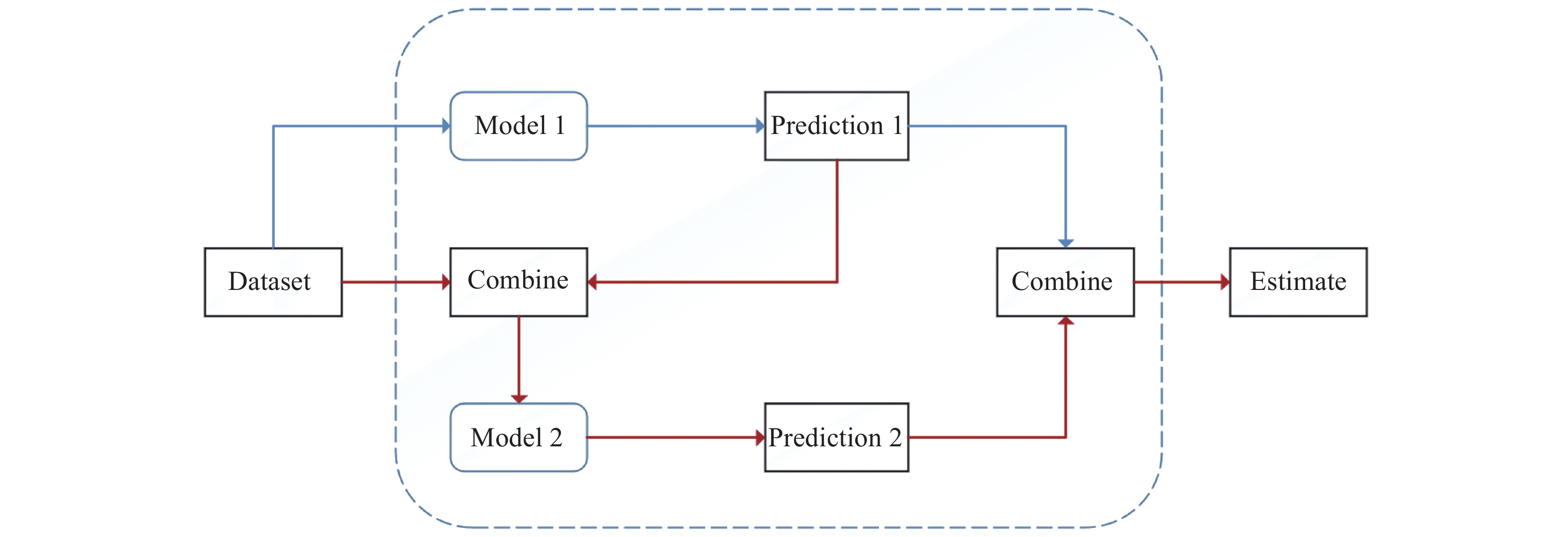
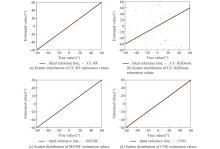
Fig 7
Scatter distribution of true values and estimated values of each algorithm"
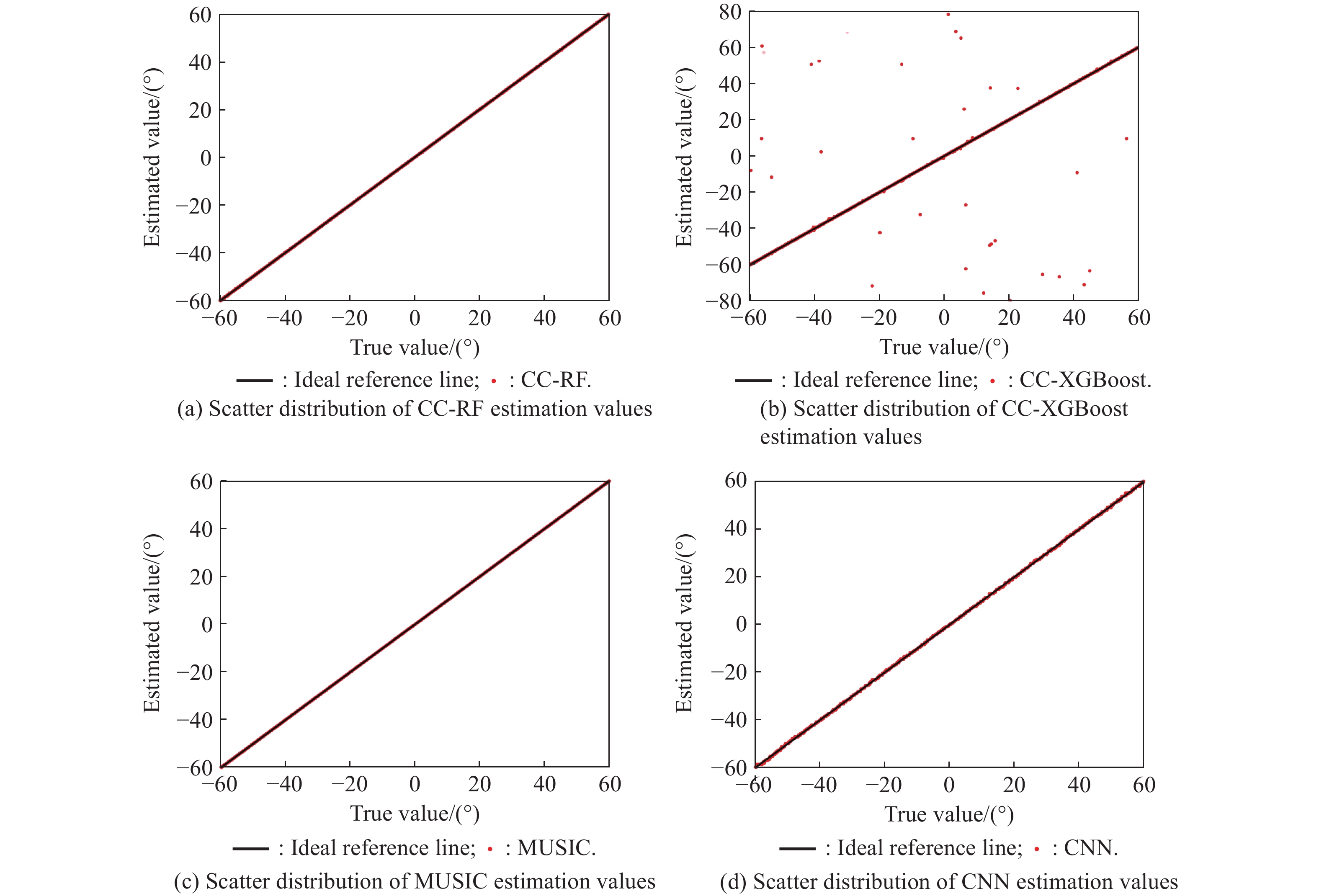
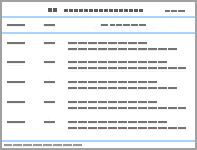
Table 1
Time consumption and RMSE of each algorithm s"
| Algorithm | RMSE/(°) | Times/s |
| CC-XGBoost | ||
| CC-RF | ||
| MUSIC | ||
| CNN |
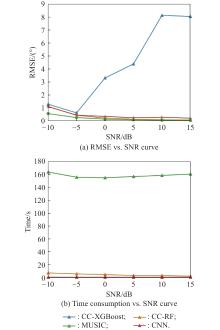
Fig 8
RMSE and time consumption vs. SNR curves"
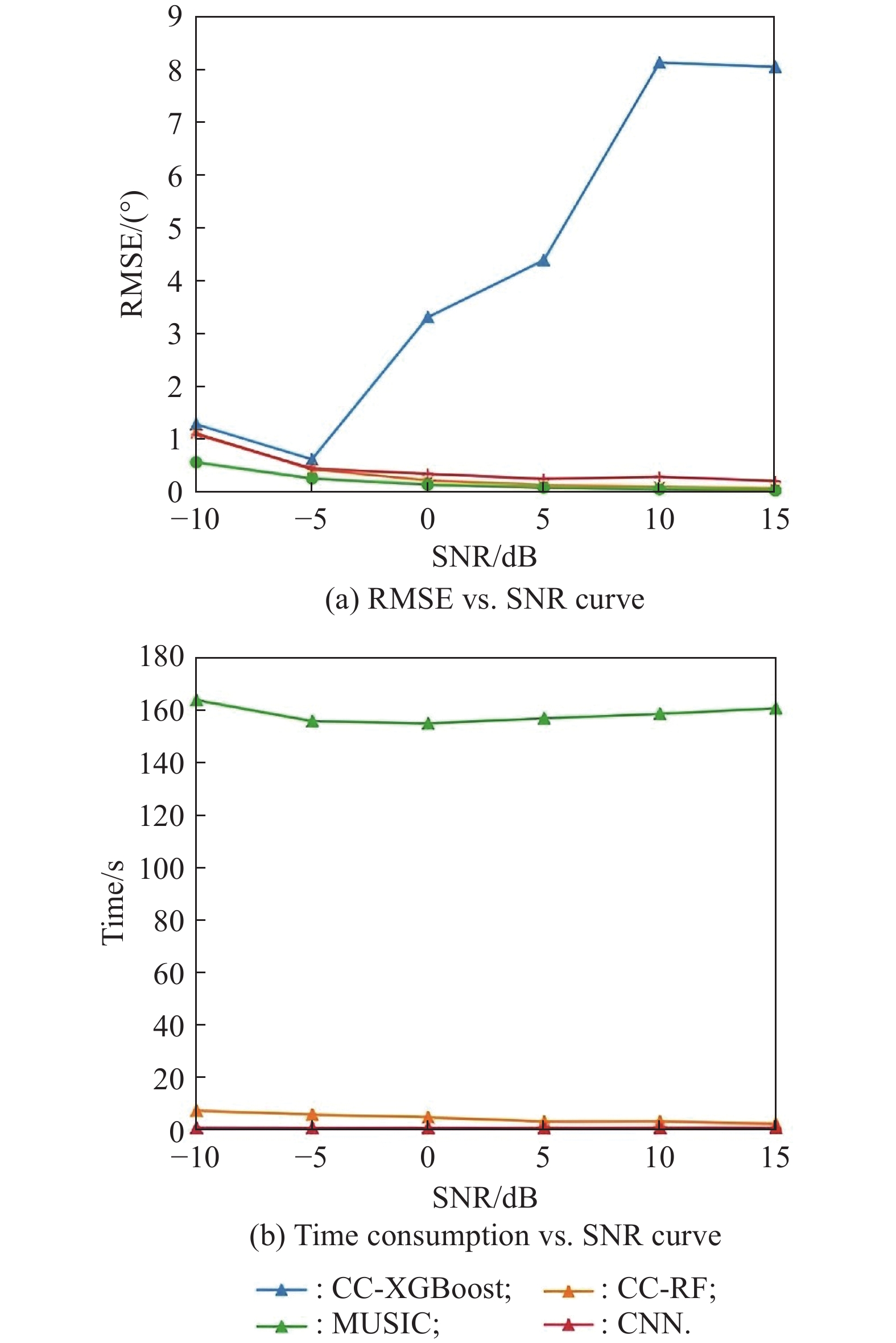
Fig 9
Comparison of true values and estimated values of dual-sources under ideal conditions"
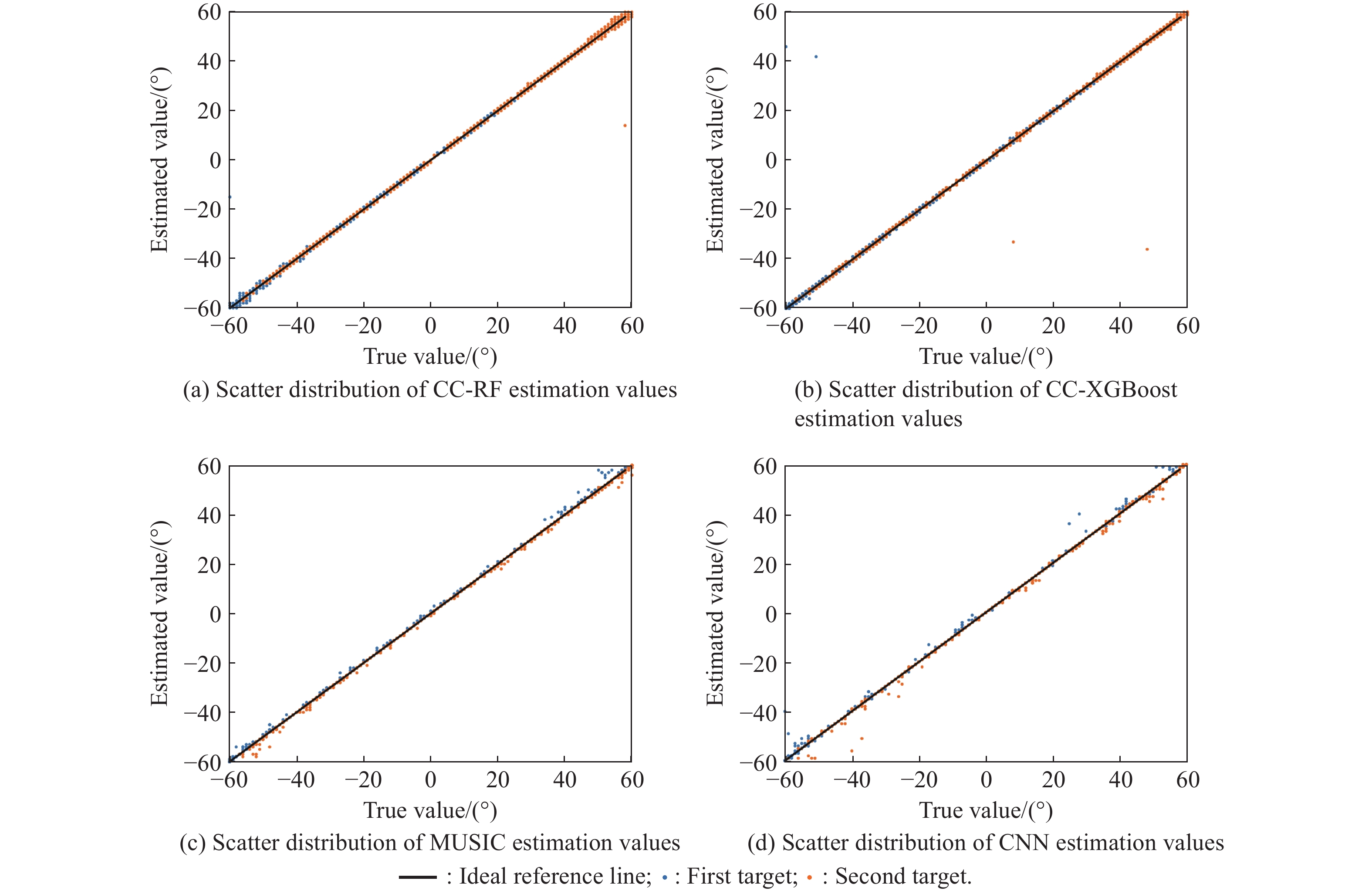
Table 2
RMSE and time consumption of each dual-sources"
| Algorithm | RMSE/(°) | Time/s |
| CC-XGBoost | ||
| CC-RF | ||
| MUSIC | ||
| CNN |
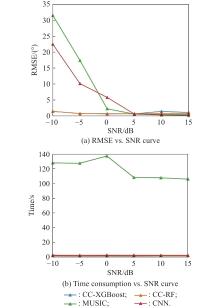
Fig 10
Dual-source RMSE and time consumption vs. SNR curves"
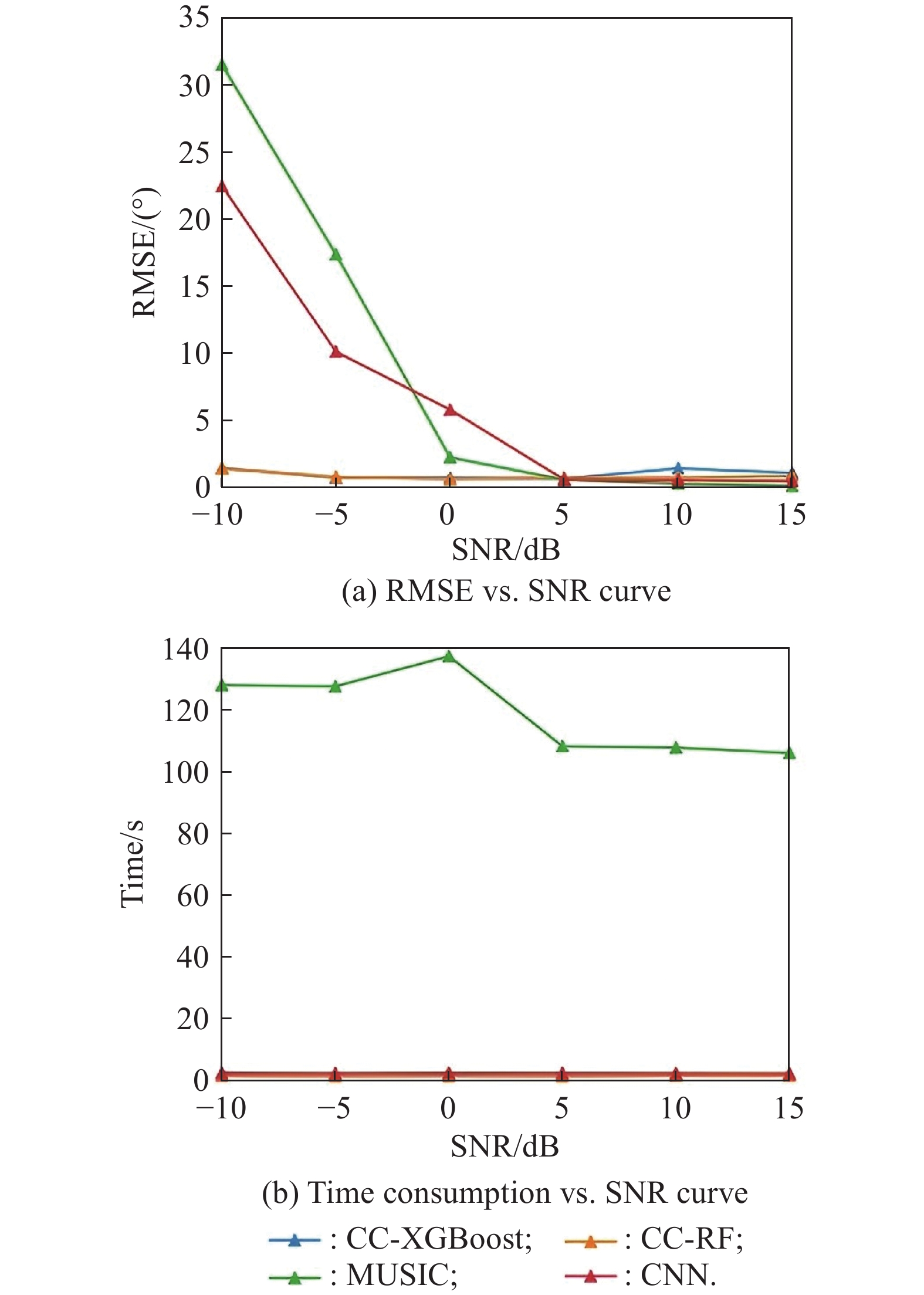
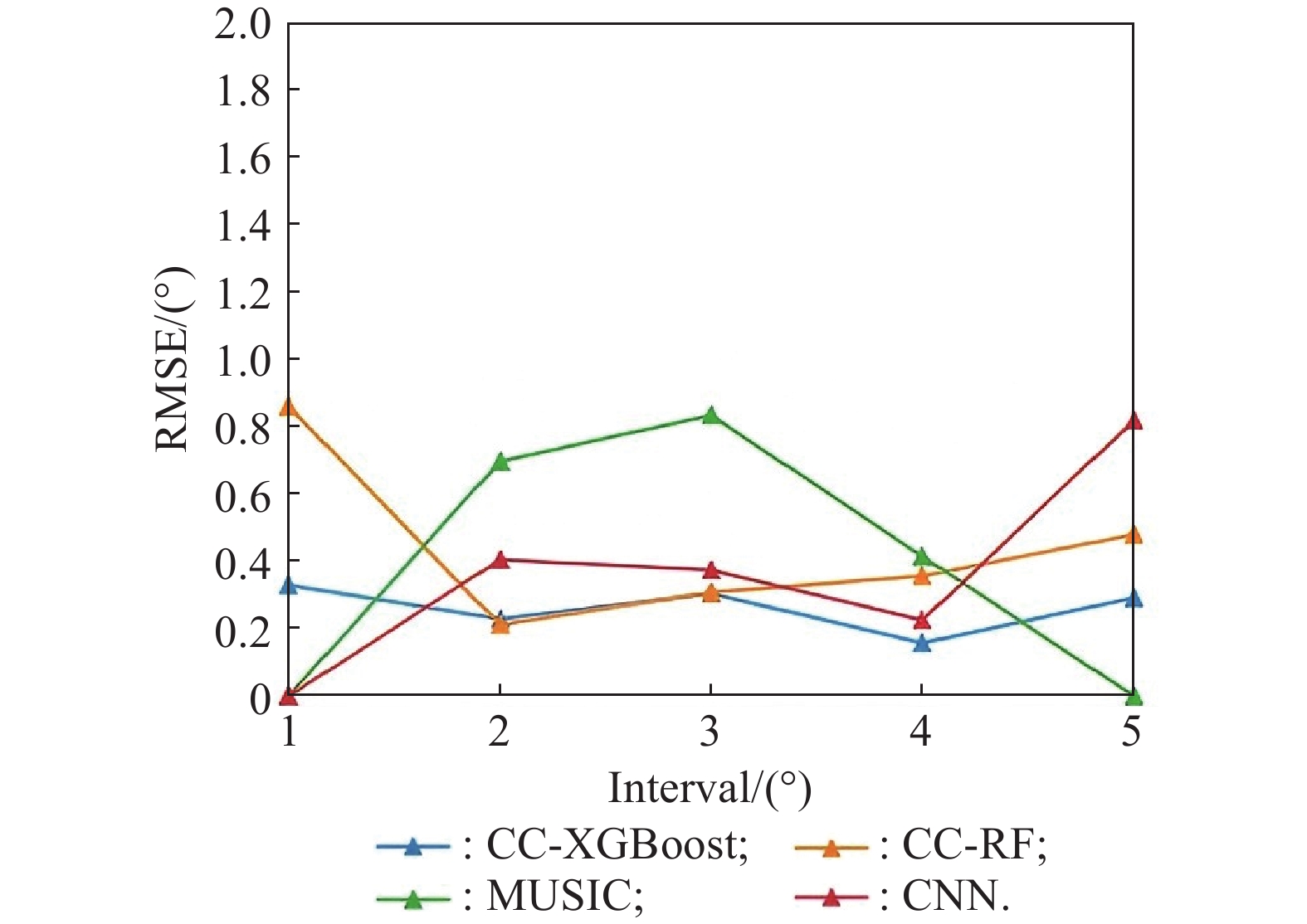
Fig 11
RMSE change curves of various algorithms under different angle intervals"
| 1 |
ROY R, KAILATH T ESPRIT-estimation of signal parameters via rotational invariance techniques. IEEE Trans. on Acoustics, Speech, and signal Processing, 1988, 37 (7): 984- 995.
doi: 10.1117/12.55606 |
| 2 |
SCHMIDT R Multiple emitter location and signal parameter estimation. IEEE Trans. on Antennas and Propagation, 1986, 34 (3): 276- 280.
doi: 10.1109/TAP.1986.1143830 |
| 3 |
LAN C F, CHEN H, ZHANG L, et al Underwater acoustic DOA estimation of incoherent signal based on improved GA-MUSIC. IEEE Access, 2023, 11 (1): 69474- 69485.
doi: 10.1109/access.2023.3292218 |
| 4 |
HERZOG A, HABETS E Eigenbeam-ESPRIT for DOA-vector estimation. IEEE Signal Processing Letters, 2019, 26 (4): 572- 576.
doi: 10.1109/LSP.2019.2898775 |
| 5 | LIU S, ZHAO J, WU D C, et al 2D DOA estimation of coherent signals with a separated linear acoustic vector-sensor array. China Communications, 2024, 21 (2): 155- 165. |
| 6 |
WANG L, ZHAO L F, BI G A, et al Novel wideband DOA estimation based on sparse Bayesian learning with dirichlet process priors. IEEE Trans. on Signal Processing, 2016, 64 (2): 275- 289.
doi: 10.1109/TSP.2015.2481790 |
| 7 |
WANG Q S, YU H, LI J, et al Adaptive grid refinement method for DOA estimation via sparse bayesian learning. IEEE Journal of Oceanic Engineering, 2023, 48 (3): 806- 819.
doi: 10.1109/JOE.2023.3235055 |
| 8 | OLLILA E. Multichannel sparse recovery of complex-valued signals using Huber’s criterion. Proc. of the 3rd International Workshop on Compressed Sensing Theory and its Applications to Radar, Sonar and Remote Sensing, 2015. DOI: 10.1109/CoSeRa.2015.7330257. |
| 9 |
TRONG-DAI H, HUANG X J, QIN P Y, et al Low-complexity direction-of-arrival estimation with orthogonal matching pursuit for large-scale lens antenna array. IEEE Trans. on Communications, 2025, 73 (7): 3924- 3939.
doi: 10.1109/tcomm.2024.3502670 |
| 10 |
DONG Y J, XU Y Y, LIU S, et al DOA estimation based on sparse Bayesian learning under amplitude-phase error and position error. Journal of Systems Engineering and Electronics, 2025, 36 (5): 1122- 1131.
doi: 10.23919/JSEE.2025.000052 |
| 11 |
ELBIR A M, CELIK A, ELTAWIL A M NEAT-MUSIC: auto-calibration of DOA estimation for terahertz-band massive MIMO systems. IEEE Wireless Communications Letters, 2024, 13 (2): 451- 455.
doi: 10.1109/LWC.2023.3331945 |
| 12 |
ZHU H G, CHEN X X, MA T, et al Deep unfolded amplitude-phase error self-calibration network for DOA estimation. Journal of Systems Engineering and Electronics, 2025, 36 (2): 353- 361.
doi: 10.23919/JSEE.2024.000099 |
| 13 | PASTORINO M , RANDAZZO A. A smart antenna system for direction of arrival estimation based on a support vector regression. IEEE Trans. on Antennas & Propagation, 2005, 53(7): 2161−2168. |
| 14 |
TARKOWSKI M, KULAS L RSS-based DoA estimation for ESPAR antennas using support vector machine. IEEE Antennas and Wireless Propagation Letters, 2019, 18 (4): 561- 565.
doi: 10.1109/LAWP.2019.2891021 |
| 15 |
GAO Y L, HU D S, CHEN Y P, et al Gridless 1-b DOA estimation exploiting SVM approach. IEEE Communications Letters, 2017, 21 (10): 2210- 2213.
doi: 10.1109/LCOMM.2017.2723359 |
| 16 |
WU L L, HUANG Z T Coherent SVR learning for wideband direction-of-arrival estimation. IEEE Signal Processing Letters, 2019, 26 (4): 642- 646.
doi: 10.1109/LSP.2019.2901641 |
| 17 |
HUANG H J, YANG J, HUANG H, et al Deep learning for super-resolution channel estimation and DOA estimation based massive MIMO system. IEEE Trans. on Vehicular Technology, 2018, 67 (9): 8549- 8560.
doi: 10.1109/TVT.2018.2851783 |
| 18 |
PAPAGEORGIOU K, SELLATHURAI E, YONINA C Deep networks for direction-of-arrival estimation in low SNR. IEEE Trans. on Signal Processing, 2021, 69, 3714- 3729.
doi: 10.1109/TSP.2021.3089927 |
| 19 |
TIAN Q, CAI R Y, LUO Y, et al DOA estimation: LSTM and CNN learning algorithms. Circuits, Systems, and Signal Processing, 2025, 44 (1): 652- 669.
doi: 10.1007/s00034-024-02866-0 |
| 20 |
ALEXANDER B, ANN S, WOUTER T, et al Exploiting temporal context in CNN based multisource DOA estimation. IEEE/ACM Trans. on Audio, Speech, and Language Processing, 2021, 29, 1594- 1608.
doi: 10.1109/TASLP.2021.3067113 |
| 21 | THEJA D, PULI, KISHORE K Deep learning approach for high-resolution DOA estimation. International Journal of Ad Hoc and Ubiquitous Computing, 2024, 46 (2): 90- 103. |
| 22 |
ZHENG H, ZHOU C W, SERGIY A, et al Decomposed CNN for sub-Nyquist tensor-based 2-D DOA estimation. IEEE Signal Processing Letters, 2023, 30, 708- 712.
doi: 10.1109/LSP.2023.3282815 |
| 23 |
WANG Q, LI S, GUO R Z, et al One-shot architecture search and transformation for robust DOA estimation. IEEE Trans. on Aerospace and Electronic Systems, 2025, 61 (2): 3642- 3653.
doi: 10.1109/TAES.2024.3492139 |
| 24 |
GUO Y, ZHANG Z, HUANG Y Z Dual class token vision transformer for direction of arrival estimation in low SNR. IEEE Signal Processing Letters, 2024, 31, 76- 80.
doi: 10.1109/LSP.2023.3342628 |
| 25 |
LIU J C, WANG T Y, LI Y X, et al A Transformer-based signal denoising network for AoA estimation in NLoS environments. IEEE Communications Letters, 2022, 26 (10): 2336- 2339.
doi: 10.1109/LCOMM.2022.3187661 |
| 26 | JI J K, MAO W, XI F, et al. TransMUSIC: a Transformer-aided subspace METhod for DOA estimation with low-resolution ADCS. Proc. of the IEEE International Conference on Acoustics, Speech and Signal Processing, 2024. DOI: 10.1109/ICASSP48485.2024.10446722. |
| 27 |
FAN R, SI C K, YI W C, et al YOLO-DoA: a new data-driven method of DoA estimation based on YOLO neural network framework. IEEE Sensors Letters, 2023, 7 (2): 1- 4.
doi: 10.1109/lsens.2023.3241080 |
| 28 |
CHEN Y, WANG C, XIONG K L Synchronized perturbation elimination and DOA estimation via signal selection mechanism and parallel deep capsule networks in multipath environment. Chinese Journal of Aeronautics, 2021, 34 (12): 158- 170.
doi: 10.1016/j.cja.2021.01.016 |
| 29 | ZHANG K Z, XU L, FENG Z Y A novel automatic modulation classification method based on dictionary learning. China Communications, 2019, 16 (1): 176- 192. |
| 30 |
SUFYAN D, ASFANDYAR K, DANG M L, et al Metaverse applications in bioinformatics: a machine learning framework for the discrimination of anti-cancer peptides. Information, 2024, 15 (1): 48.
doi: 10.3390/info15010048 |
| 31 |
BREIMAN L Random forests. Machine Learning, 2001, 45 (1): 5- 32.
doi: 10.1023/A:1010933404324 |
| 32 | CHEN T, GUESTRIN C. XGBoost: a scalable tree boosting system. Proc. of the 22nd ACM SIGKDD International Conference on Knowledge Discovery and Data Mining, 2016. DOI: 10.1145/2939672.2939785. |
| [1] | Deng WANG, Wenhao XIAO, Jianshuai SHAO, Yi JIANG. Prelaunch rolling suppression for maritime rockets using RF-AdaBoost [J]. Journal of Systems Engineering and Electronics, 2026, 37(1): 197-210. |
| [2] | Yijia DONG, Yuanyuan XU, Shuai LIU, Ming JIN. DOA estimation based on sparse Bayesian learning under amplitude-phase error and position error [J]. Journal of Systems Engineering and Electronics, 2025, 36(5): 1122-1131. |
| [3] | Mingyu LI, Lu GAO, Hongwei XU, Kai LI, Yisong HUANG. Equipment damage measurement method of wartime based on FCE-PCA-RF [J]. Journal of Systems Engineering and Electronics, 2024, 35(3): 707-719. |
| [4] | Jujie Zhang, Min Fang, and Huimin Chai. Multi-label local discriminative embedding [J]. Systems Engineering and Electronics, 2017, 28(5): 1009-1018. |
| [5] | Jianfei Ding, Guangya Si, Baoqiang Li, Jingyu Yang, and Yu Zhang. Construction of composite indicator system based on simulation data mining [J]. Systems Engineering and Electronics, 2017, 28(1): 81-. |
| Viewed | ||||||
|
Full text |
|
|||||
|
Abstract |
|
|||||
